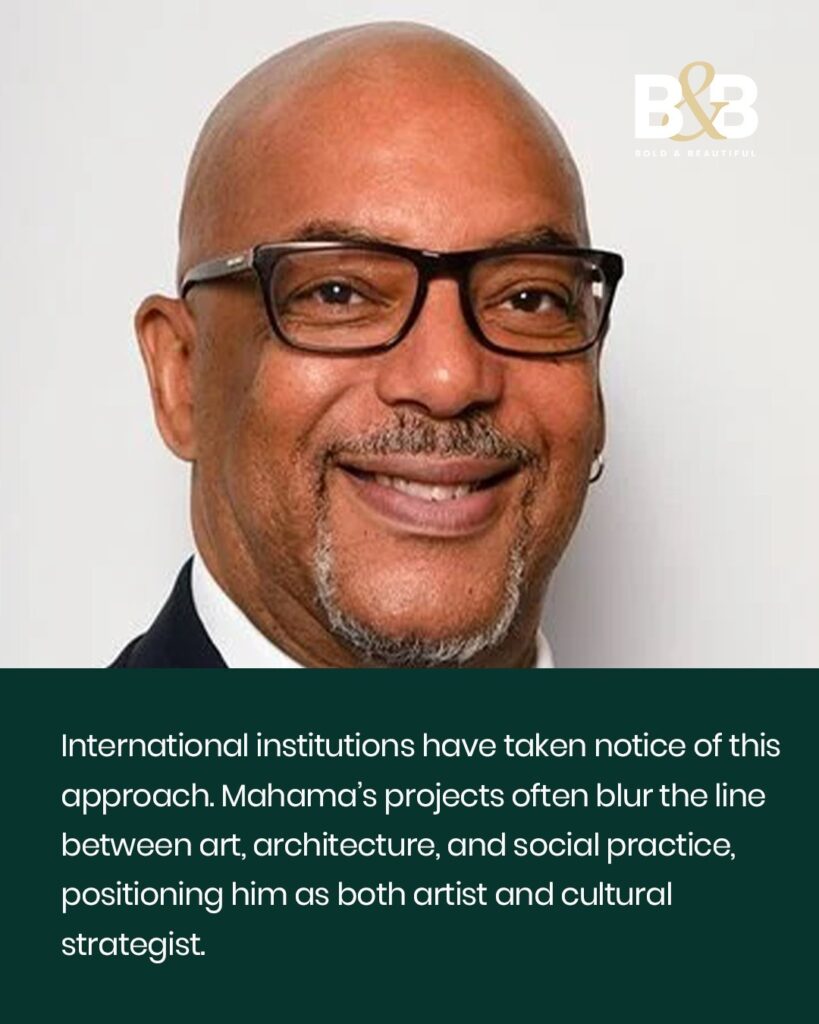

Stanley Richards made history as the first formerly incarcerated person to lead the New York City Department of Correction, a system that oversees one of the largest jail networks in the United States. His appointment marked a profound shift in how experience, accountability, and reform are understood within public institutions traditionally shaped by distance from the people they govern. Richards’ rise to commissioner placed lived experience at the centre of correctional leadership in a city grappling with safety, dignity, and institutional trust.
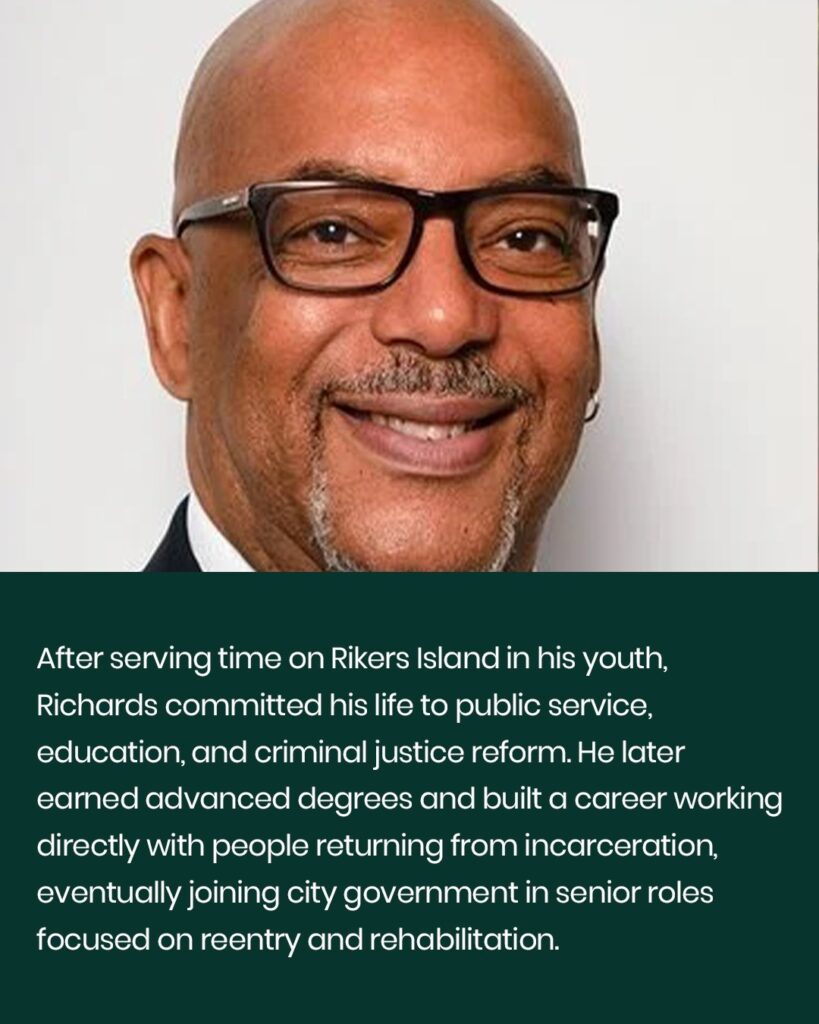
Richards’ story is rooted in transformation rather than symbolism. After serving time on Rikers Island in his youth, he committed his life to public service, education, and criminal justice reform. He later earned advanced degrees and built a career working directly with people returning from incarceration, eventually joining city government in senior roles focused on reentry and rehabilitation. His path offered credibility that no textbook or policy memo could replace, shaped by firsthand knowledge of the system’s failures and possibilities.
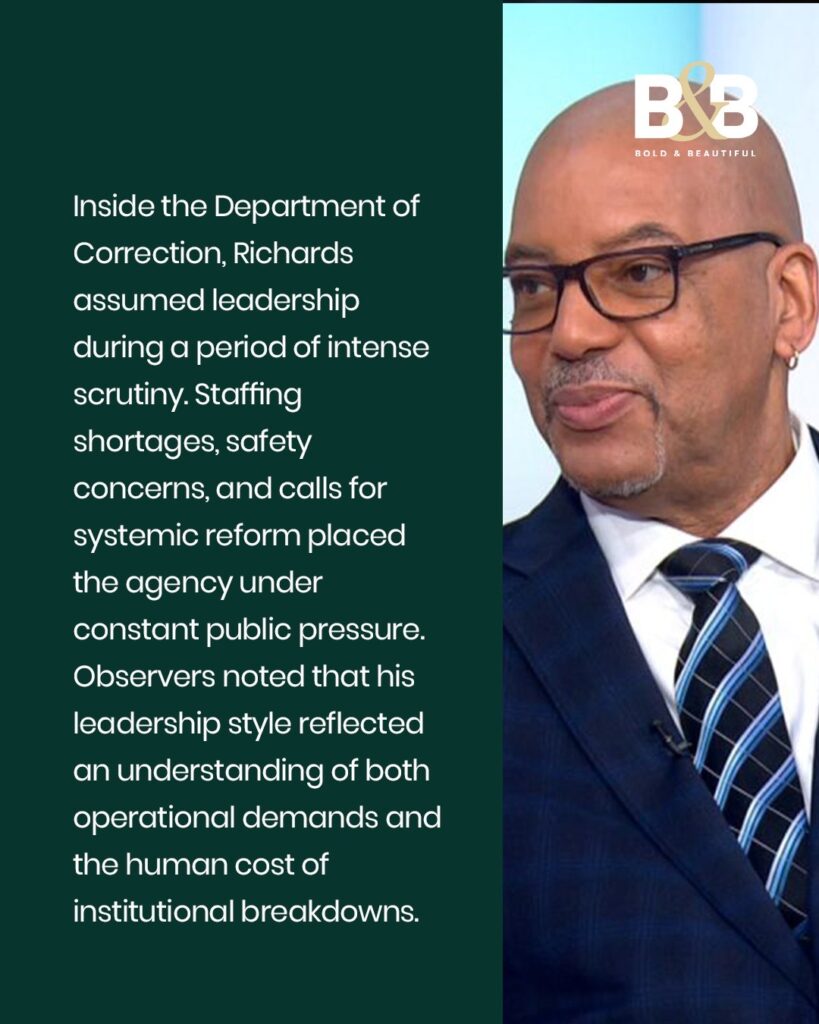
Inside the Department of Correction, Richards assumed leadership during a period of intense scrutiny. Staffing shortages, safety concerns, and calls for systemic reform placed the agency under constant public pressure. His approach emphasized accountability, staff training, mental health support, and a renewed focus on humane conditions. Observers noted that his leadership style reflected an understanding of both operational demands and the human cost of institutional breakdowns.
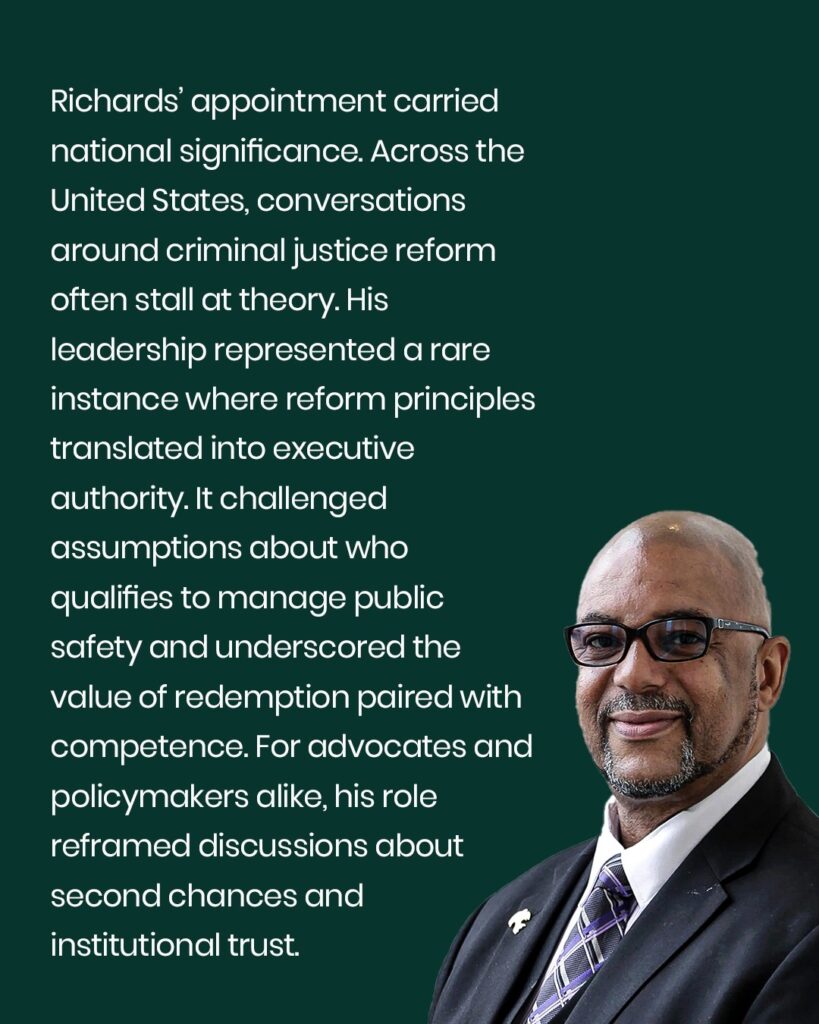
Richards’ appointment carried national significance. Across the United States, conversations around criminal justice reform often stall at theory. His leadership represented a rare instance where reform principles translated into executive authority. It challenged assumptions about who qualifies to manage public safety and underscored the value of redemption paired with competence. For advocates and policymakers alike, his role reframed discussions about second chances and institutional trust.
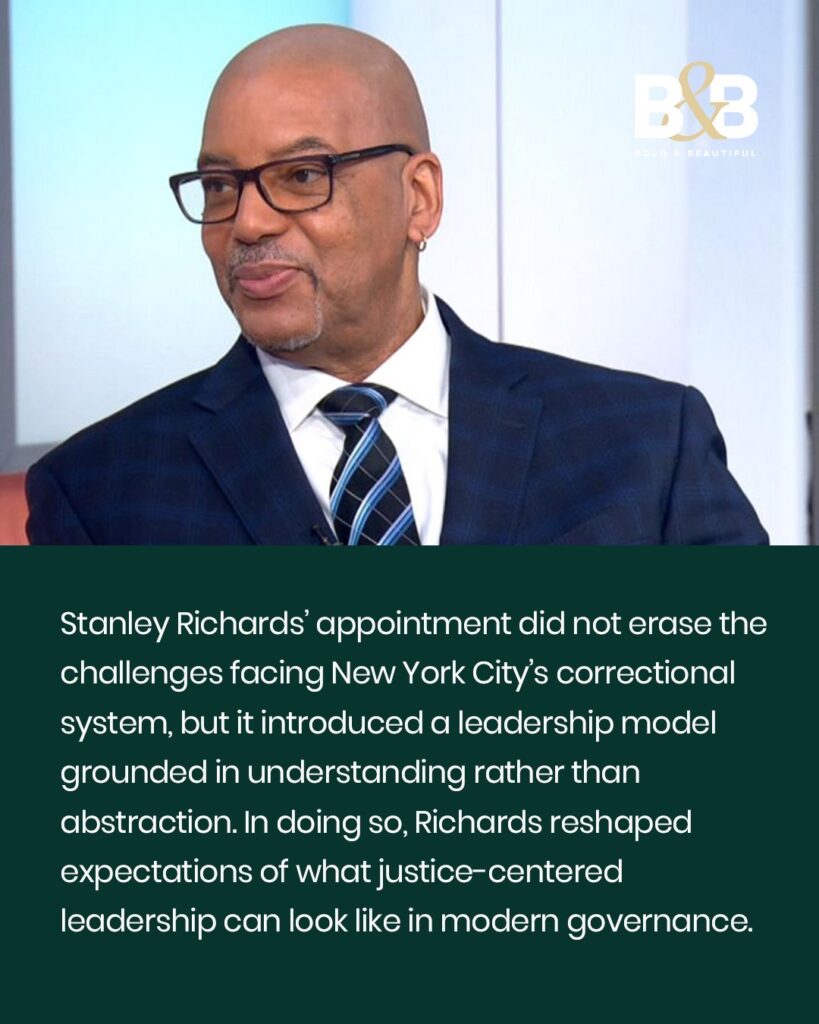
As commissioner, Stanley Richards stood as proof that systems can evolve when leadership reflects experience, discipline, and earned authority. His appointment did not erase the challenges facing New York City’s correctional system, but it introduced a leadership model grounded in understanding rather than abstraction. In doing so, Richards reshaped expectations of what justice-centered leadership can look like in modern governance.