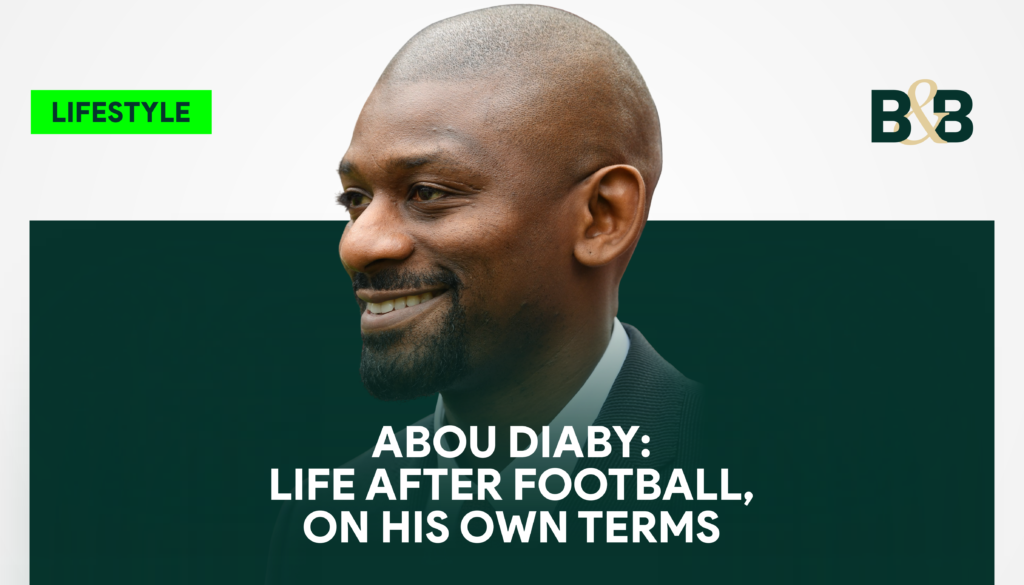
For a player once defined by intensity and expectation, quiet has become a deliberate choice. At 39, Abou Diaby lives in Paris with a rhythm that would have felt unfamiliar during his years at Arsenal FC. The pace is slower, the routines personal. Morning errands replace matchday schedules. Public attention has given way to anonymity, a shift he has embraced without hesitation. For Diaby, stepping away from the spotlight has not created a void. It has created space.
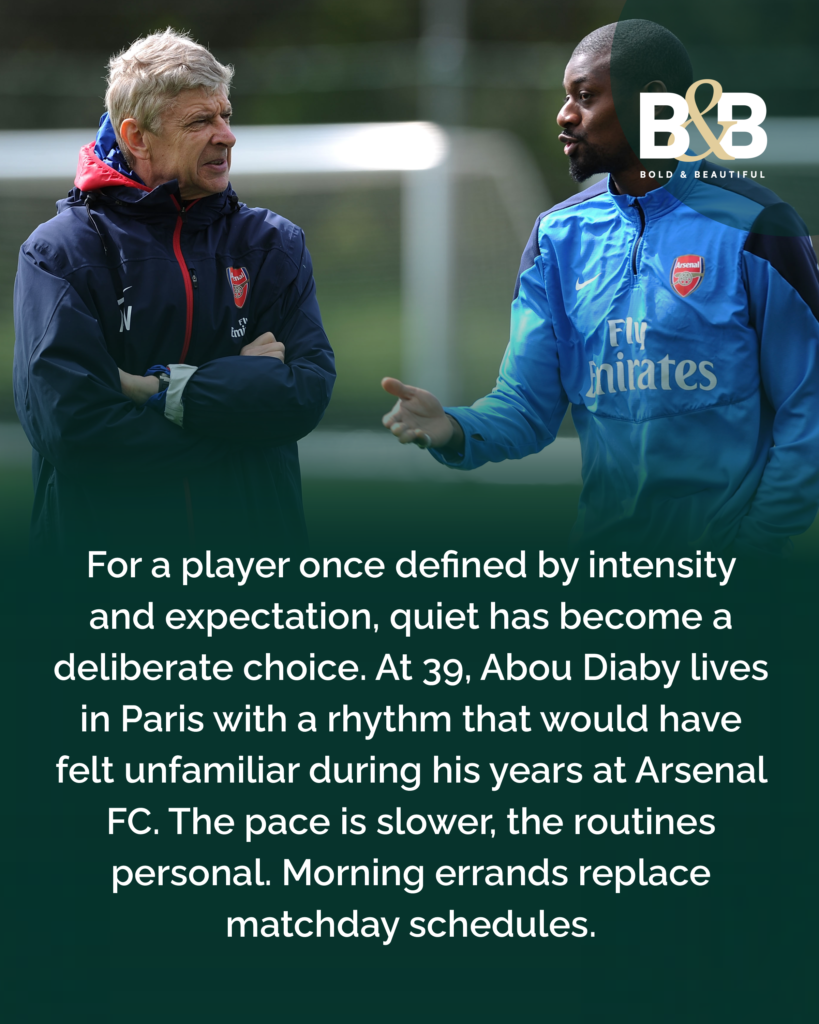
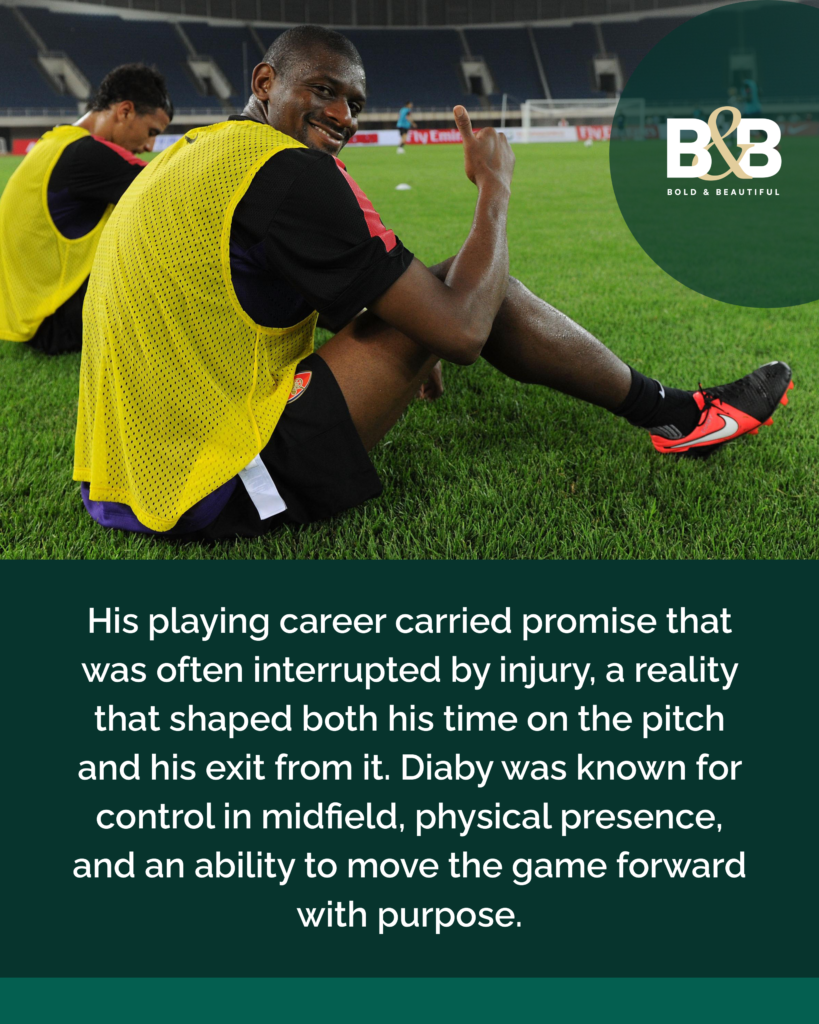
His playing career carried promise that was often interrupted by injury, a reality that shaped both his time on the pitch and his exit from it. Diaby was known for control in midfield, physical presence, and an ability to move the game forward with purpose. Those qualities made him a valuable asset during his time in England and with the French national team. They also made his absences more visible when injuries disrupted his momentum. Retirement closed that chapter, but it did not define what followed.
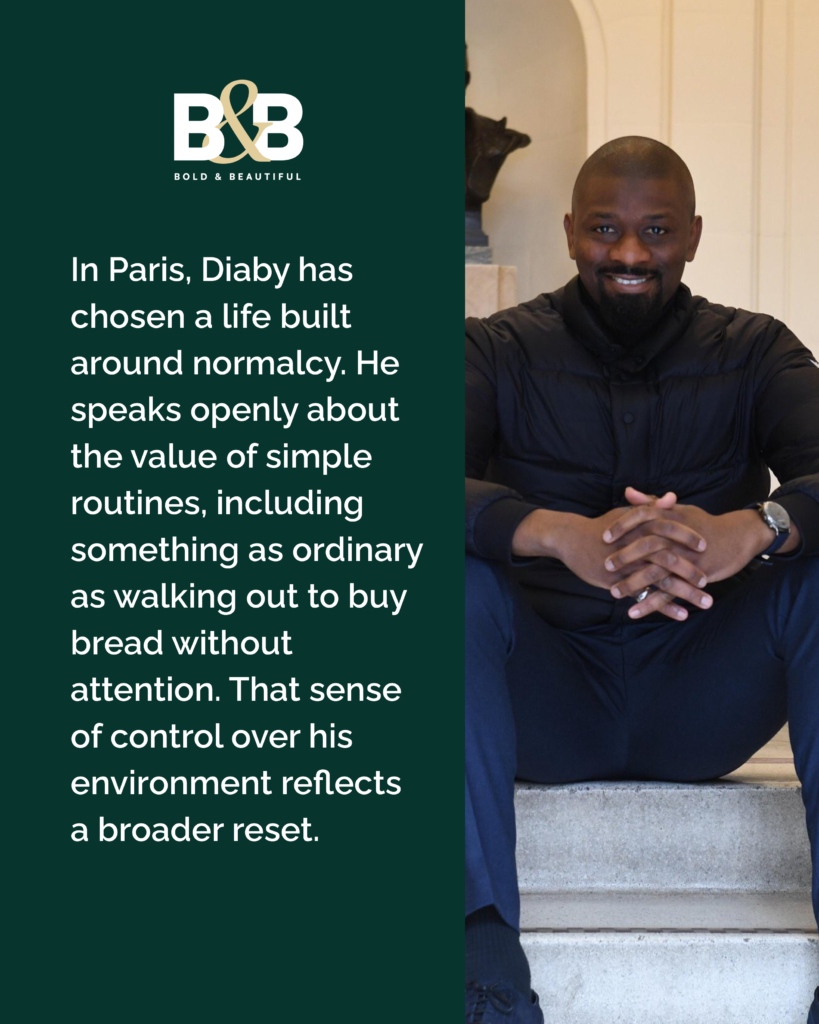
In Paris, Diaby has chosen a life built around normalcy. He speaks openly about the value of simple routines, including something as ordinary as walking out to buy bread without attention. That sense of control over his environment reflects a broader reset. It is a conscious departure from a career where schedules, performance, and recovery dictated daily life. The shift is not framed as withdrawal. It is framed as alignment.
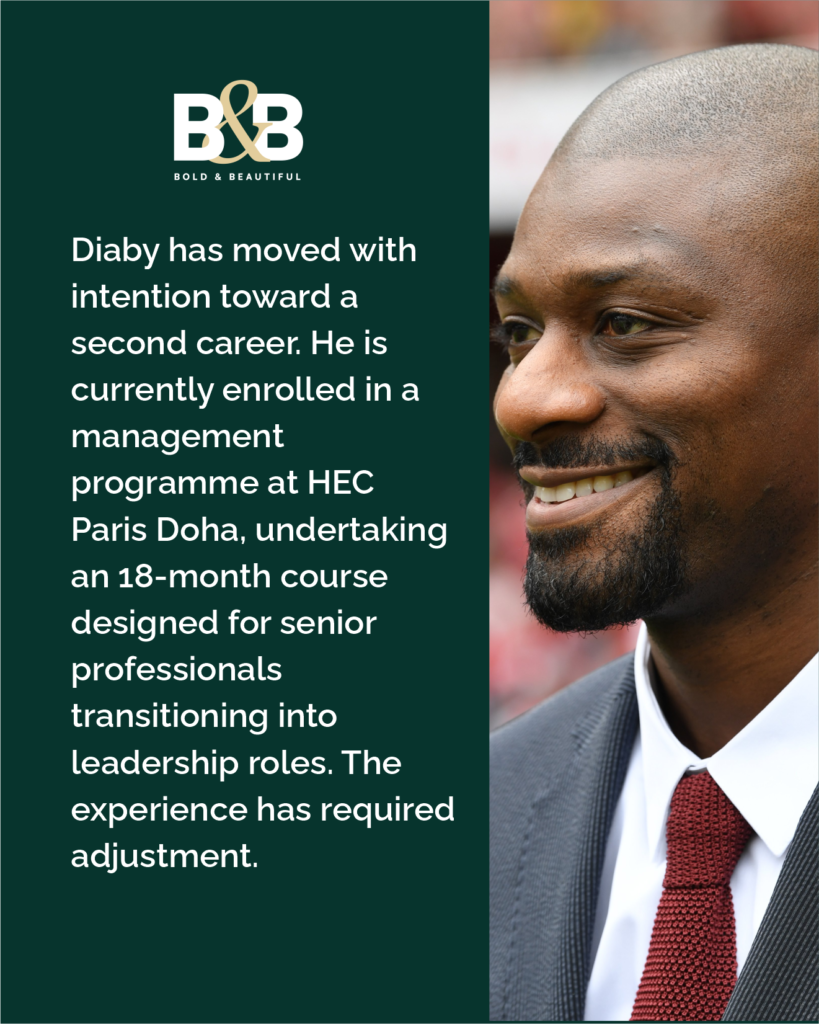
At the same time, Diaby has moved with intention toward a second career. He is currently enrolled in a management programme at HEC Paris Doha, undertaking an 18-month course designed for senior professionals transitioning into leadership roles. The experience has required adjustment. Returning to structured learning, completing assignments, and engaging with business language has demanded a different kind of discipline. He has approached it with the same focus that once defined his training.
What emerges from this phase is a portrait of reinvention grounded in realism. Diaby is not chasing visibility. He is building capacity. His decision to return to education reflects an understanding that elite sport does not automatically translate into long-term career security. It requires planning, adaptation, and the willingness to start again in unfamiliar territory.
His story offers a perspective that resonates beyond football. Transition, particularly after high-performance careers, is rarely straightforward. Diaby’s approach is measured. He has stepped away from one identity without rushing into another. In doing so, he has created a model based on choice rather than necessity. The quiet life he now values is not an absence of ambition. It is a redefinition of it.