

At an age when most sprint careers are archived and celebrated in retrospect, Allyson Felix has chosen a different direction. The most decorated woman in Olympic track and field history has announced her return to competitive athletics, setting her sights on the 2028 Summer Olympics. The decision places her back in a system she once dominated, this time with a new context shaped by age, motherhood, and legacy.
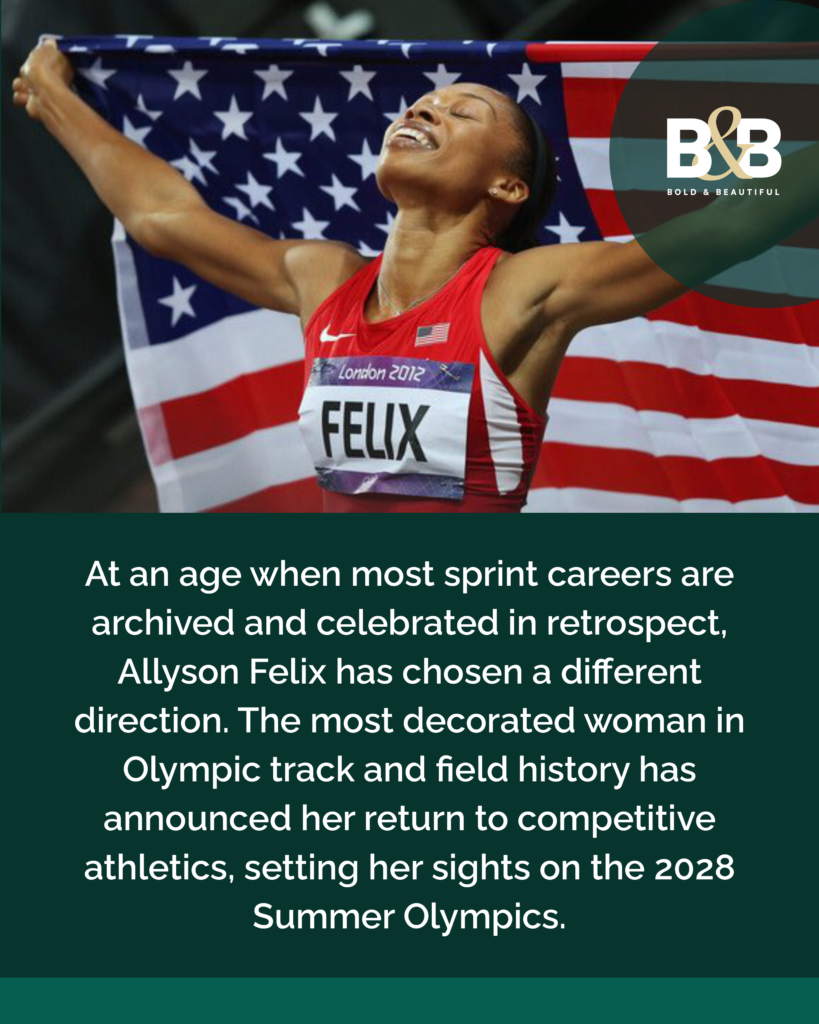
Felix retired in 2022 after a career that produced 11 Olympic medals, including seven golds, a record in women’s track and field. Her exit at the time felt complete. She had transitioned into business, advocacy, and family life, building influence beyond the track. The return reframes that narrative. It signals unfinished business tied not to statistics, but to place. Los Angeles, her hometown, presents a stage she never experienced as an Olympian, and that absence has become a motivating factor in this comeback.
The path back is defined by reality rather than nostalgia. Felix will be 42 by the time the Games begin and must navigate the United States’ highly competitive qualification system. She has already outlined a structured return, including a planned resumption of full training and a gradual re-entry into competition. The challenge is measurable. Sprinting remains one of the most physically demanding disciplines in sport, where margins are defined by fractions of a second and generational turnover is constant.
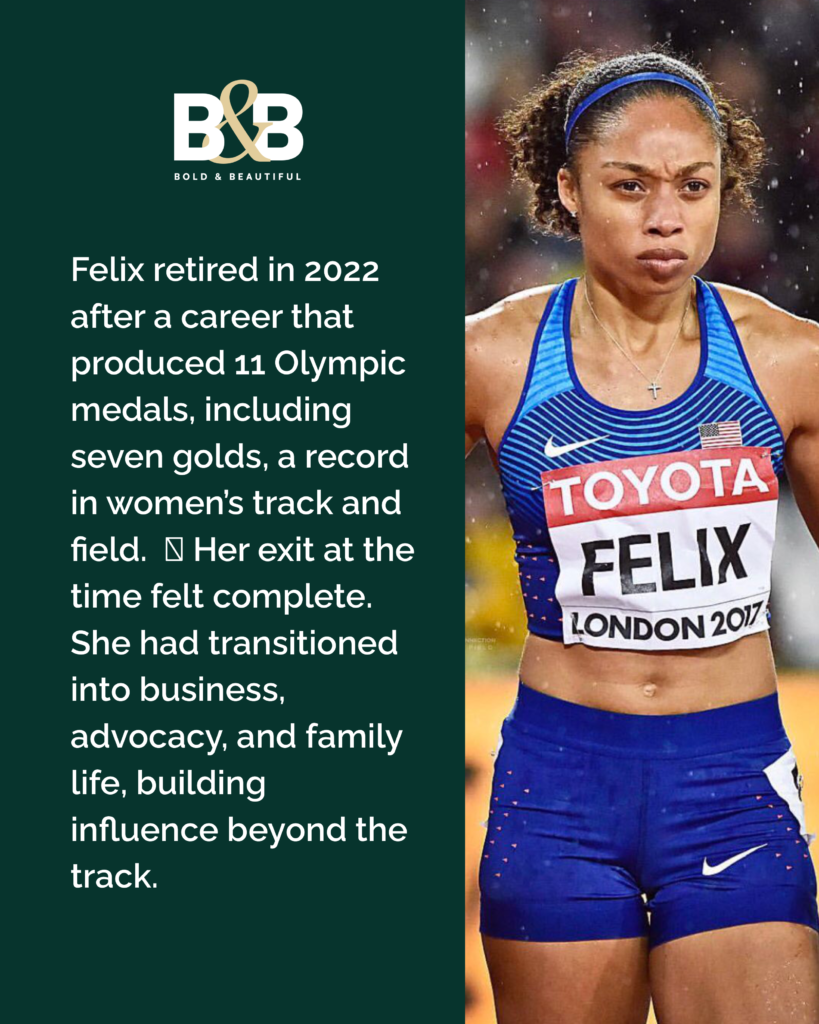
Her return carries broader cultural weight. Felix has long positioned herself at the intersection of performance and advocacy, particularly around maternity rights and equity in sport. This decision extends that narrative into performance again. It challenges assumptions about peak age, motherhood, and the lifecycle of elite female athletes. Her framing is direct. The attempt itself holds value, independent of outcome.
Within athletics, the response has been a mix of respect and realism. Felix’s record secures her legacy regardless of what follows. The comeback introduces a different question. What does longevity look like at the highest level of sprinting in this era? For Felix, the answer will be tested in competition, not conversation.
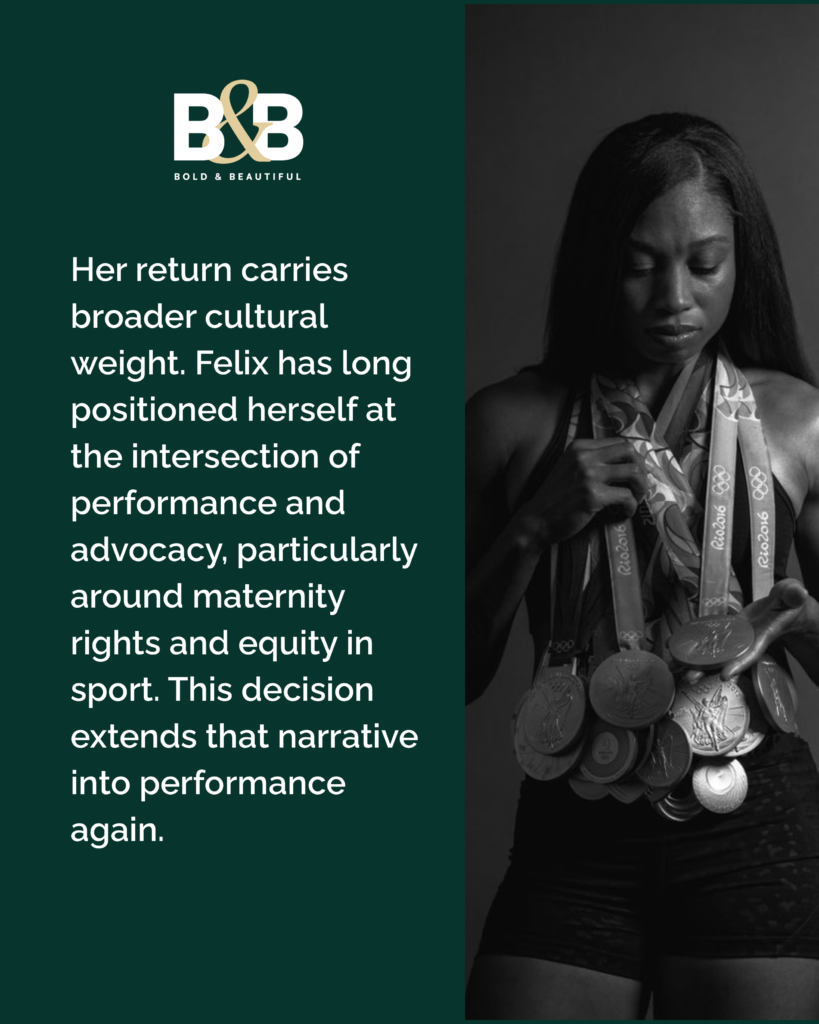
What remains clear is intent. This is not a ceremonial return. It is a calculated pursuit shaped by experience, discipline, and a clear understanding of the demands ahead. If she qualifies, it will mark a sixth Olympic appearance on home soil. If she does not, the attempt will still stand as a statement of agency in a sport that rarely accommodates second acts at this level.