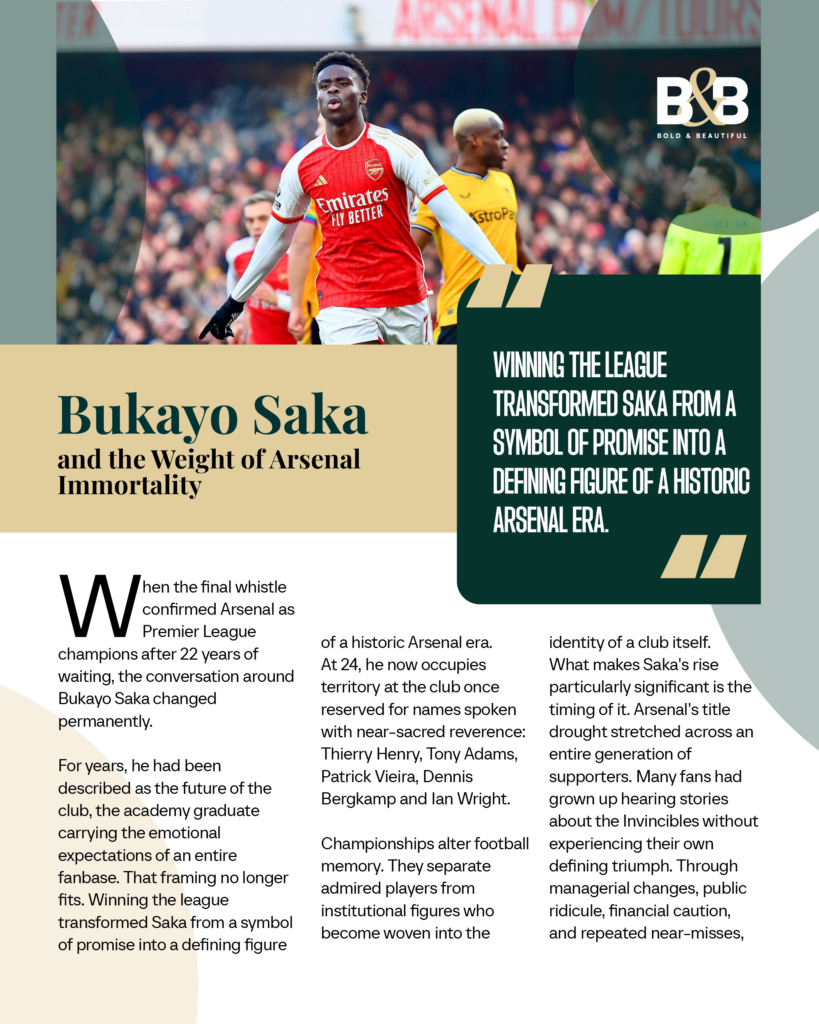
When the final whistle confirmed Arsenal as Premier League champions after 22 years of waiting, the conversation around Bukayo Saka changed permanently. For years, he had been described as the future of the club, the academy graduate carrying the emotional expectations of an entire fanbase. That framing no longer fits. Winning the league transformed Saka from a symbol of promise into a defining figure of a historic Arsenal era. At 24, he now occupies territory at the club once reserved for names spoken with near-sacred reverence: Thierry Henry, Tony Adams, Patrick Vieira, Dennis Bergkamp and Ian Wright. Championships alter football memory. They separate admired players from institutional figures who become woven into the identity of a club itself.
What makes Saka’s rise particularly significant is the timing of it. Arsenal’s title drought stretched across an entire generation of supporters. Many fans had grown up hearing stories about the Invincibles without experiencing their own defining triumph. Through managerial changes, public ridicule, financial caution, and repeated near-misses, the club struggled to reconnect with the authority it once carried in English football. Saka emerged during that uncertainty. He was not purchased as a finished global superstar. He developed publicly through setbacks, pressure, tactical reinvention, and impossible expectation. Supporters watched him evolve from a talented teenager into the emotional centre of the team. That intimacy matters in football culture. Arsenal fans did not simply witness success from Saka. They grew with him.
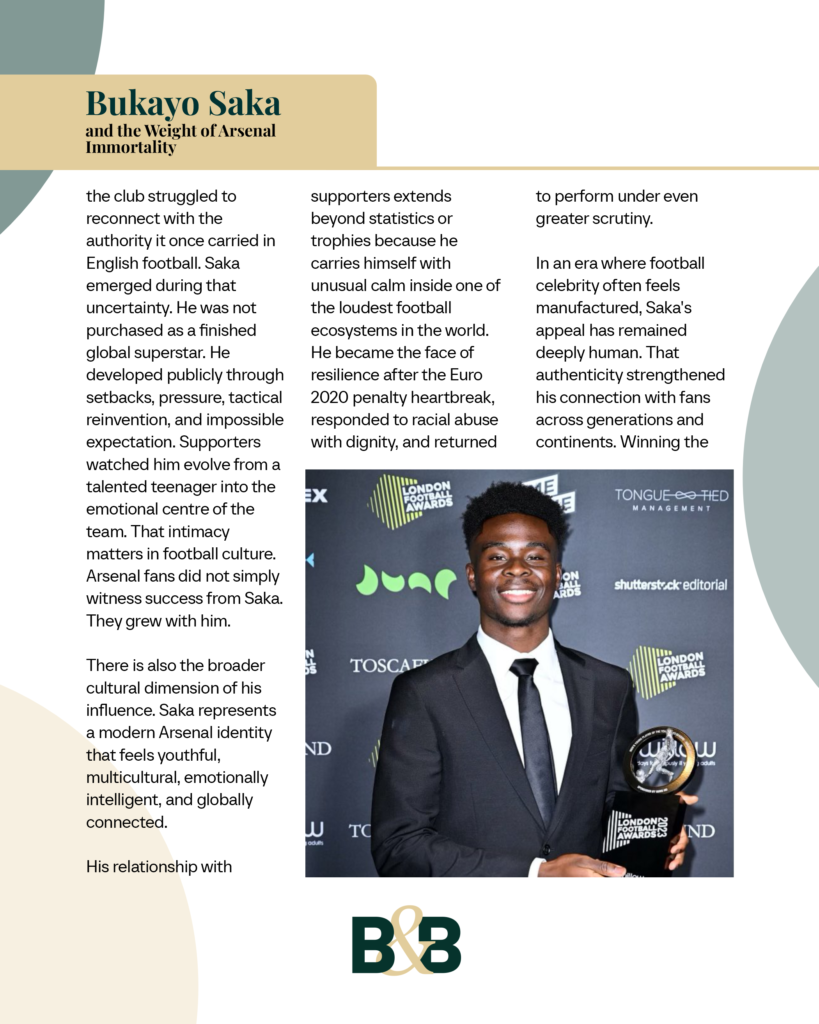
There is also the broader cultural dimension of his influence. Saka represents a modern Arsenal identity that feels youthful, multicultural, emotionally intelligent, and globally connected. His relationship with supporters extends beyond statistics or trophies because he carries himself with unusual calm inside one of the loudest football ecosystems in the world. He became the face of resilience after the Euro 2020 penalty heartbreak, responded to racial abuse with dignity, and returned to perform under even greater scrutiny. In an era where football celebrity often feels manufactured, Saka’s appeal has remained deeply human. That authenticity strengthened his connection with fans across generations and continents. Winning the league elevated that bond into mythology.
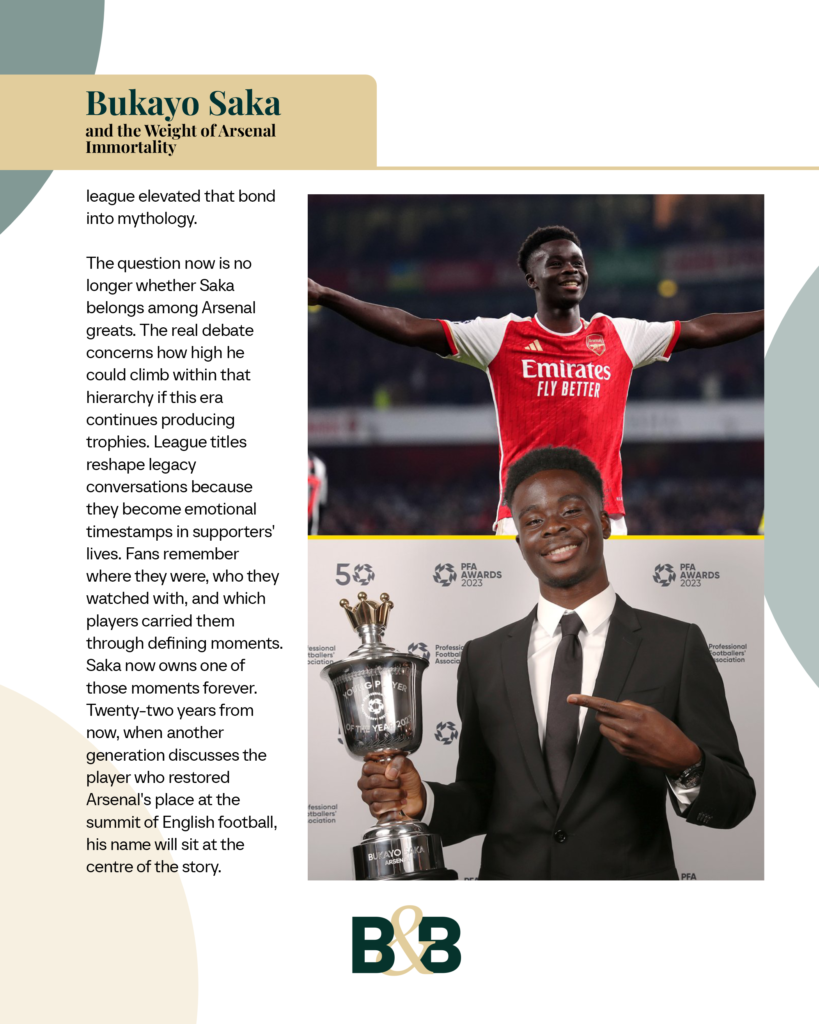
The question now is no longer whether Saka belongs among Arsenal greats. The real debate concerns how high he could climb within that hierarchy if this era continues producing trophies. League titles reshape legacy conversations because they become emotional timestamps in supporters’ lives. Fans remember where they were, who they watched with, and which players carried them through defining moments. Saka now owns one of those moments forever. Twenty-two years from now, when another generation discusses the player who restored Arsenal’s place at the summit of English football, his name will sit at the centre of the story.