
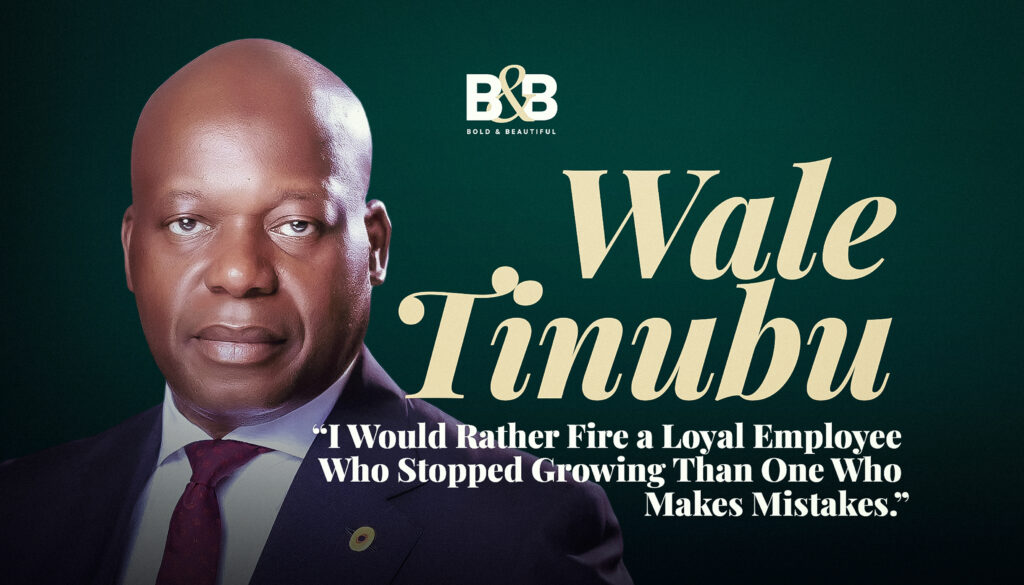
A single sentence from Oando Group Chief Executive, Wale Tinubu, triggered one of the week’s most intense conversations across Nigeria’s corporate and entrepreneurial circles: “I would rather fire a loyal employee who stopped growing than one who makes mistakes.” The remark moved rapidly through executive WhatsApp groups, LinkedIn timelines, startup communities, and HR forums because it confronted a deeply rooted workplace belief that loyalty alone guarantees relevance. In a business culture where years of service are often treated as proof of value, Tinubu’s comment introduced a harder metric centred on adaptability, learning, and measurable evolution.
The reactions arrived almost immediately and revealed how sharply divided modern workplace expectations have become. “This is harsh but true,” one Lagos-based tech founder wrote on LinkedIn. “The people willing to fail, learn and improve are usually the ones building the future of your company.” Another commenter disagreed strongly, arguing that “African workplaces already treat employees as disposable. Loyalty should still count for something.” A senior HR executive in Abuja described the statement as “uncomfortable leadership honesty,” adding that many organisations privately think this way but avoid saying it publicly because of how employees may interpret it. Across industries, the quote became less about Wale Tinubu personally and more about the changing definition of professional value in a fast-moving economy.
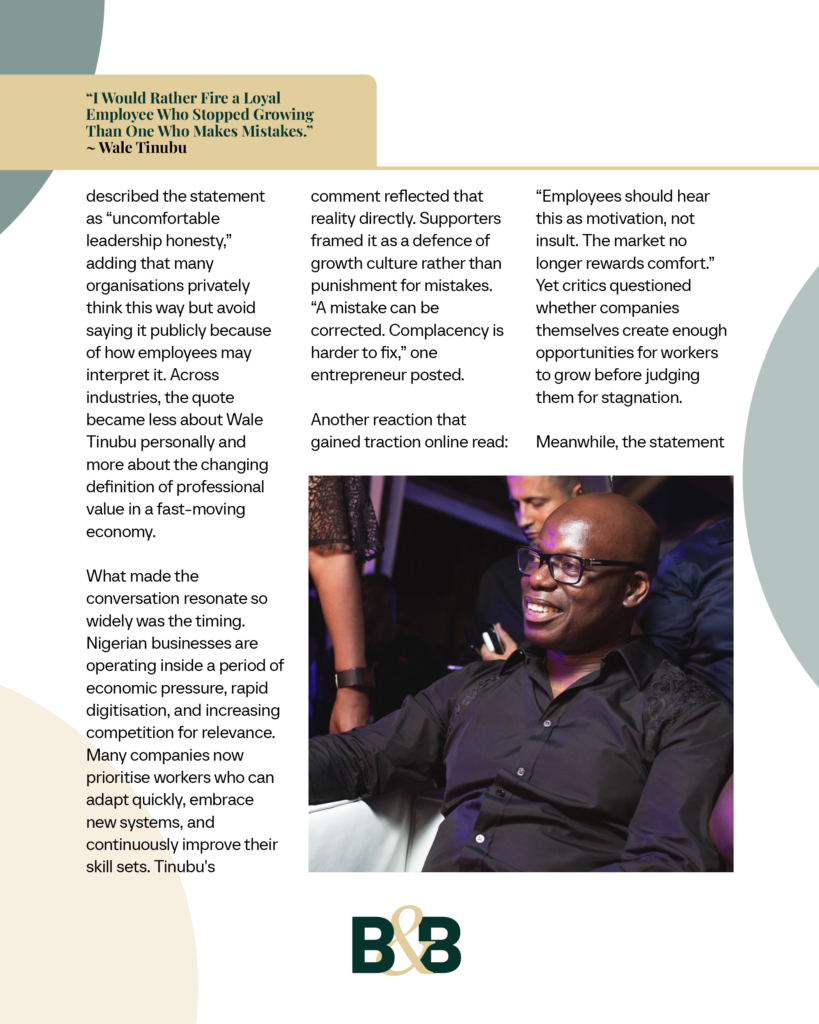
What made the conversation resonate so widely was the timing. Nigerian businesses are operating inside a period of economic pressure, rapid digitisation, and increasing competition for relevance. Many companies now prioritise workers who can adapt quickly, embrace new systems, and continuously improve their skill sets. Tinubu’s comment reflected that reality directly. Supporters framed it as a defence of growth culture rather than punishment for mistakes. “A mistake can be corrected. Complacency is harder to fix,” one entrepreneur posted. Another reaction that gained traction online read: “Employees should hear this as motivation, not insult. The market no longer rewards comfort.” Yet critics questioned whether companies themselves create enough opportunities for workers to grow before judging them for stagnation.
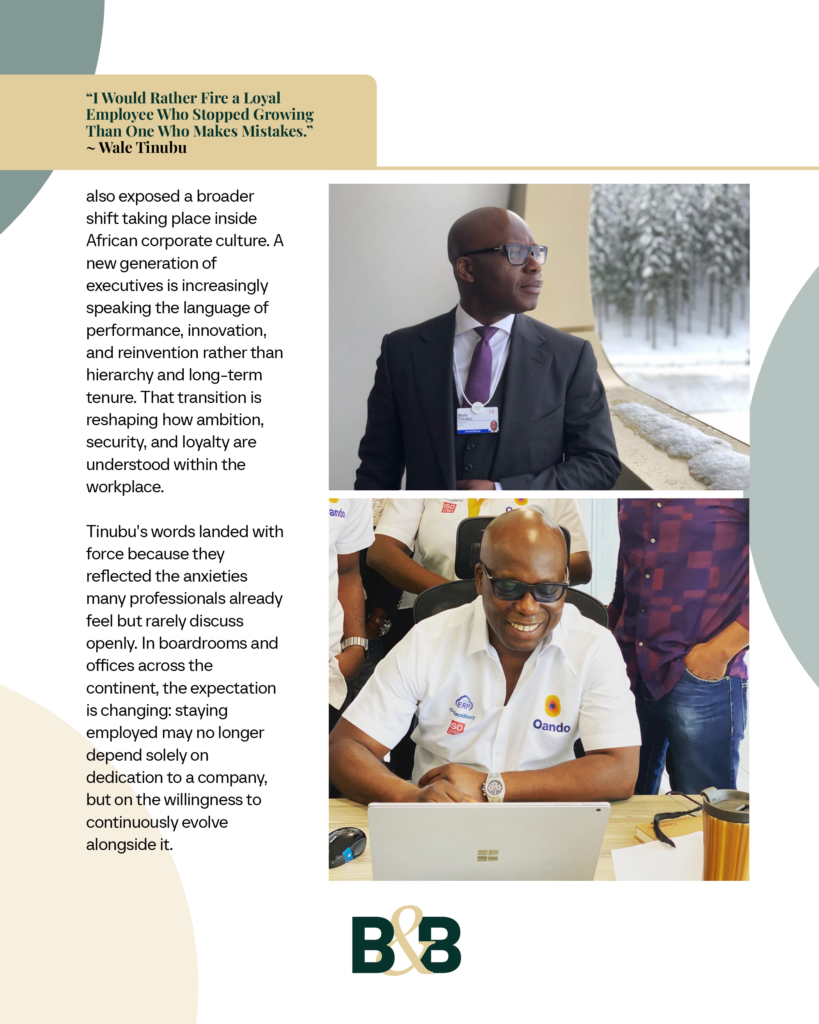
Beyond the online debate, the statement also exposed a broader shift taking place inside African corporate culture. A new generation of executives is increasingly speaking the language of performance, innovation, and reinvention rather than hierarchy and long-term tenure. That transition is reshaping how ambition, security, and loyalty are understood within the workplace. Tinubu’s words landed with force because they reflected the anxieties many professionals already feel but rarely discuss openly. In boardrooms and offices across the continent, the expectation is changing: staying employed may no longer depend solely on dedication to a company, but on the willingness to continuously evolve alongside it.