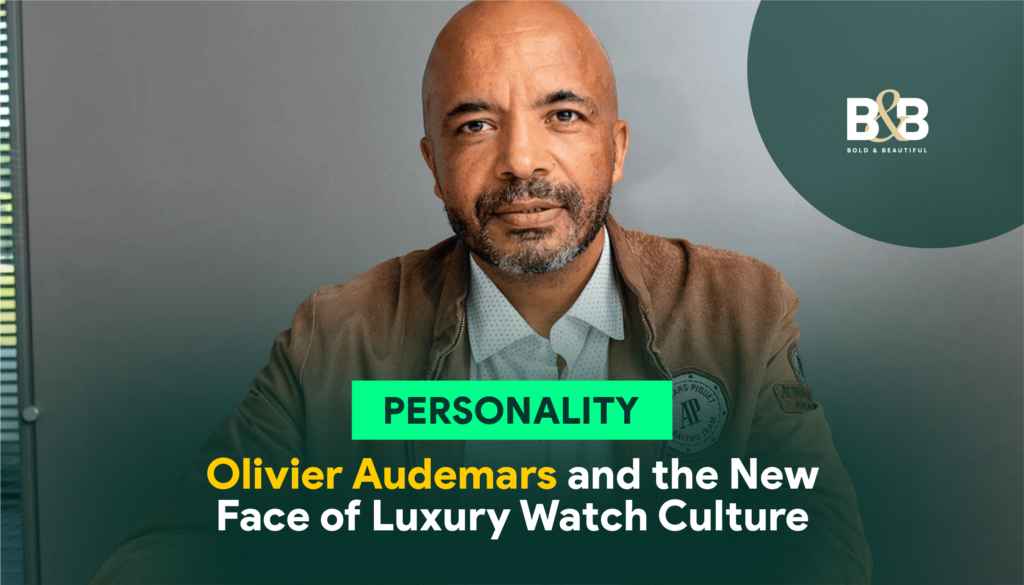
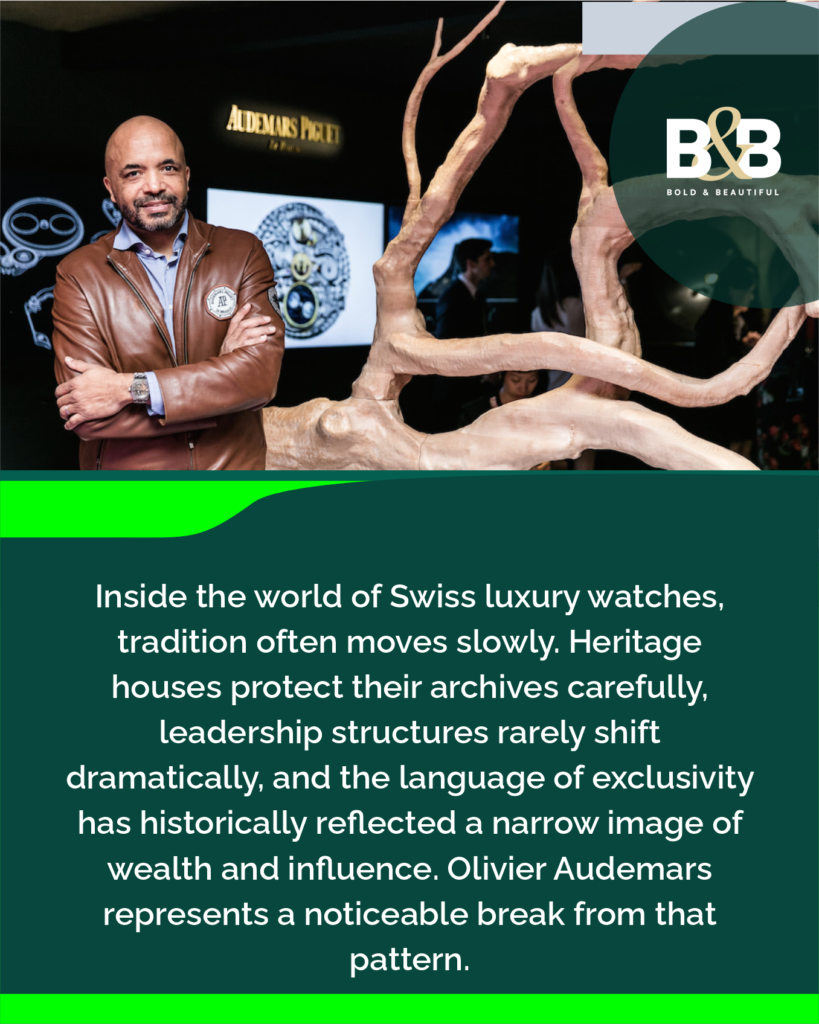
Inside the world of Swiss luxury watches, tradition often moves slowly. Heritage houses protect their archives carefully, leadership structures rarely shift dramatically, and the language of exclusivity has historically reflected a narrow image of wealth and influence. Olivier Audemars represents a noticeable break from that pattern. As one of the prominent Black executives associated with the global identity of Audemars Piguet, he has become part of a wider transformation reshaping how luxury brands engage culture, creativity, and a younger international audience. His growing visibility reflects an industry learning that prestige today is built as much through cultural fluency as craftsmanship.
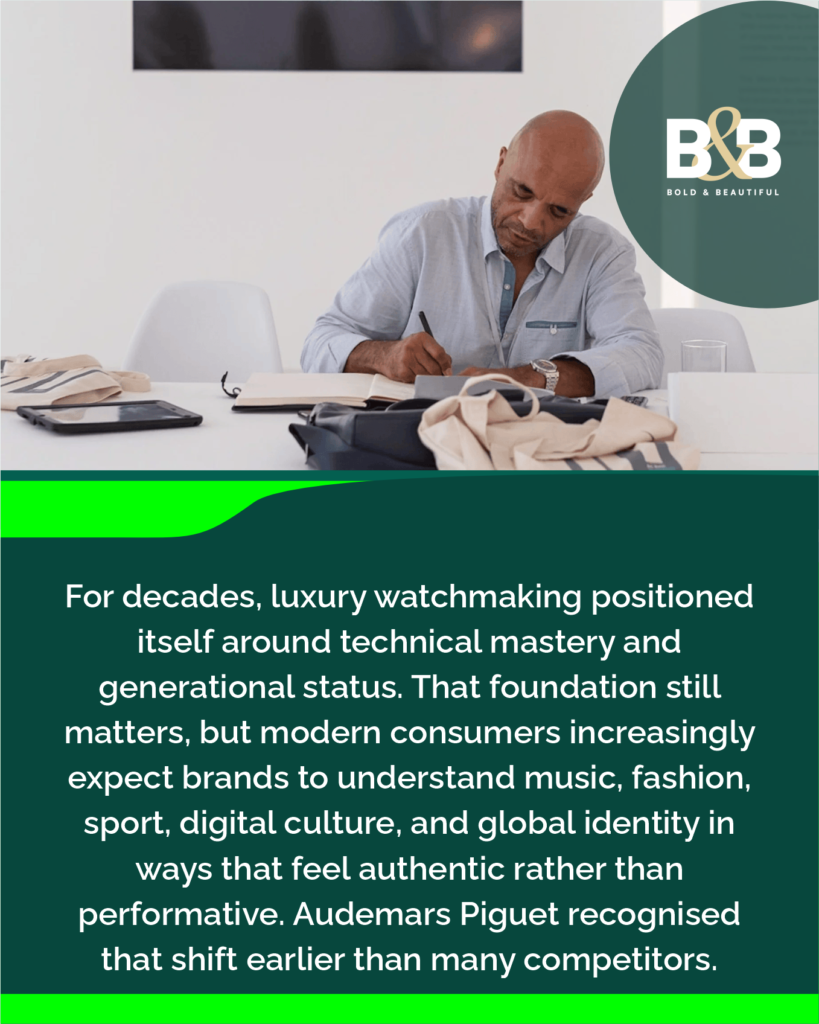
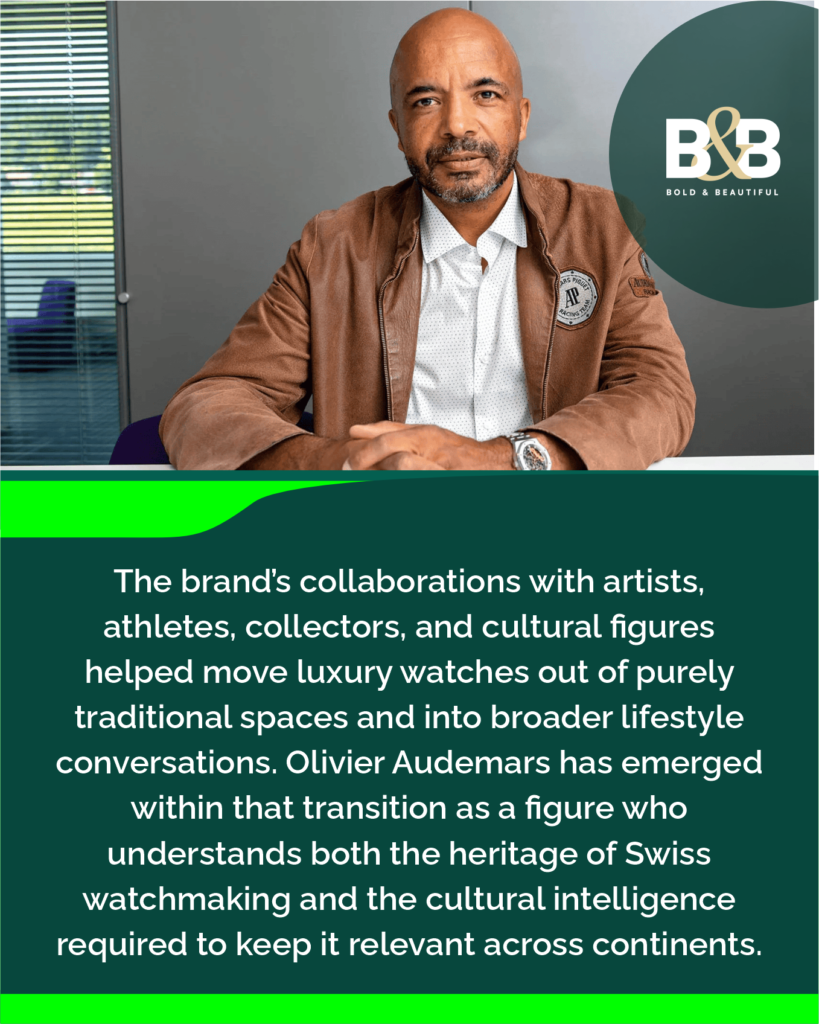
For decades, luxury watchmaking positioned itself around technical mastery and generational status. That foundation still matters, but modern consumers increasingly expect brands to understand music, fashion, sport, digital culture, and global identity in ways that feel authentic rather than performative. Audemars Piguet recognised that shift earlier than many competitors. The brand’s collaborations with artists, athletes, collectors, and cultural figures helped move luxury watches out of purely traditional spaces and into broader lifestyle conversations. Olivier Audemars has emerged within that transition as a figure who understands both the heritage of Swiss watchmaking and the cultural intelligence required to keep it relevant across continents.
His presence also carries symbolic weight in an industry where Black leadership remains limited at the executive level. Luxury fashion and jewellery have made visible progress in representation over recent years, yet high horology continues to lag behind in public-facing diversity. That reality makes figures like Olivier Audemars particularly significant. He occupies a space historically associated with old European exclusivity while participating in conversations increasingly shaped by African influence, Black creativity, and global youth culture. In many ways, his role reflects how luxury itself is changing. Today’s aspirational consumers are as likely to discover a timepiece through music videos, NBA tunnel fashion, Formula One culture, or Afrobeats celebrity style as through traditional advertising campaigns.
What makes this shift important is the broader redefinition of luxury happening globally. Modern prestige is no longer communicated purely through price or scarcity. Cultural relevance now plays a central role in how brands maintain influence. Audemars Piguet’s relationship with entertainment, sport, and contemporary art positioned the company strongly within that landscape, and executives capable of navigating those intersections have become increasingly valuable. Olivier Audemars stands at the centre of that evolution, helping shape a luxury culture that feels less rigid, more globally aware, and increasingly connected to the people driving contemporary influence around the world.