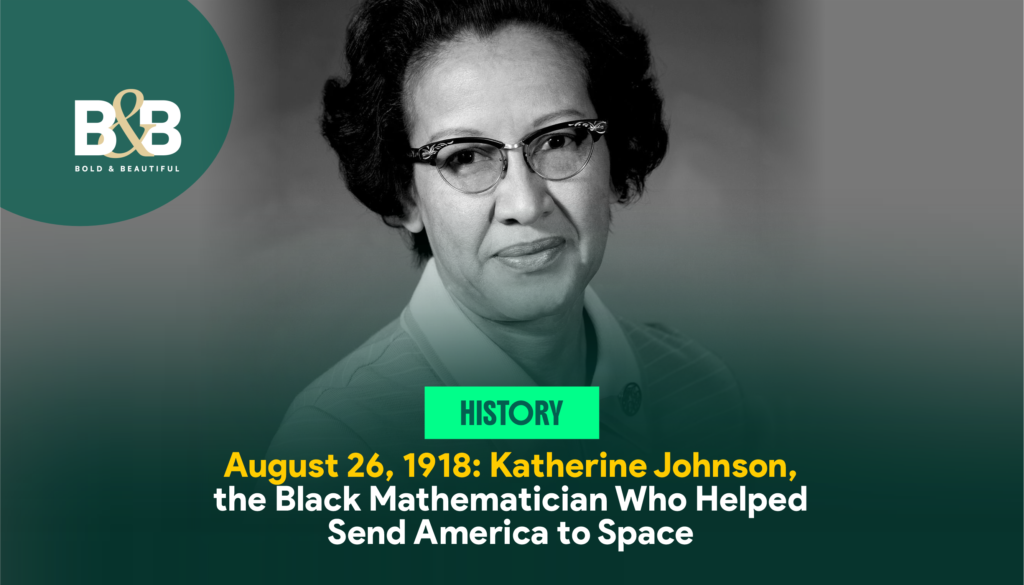
Before astronauts became household names and before computers could calculate a trajectory in seconds, there were mathematicians whose work had to be precise enough to bring a spacecraft home. Katherine Johnson was one of them. Born on August 26, 1918, in White Sulphur Springs, West Virginia, she grew up with an extraordinary instinct for numbers and became one of the mathematicians whose calculations helped shape America’s early journey into space.
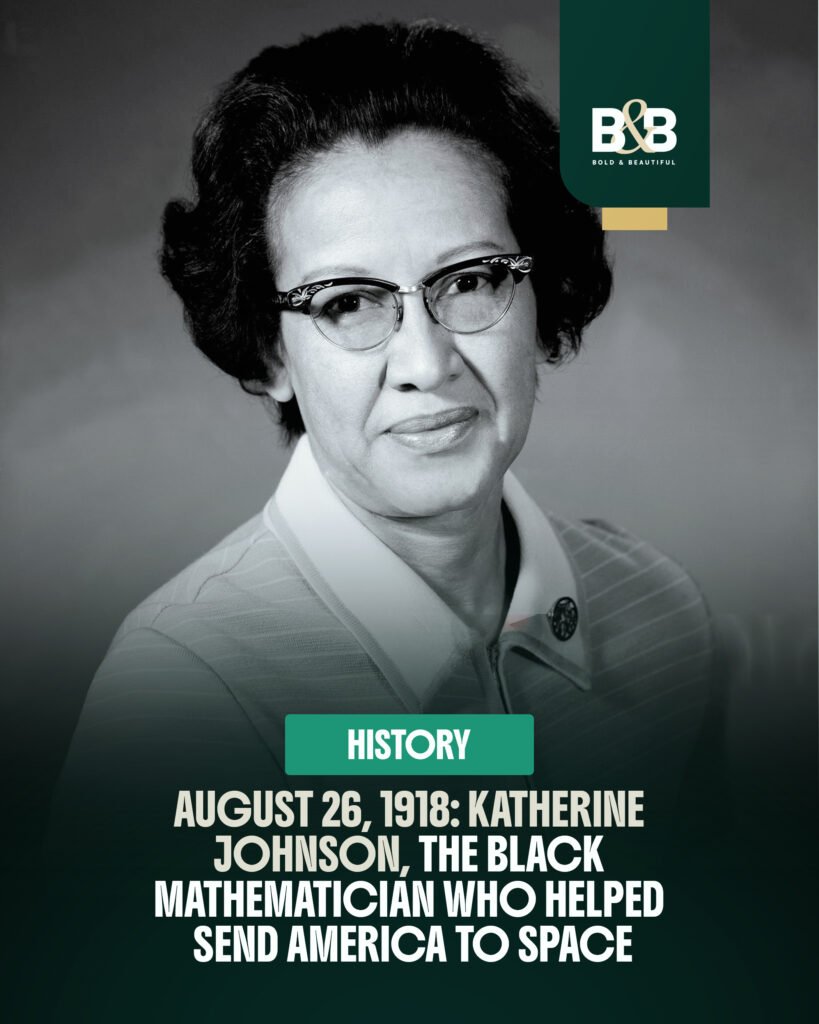
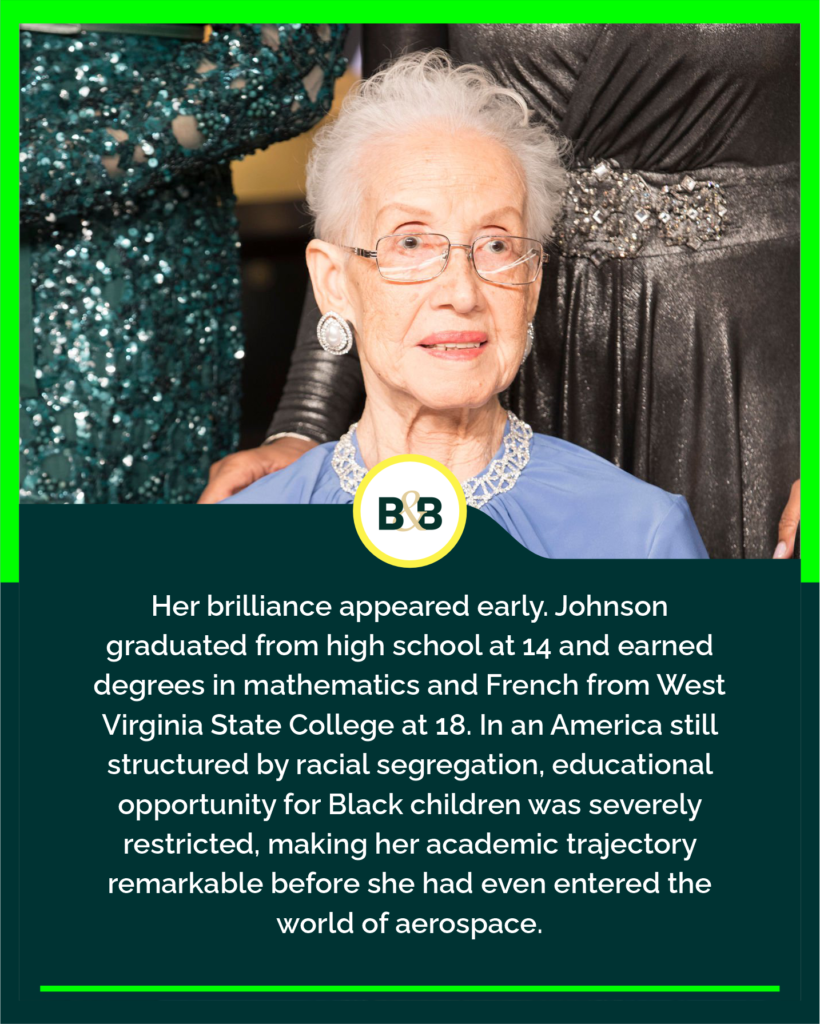
Her brilliance appeared early. Johnson graduated from high school at 14 and earned degrees in mathematics and French from West Virginia State College at 18. In an America still structured by racial segregation, educational opportunity for Black children was severely restricted, making her academic trajectory remarkable before she had even entered the world of aerospace.
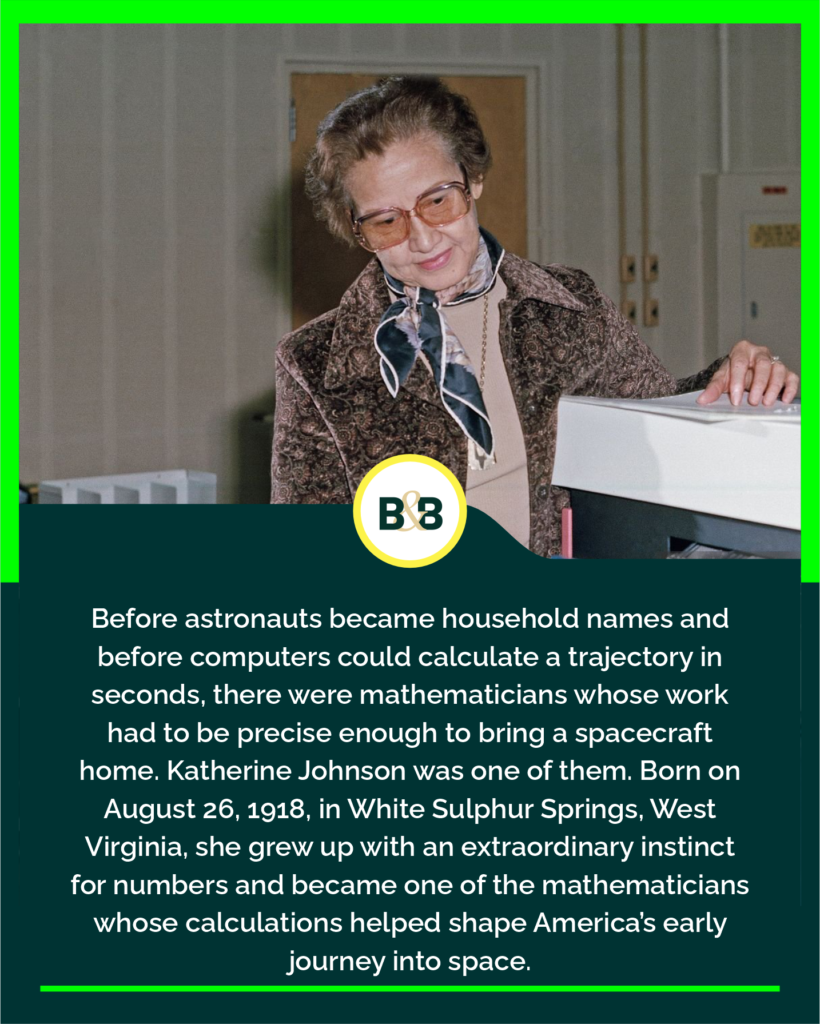
In 1953, Johnson joined the National Advisory Committee for Aeronautics, the organisation that preceded NASA, as one of the Black women working as human “computers” at Langley Research Center. Her work quickly moved beyond routine calculation. She performed the trajectory analysis for Alan Shepard’s 1961 Freedom 7 mission, the first human spaceflight by an American.
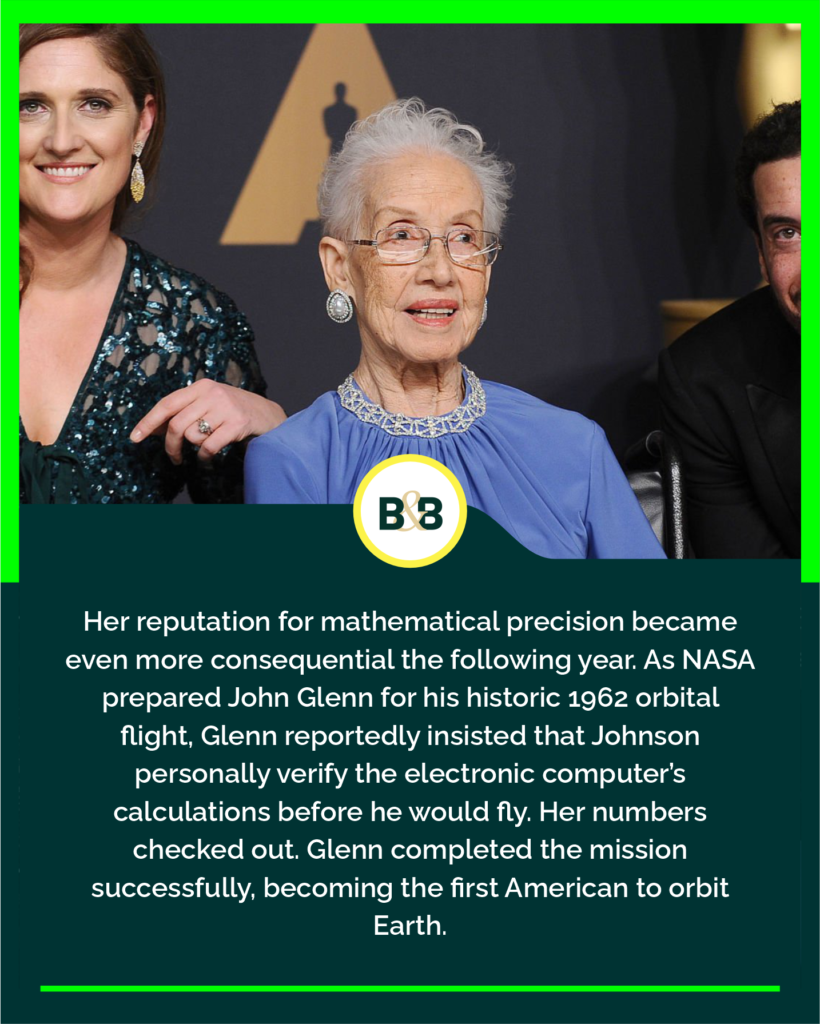
Her reputation for mathematical precision became even more consequential the following year. As NASA prepared John Glenn for his historic 1962 orbital flight, Glenn reportedly insisted that Johnson personally verify the electronic computer’s calculations before he would fly. Her numbers checked out. Glenn completed the mission successfully, becoming the first American to orbit Earth.
Johnson’s work did not end with Mercury. She went on to contribute calculations to the Apollo programme, including the trajectory for Apollo 11’s journey to the Moon, and later worked on the Space Shuttle programme and Earth Resources Technology Satellite. Across a 33-year career at NASA, she authored or co-authored more than two dozen research reports.
Yet the most enduring part of Katherine Johnson’s story may be what happened after the numbers had done their work. Her contribution to American space exploration became increasingly recognised, culminating in the Presidential Medal of Freedom in 2015. She died in 2020 at 101, but her name now sits firmly within the history of space exploration and STEM. The woman who once counted everything became one of the people whose calculations helped humanity look beyond Earth.