

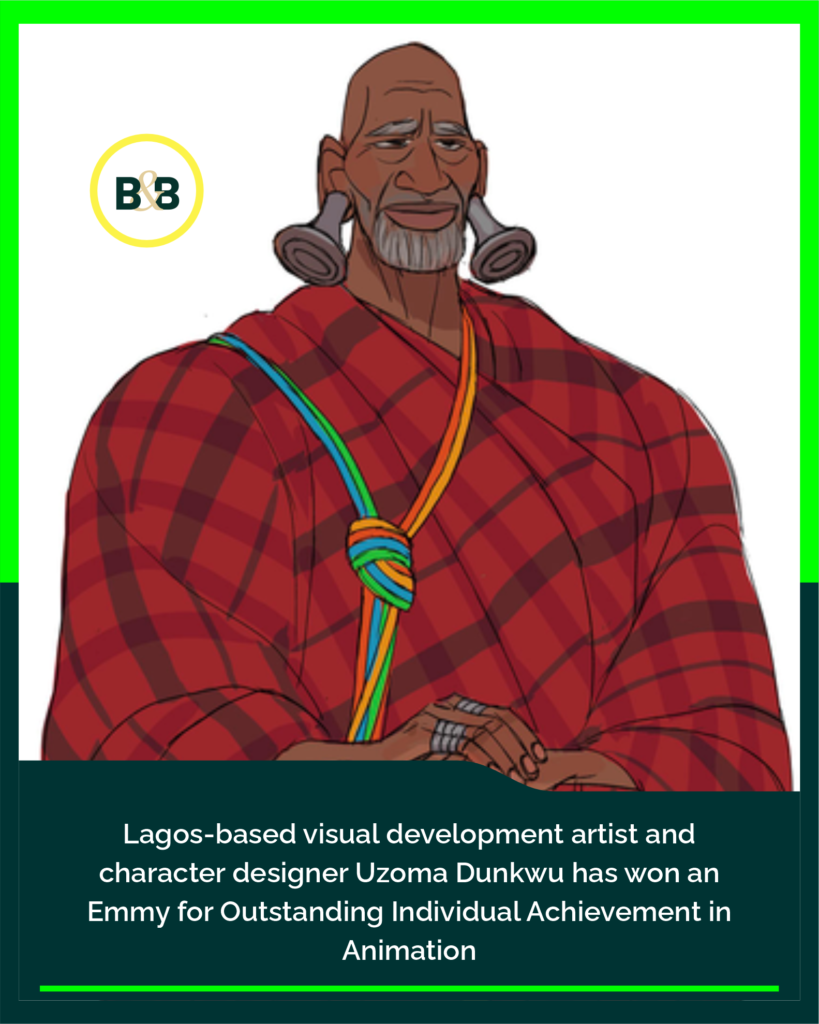
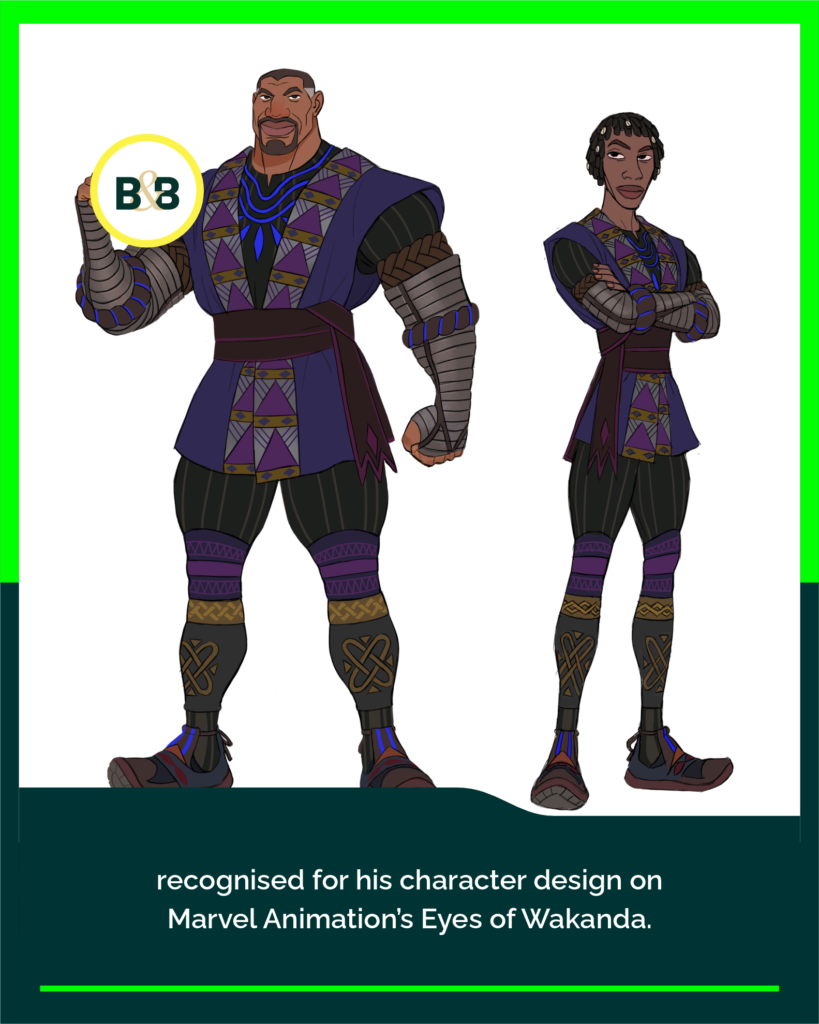
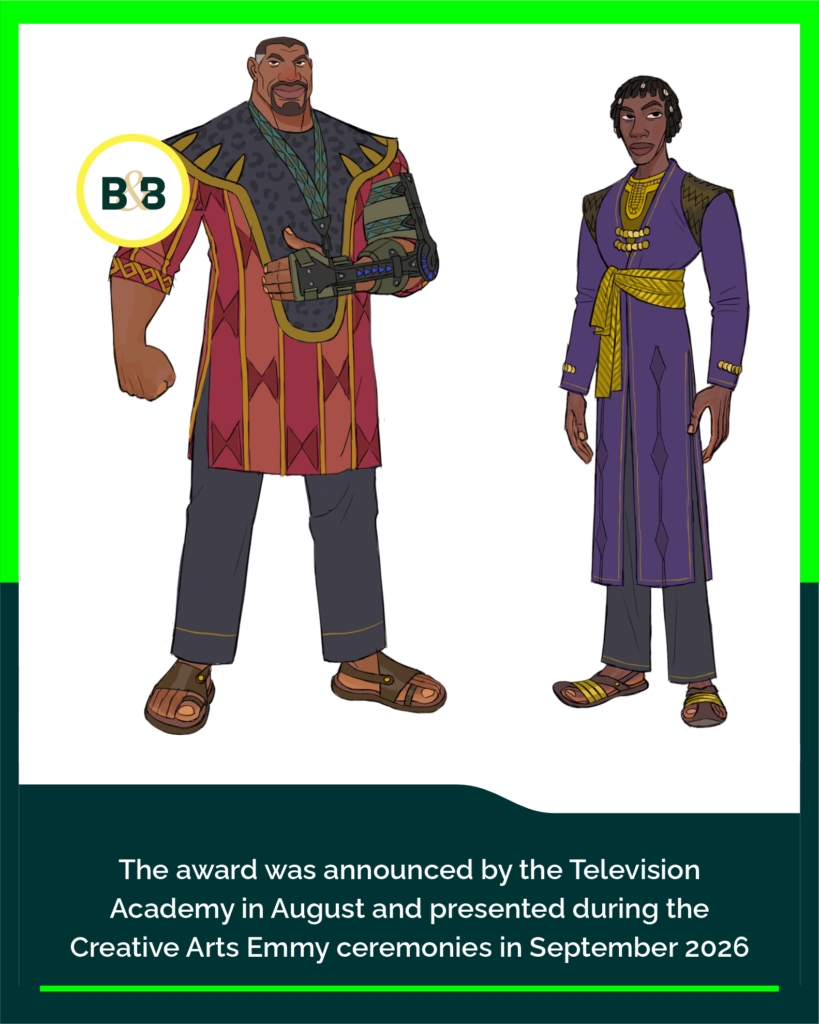
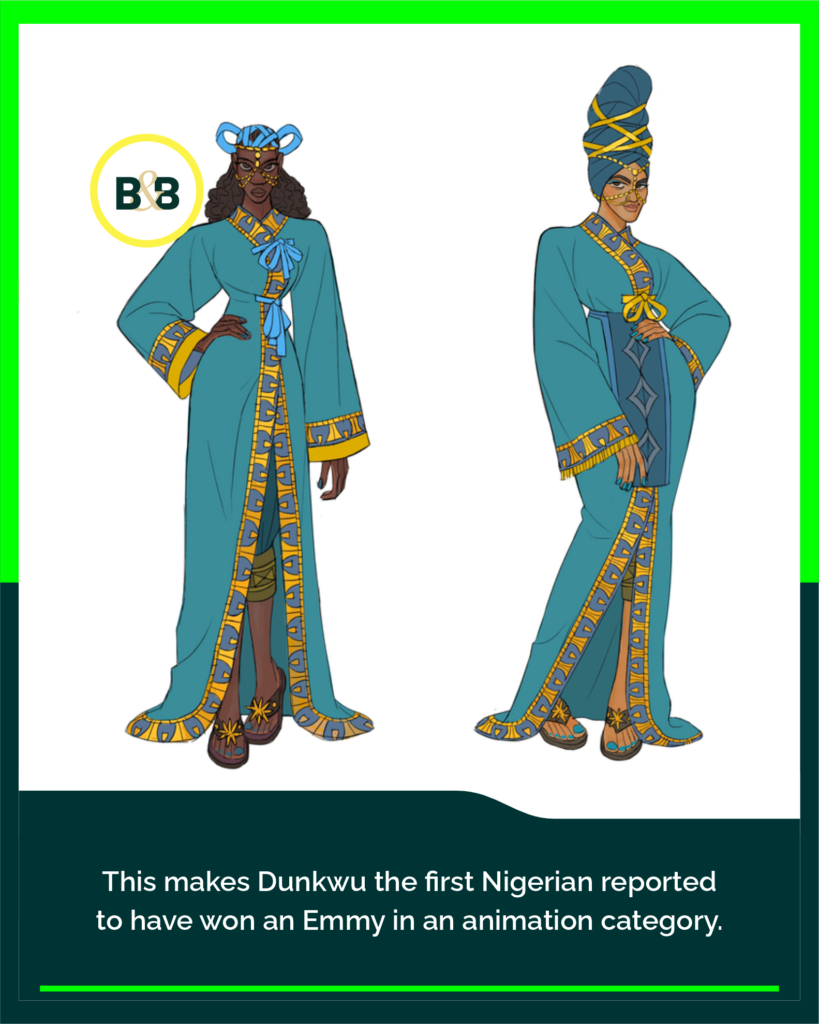
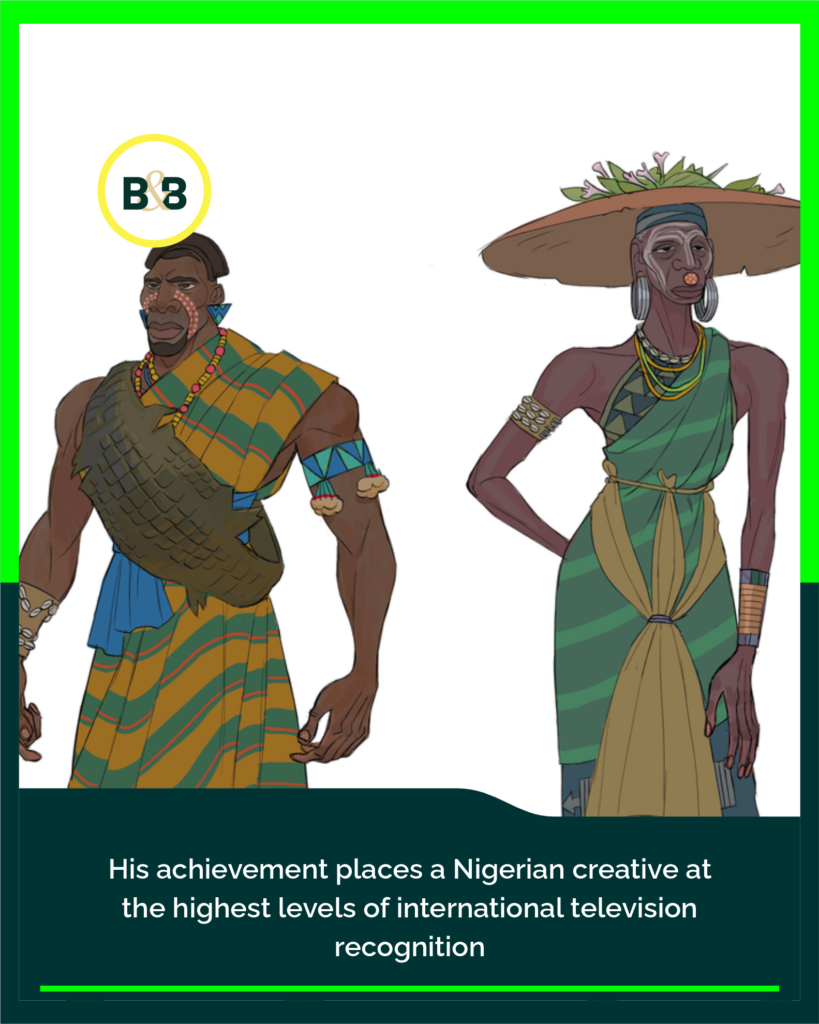
Nigeria has a new milestone in global animation, and it began with the art of bringing a character to life. Lagos-based visual development artist and character designer Uzoma Dunkwu has won an Emmy for Outstanding Individual Achievement in Animation, recognised for his character design on Marvel Animation’s Eyes of Wakanda. The award, announced by the Television Academy in August and presented during the Creative Arts Emmy ceremonies in September 2026, makes Dunkwu the first Nigerian reported to have won an Emmy in an animation category. His achievement places a Nigerian creative at the highest levels of international television recognition for a discipline that audiences may not always notice, but without which animated worlds would have no faces.


Dunkwu received the honour for the episode “Into the Lion’s Den”, part of the four-episode Eyes of Wakanda anthology released on Disney+ in August 2025. The series follows Wakandan operatives across different periods of history as they pursue dangerous vibranium artefacts. Its visual world draws on African cultures, historical references and the fictional kingdom’s distinctive identity. Character design is central to making that world convincing. Clothing, facial features, posture, silhouette and detail help communicate who a character is, where they belong and what their presence means within the story. Dunkwu’s award recognises the creative work behind those decisions.
His involvement with the production began in August 2021, when he joined the project as an early concept artist under director Todd Harris. Dunkwu helped develop initial designs for five Dora Milaje characters, including Noni. Those early concepts informed later character development across the series, with Dunkwu also contributing to designs for figures including Old Noni, Kuda, Tafari, High Councilman Rakim and an 1885 Wakandan queen. The work required more than drawing striking figures. It involved developing characters who could belong to a coherent visual world while carrying the details needed to distinguish their identities, roles and historical settings.
Dunkwu’s route into the industry was not the conventional path through an animation school or an established overseas studio. He studied electrical and electronics engineering at the University of Benin while continuing to develop his artistic abilities independently. His interests grew through illustration, comics, concept art and animation, eventually leading to professional work for major entertainment companies. His portfolio includes projects associated with Marvel, Netflix and Disney, alongside work on African animated properties such as Iyanu. Building that career from Lagos gives the Emmy particular significance for young Nigerian artists who may see international animation as an industry accessible only to people living in its established production centres.
The recognition also deserves a closer look because of the category in which Dunkwu won. The Television Academy’s Outstanding Individual Achievement in Animation awards are juried rather than decided through the standard nominations-and-voting process used in many Emmy categories. A panel of professionals reviews the submitted work and determines whether one, several or no entries merit an award. Dunkwu was among the artists recognised in 2026, alongside contributors to Genndy Tartakovsky’s Primal, The Mighty Nein and Star Wars: Visions. His Emmy therefore acknowledges a specific craft contribution, assessed by professionals familiar with the demands of animation.
For African animation, the moment carries significance beyond one artist’s résumé. African stories and visual traditions are increasingly finding places in international animation, but building a sustainable industry requires skilled artists across the production pipeline: character designers, storyboard artists, illustrators, background designers, animators and directors. These roles determine how a story looks and feels long before it reaches a streaming platform. Dunkwu’s work demonstrates that Nigerian creatives can contribute to major global productions from a base in Lagos. It also raises a practical question for the local industry: how can Nigeria develop more pathways for artists to train, collaborate, access international commissions and retain the value of their skills at home?
Dunkwu has also used his experience to support the development of other artists through educational content and training focused on visual development and character design. That dimension matters in an industry where access to specialised knowledge can determine who gets an opportunity to enter professional production. The more Nigerian artists understand the standards, workflows and collaborative demands of international animation, the stronger the country’s talent pool can become. An Emmy does not automatically create studios, financing or jobs, but it gives a visible example of what skilled artists can achieve and offers aspiring creatives a professional benchmark to study.
Uzoma Dunkwu’s Emmy win is a personal achievement with a wider message: Nigerian talent belongs in the conversations shaping global screen culture, including the technical and artistic work behind the finished image. His contribution to Eyes of Wakanda helped build characters within a story rooted in an imagined African world, while his recognition brings attention to the craft that makes such worlds credible. The next challenge is to turn this moment of visibility into lasting opportunity for Nigeria’s animation ecosystem. One award cannot build an industry by itself. It can, however, make it harder to overlook the artists who are already doing the work.