
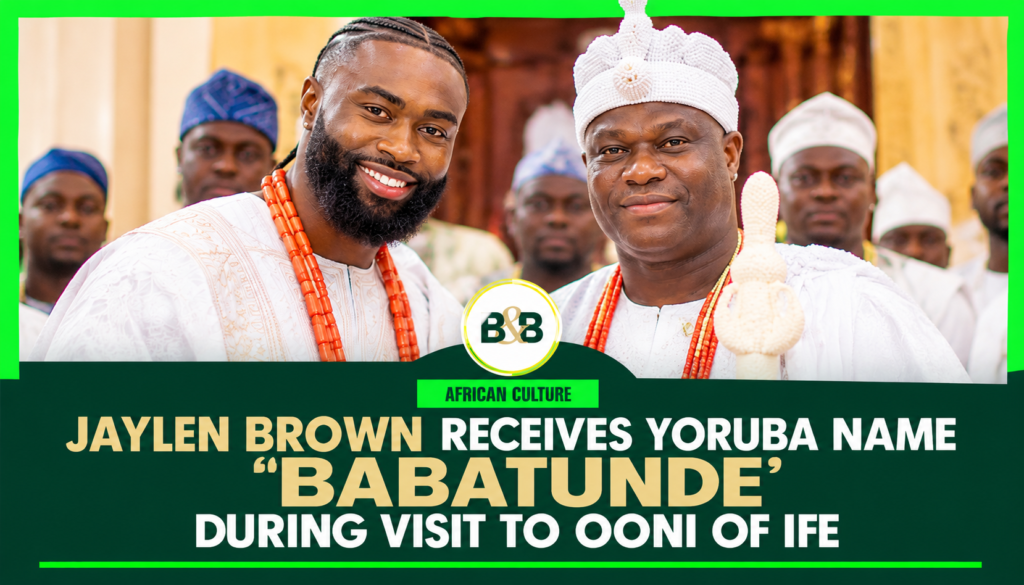
Jaylen Brown has added a Yoruba name to his identity. The NBA champion and 2024 Finals MVP was honoured with the name Babatunde by the Ooni of Ife, Oba Adeyeye Enitan Ogunwusi, during a visit to the monarch’s palace in Ile-Ife, Osun State, on 7 September 2026. The name, which means “the father has returned” or “the ancestor has returned”, was formally bestowed as part of a cultural encounter centred on African heritage, ancestry and the relationship between the continent and its diaspora.
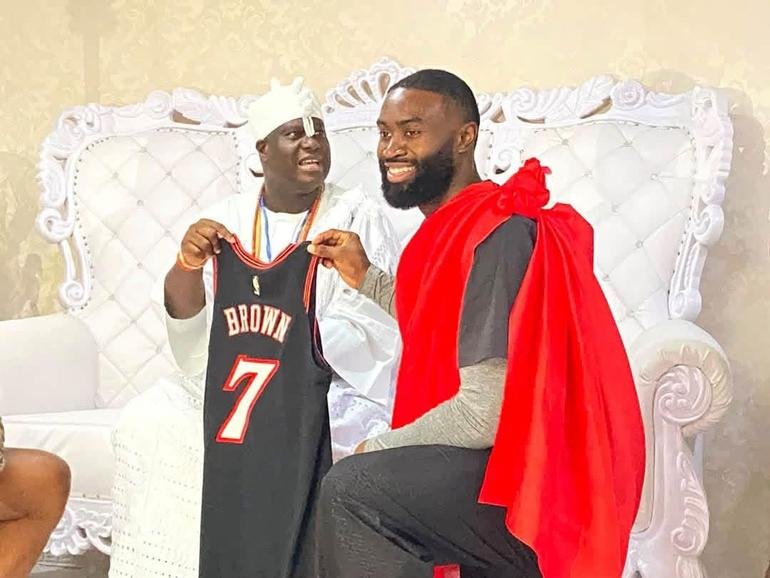
The ceremony placed Brown, one of American basketball’s most recognisable figures, inside an institution closely associated with Yoruba history and traditional authority. Addressing the athlete, the Ooni declared that he would henceforth be known as Babatunde Jaylen Brown. The monarch described the name as a traditional and ancestral identity, expressing the hope that the honour would deepen Brown’s connection with Yoruba heritage. Brown received the gesture with appreciation, thanking the monarch for the welcome and hospitality extended to him and his delegation.
For the Yoruba, Babatunde carries a meaning that reaches beyond its use as a personal name. Formed from baba (father), tún (again) and dé (to arrive), it expresses the idea of a father or ancestor returning. Traditionally associated with the birth of a child following the death of a family elder, the name reflects beliefs about continuity, family lineage and the enduring relationship between generations. Its presentation to Brown therefore carried a cultural significance that extended beyond the ceremony itself.
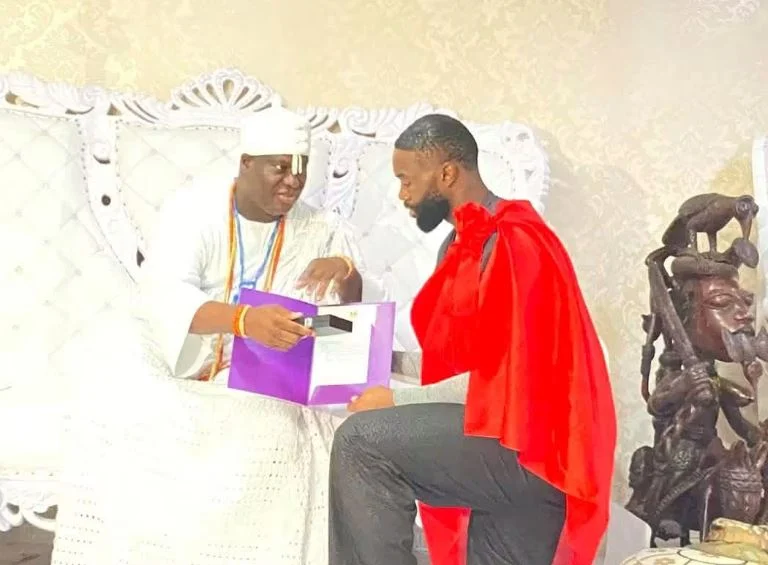
The choice of Ile-Ife as the setting was equally significant. Widely regarded as a spiritual and historical centre of Yoruba civilisation, the ancient city occupies a central place in Yoruba accounts of origin and cultural identity. The Ooni’s palace serves as one of the most visible custodians of these traditions. By receiving Brown there, the monarch brought the basketball star into an encounter with a cultural institution whose influence and historical importance extend well beyond Osun State.
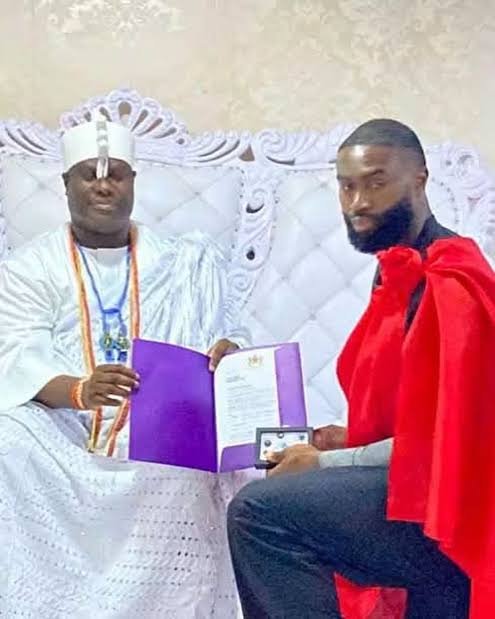
During their meeting, the Ooni spoke about the separation of African families and communities through slavery and forced migration. Millions of people were taken from the continent across generations, often losing access to the names, languages, family histories and cultural practices that connected them to their places of origin. The monarch encouraged people of African descent, particularly those living outside Africa, to visit places associated with their heritage and develop a deeper understanding of the histories that shaped their identities.
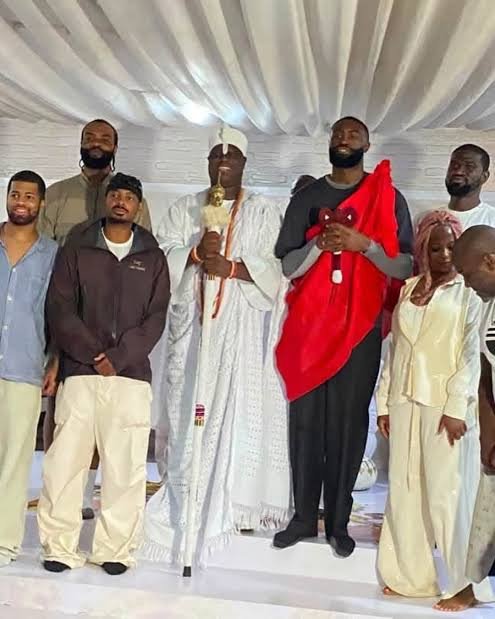
Brown’s visit speaks to an interest that has become increasingly visible among people of African descent in the diaspora: the desire to understand where their families came from and how that history relates to their present identities. For many descendants of enslaved Africans, tracing a specific ancestral line remains difficult because of records lost or disrupted by the transatlantic slave trade. Cultural encounters such as this one can offer meaningful opportunities for learning and reconnection, even when an individual’s precise family lineage has not been independently established.
Away from the palace, Brown has built an accomplished career in the National Basketball Association. Selected third overall in the 2016 NBA Draft, he became a central figure in the Boston Celtics’ 2024 championship victory, earning the NBA Finals Most Valuable Player award. His success has also extended beyond basketball, with interests in education, technology, social development and the opportunities available to young people. His international profile gives the Ile-Ife encounter a reach that few traditional cultural ceremonies receive.
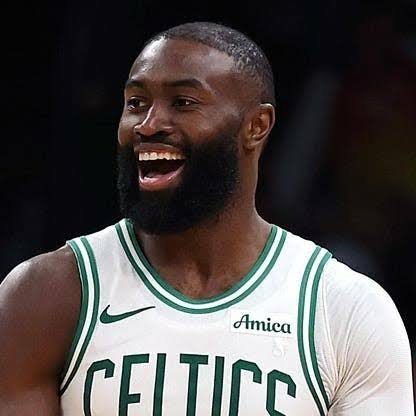
The significance of the visit, however, rests less on the presence of a famous athlete than on the conversation it has brought back into view. African identity does not end at the continent’s borders, and the history of the diaspora cannot be understood without acknowledging the events that separated millions of people from their ancestral homes. By naming Brown Babatunde, the Ooni offered a symbolic gesture of cultural recognition and renewed his invitation to the diaspora to engage with African history on its own ground. For the basketball star, the name now carries a story connected to Ile-Ife; for Yoruba culture, the encounter has brought another international audience to a heritage that has endured across generations.