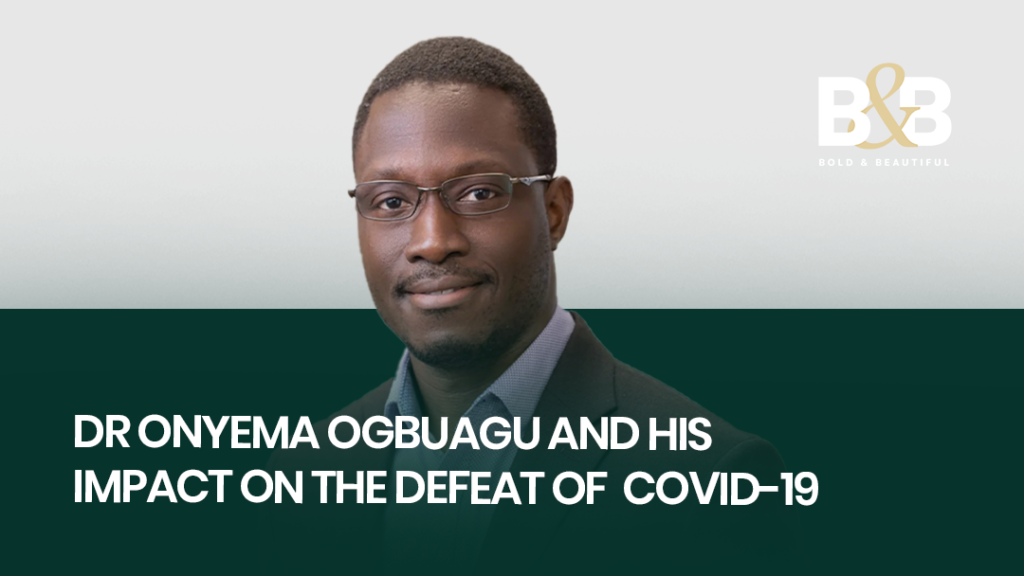
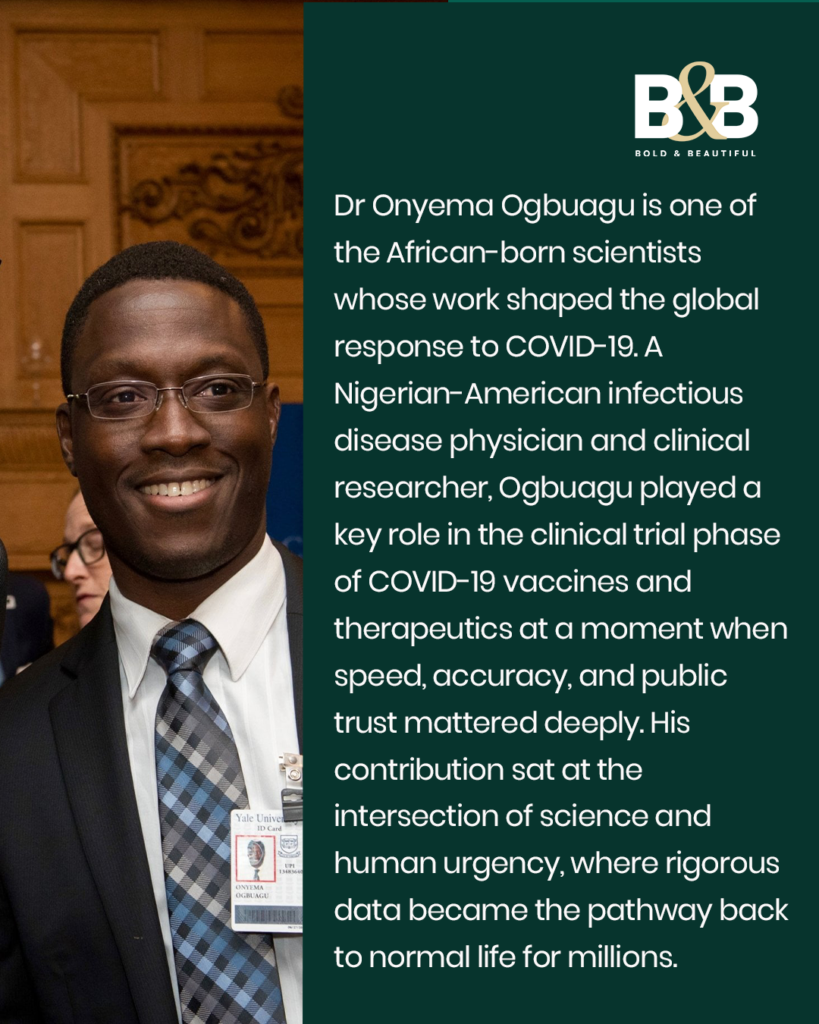
Dr Onyema Ogbuagu is one of the African-born scientists whose work shaped the global response to COVID-19. A Nigerian-American infectious disease physician and clinical researcher, Ogbuagu played a key role in the clinical trial phase of COVID-19 vaccines and therapeutics at a moment when speed, accuracy, and public trust mattered deeply. His contribution sat at the intersection of science and human urgency, where rigorous data became the pathway back to normal life for millions.
Based in the United States, Dr Ogbuagu served as a principal investigator on several high-profile COVID-19 clinical trials, including vaccine studies and antiviral treatments. His work focused on safety, efficacy, and real-world application, ensuring that vaccines and treatments met strict scientific standards before public rollout. These trials formed part of the foundation that enabled regulatory approvals and mass vaccination programmes across multiple countries.
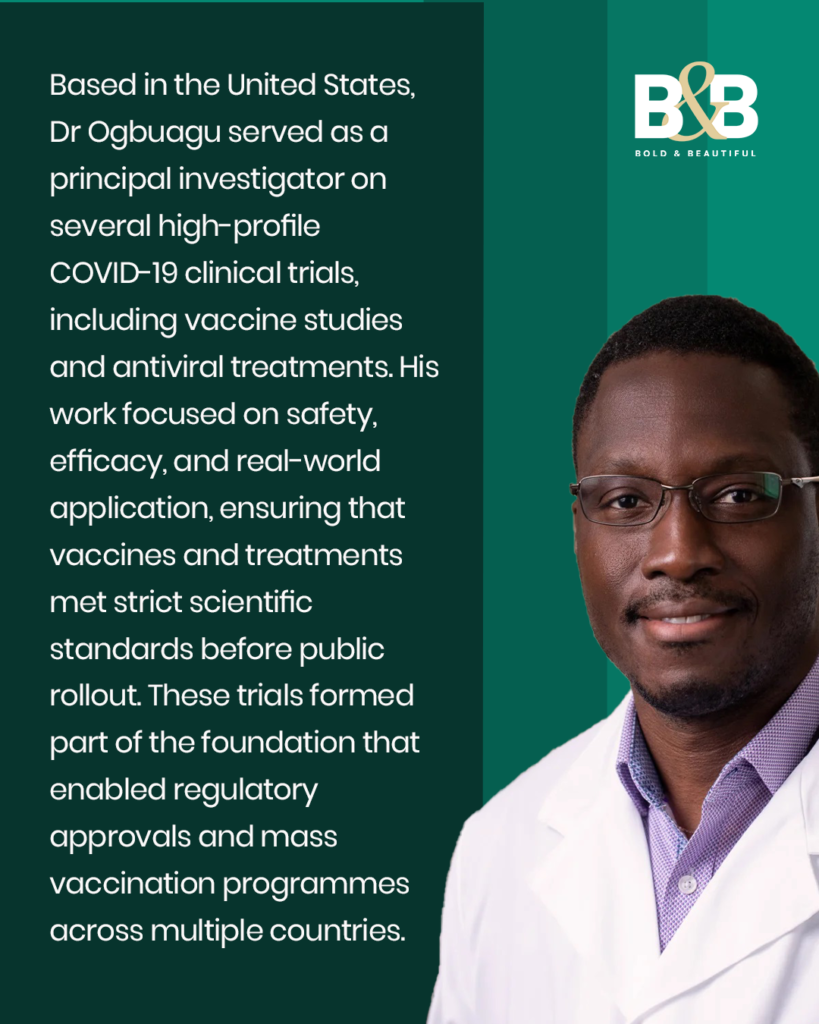
Long before the pandemic, Ogbuagu had built a strong reputation in infectious disease research, particularly in HIV prevention and treatment. That background positioned him well when COVID-19 emerged. His experience with complex clinical trials, community engagement, and patient-centred research became essential during a period marked by fear, misinformation, and uneven access to healthcare. Colleagues often pointed to his ability to communicate science clearly, especially within Black and minority communities that carried a disproportionate burden of the pandemic.
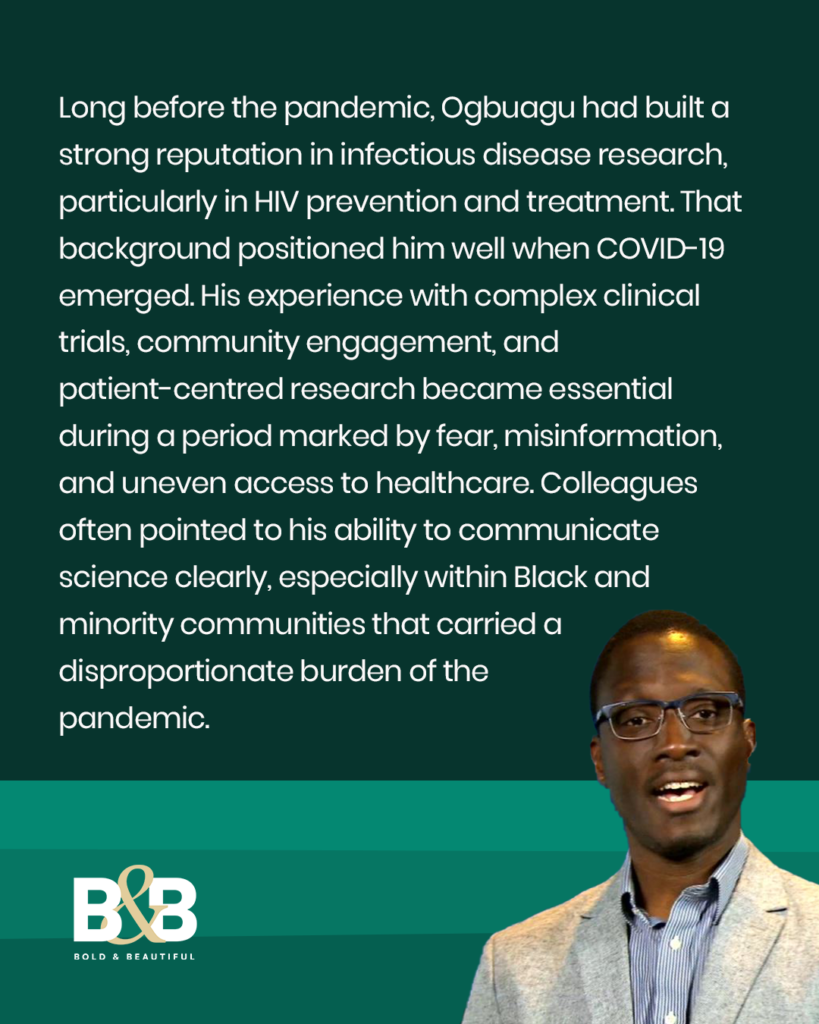
For many Africans at home and in the diaspora, Dr Ogbuagu’s visibility during the pandemic carried symbolic weight. At a time when global narratives around scientific innovation rarely highlighted African expertise, his role reinforced the reality that African minds were active contributors to one of the most significant medical breakthroughs of the modern era. His work challenged the idea that Africa only consumes global science rather than helps to shape it.
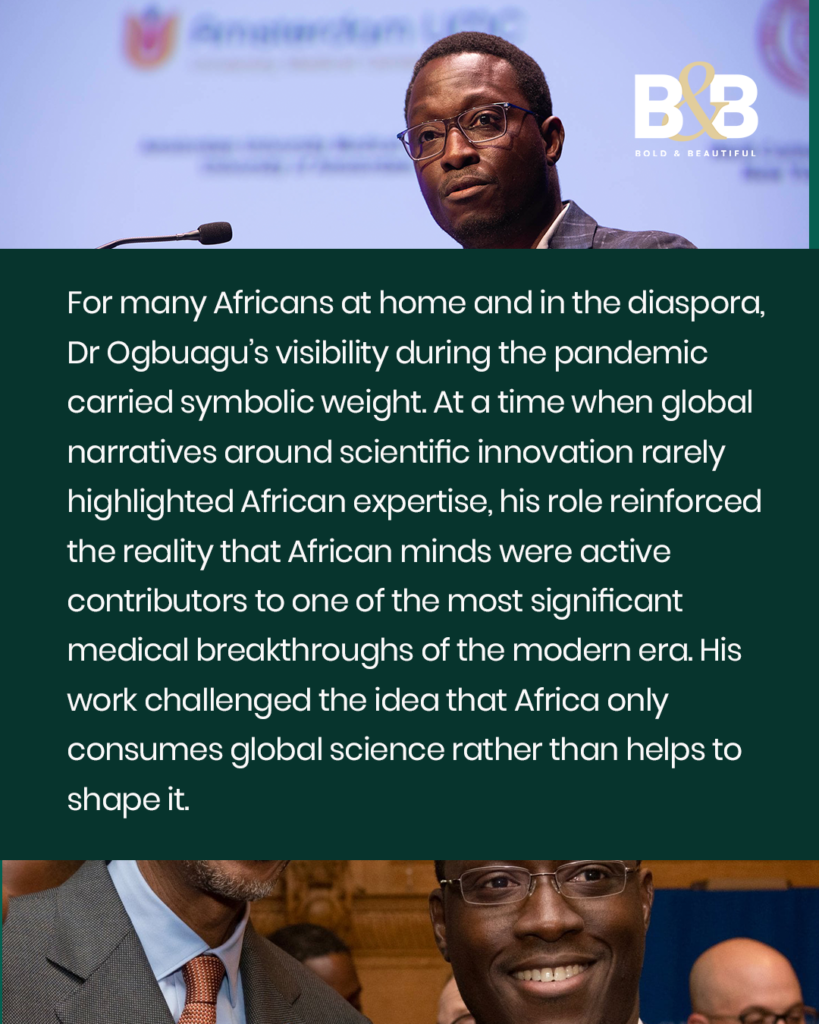
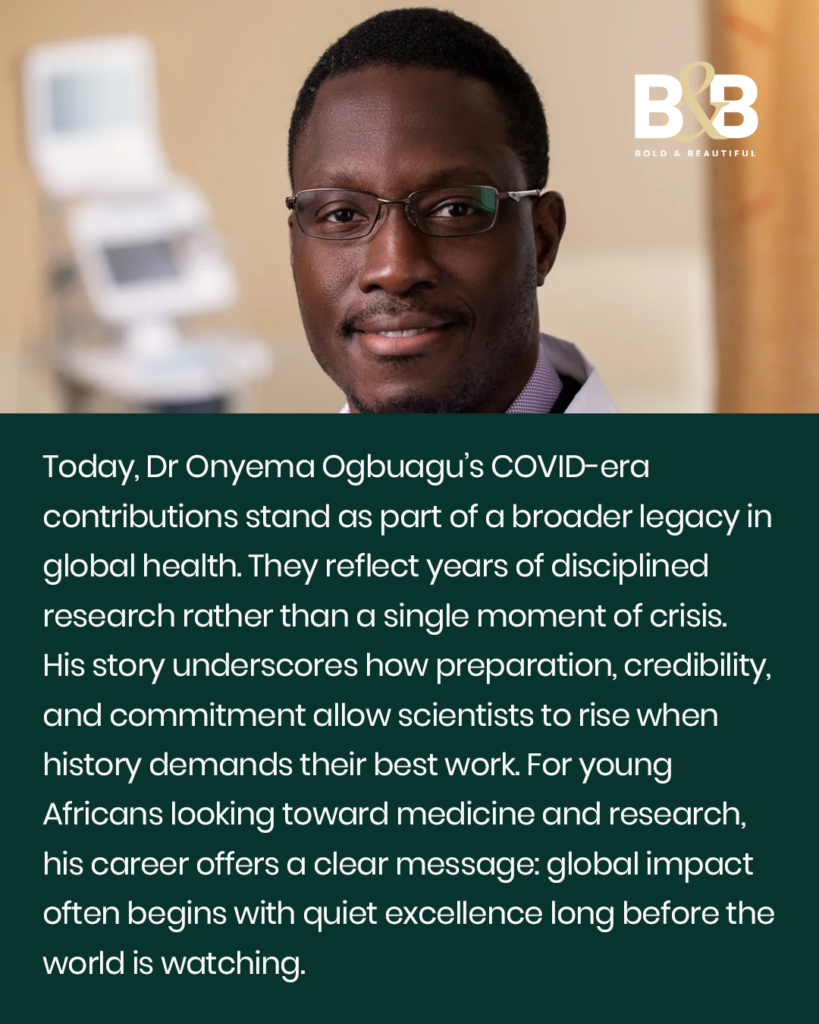
Today, Dr Onyema Ogbuagu’s COVID-era contributions stand as part of a broader legacy in global health. They reflect years of disciplined research rather than a single moment of crisis. His story underscores how preparation, credibility, and commitment allow scientists to rise when history demands their best work. For young Africans looking toward medicine and research, his career offers a clear message: global impact often begins with quiet excellence long before the world is watching.