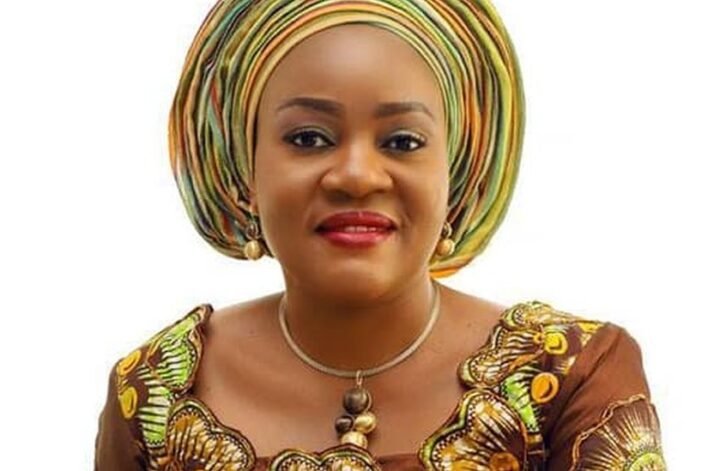

For decades, mental health remained one of the most neglected areas of medicine across much of Africa. Services were scarce, research was limited, and specialised care for children and adolescents was almost nonexistent. In Nigeria, one physician quietly began to change that trajectory. Professor Olayinka Olusola Omigbodun has spent her career building the intellectual and clinical foundations for child and adolescent psychiatry in the region, combining academic leadership, global research collaboration, and public health advocacy.

Born on February 11, 1963 at University College Hospital Ibadan, Omigbodun’s early years unfolded during one of Nigeria’s most turbulent periods. Her father, Lieutenant-Colonel Victor Adebukunola Banjo, a senior Nigerian Army officer, died during the Nigerian Civil War. The conflict forced the family to spend part of her childhood in Sierra Leone before returning to Nigeria. Education remained central to the household. She completed her secondary education in Ibadan before gaining admission into the University of Ibadan College of Medicine in 1980, graduating in 1985 with distinction in physiology.
Her professional training stretched across Nigeria, the United Kingdom, and the United States. After clinical training in psychiatry at University College Hospital in Ibadan, she continued postgraduate work in the UK at Lancaster Moor Hospital and Queen’s Park Hospital in Blackburn. By the early 1990s she had earned fellowships from the National Postgraduate Medical College of Nigeria and the West African College of Physicians, along with a Diploma in Psychiatry from the University of Manchester. She later trained in family therapy and served as a visiting scholar at the Bipolar Disorders Unit at the University of Pennsylvania. A British Chevening Scholarship later took her to the University of Leeds where she completed a Master of Public Health with distinction.
Her most consequential work began after she joined the University of Ibadan faculty in 1997. At the time, specialised psychiatric services for children were virtually absent in Nigeria’s teaching hospitals. Omigbodun established the first structured clinical programme for child and adolescent psychiatry at University College Hospital in 1999. The programme later evolved into a full academic department, the first of its kind in the country. More than a clinical service, it created a training pipeline for psychiatrists, psychologists, and social workers interested in youth mental health.

In 2011 she expanded that vision further with the creation of the Centre for Child and Adolescent Mental Health at the University of Ibadan. Supported by the MacArthur Foundation, the centre became a regional training hub for mental health professionals across Africa. Over the following decade, more than 200 practitioners from fourteen African countries passed through its programmes, receiving multidisciplinary training in adolescent psychiatry, public health research, and community mental health interventions.
Her influence also reached the global stage. From 2010 to 2014 she served as President of the International Association for Child and Adolescent Psychiatry and Allied Professions, becoming the first African to lead the organisation since it was founded in 1937. Her advisory work with the World Health Organization and UNICEF has helped shape international discussions on youth mental health, particularly in low-resource settings where access to psychiatric care remains limited.

In August 2020, Omigbodun broke another institutional barrier when she became the first woman appointed Provost of the University of Ibadan College of Medicine. The appointment marked a historic shift within one of Africa’s most respected medical schools. Throughout her career she has published more than 160 scholarly articles and book chapters on subjects ranging from adolescent suicide and autism spectrum disorders to school mental health and the psychological consequences of female genital mutilation.
Across classrooms, clinics, and international policy circles, Professor Olayinka Omigbodun has built a career defined by institutional change. Her work has trained a generation of mental health professionals and placed child and adolescent psychiatry firmly on Nigeria’s medical agenda. In a field that once received little attention, she created systems that will shape research, treatment, and public health policy for decades.