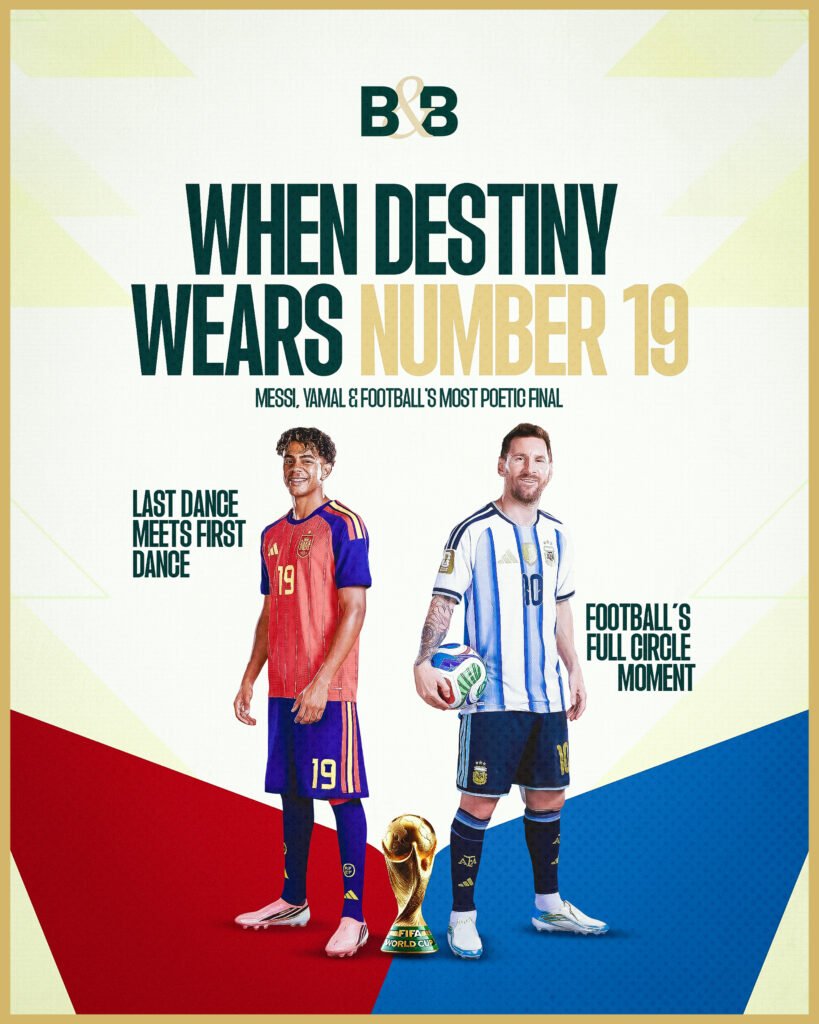
Football’s Full Circle Moment: Last Dance Meets First Dance
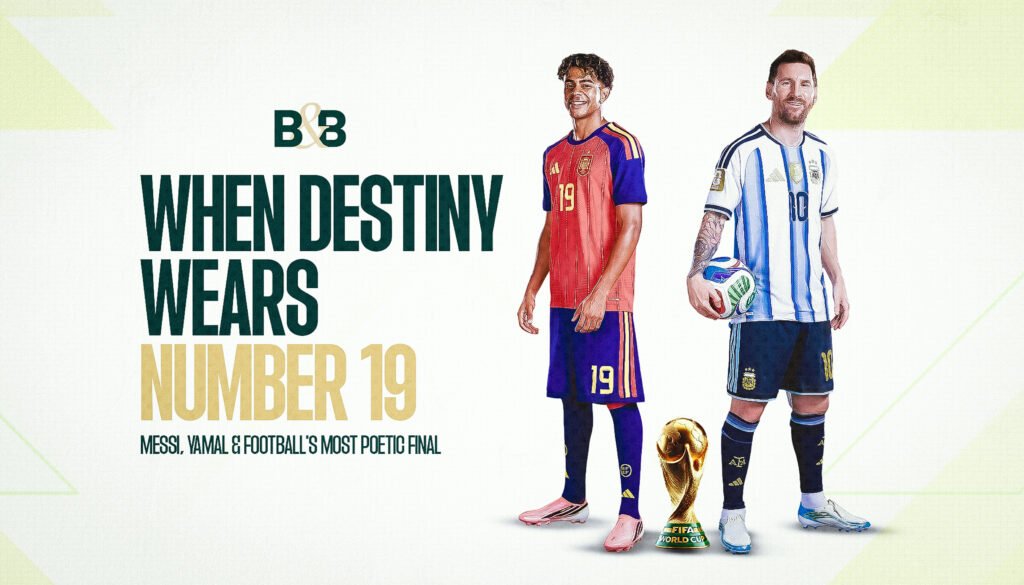
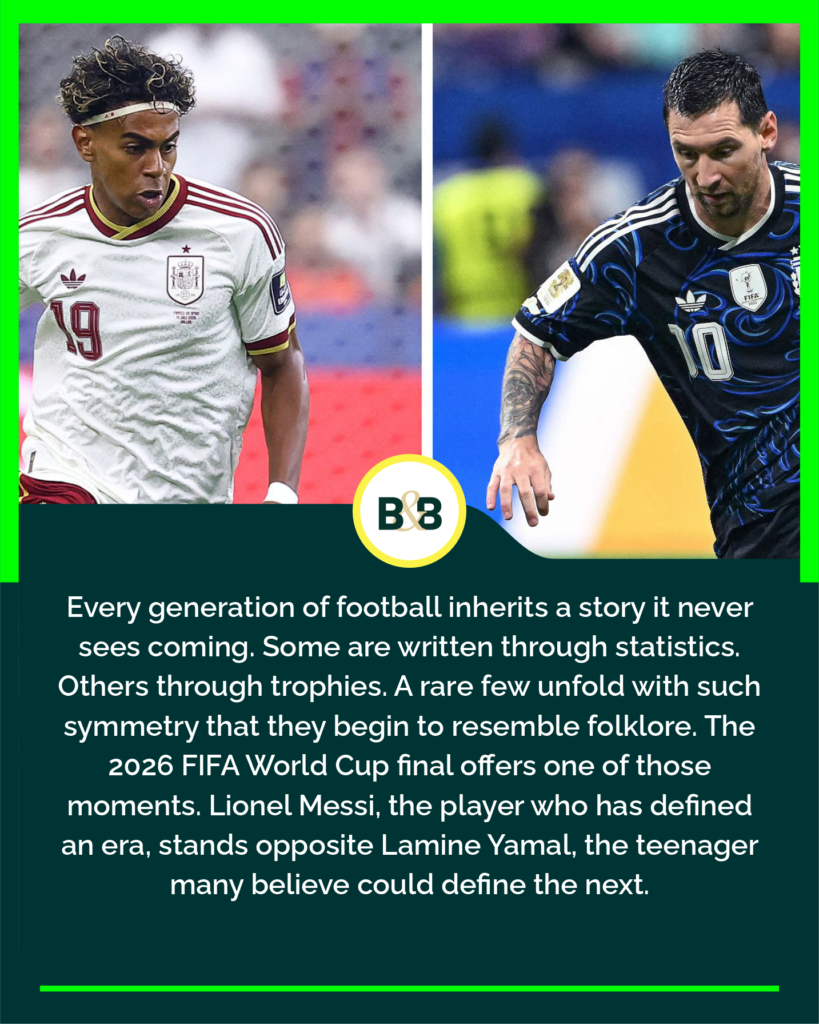
Every generation of football inherits a story it never sees coming. Some are written through statistics. Others through trophies. A rare few unfold with such symmetry that they begin to resemble folklore. The 2026 FIFA World Cup final offers one of those moments. Lionel Messi, the player who has defined an era, stands opposite Lamine Yamal, the teenager many believe could define the next. One career approaches its final chapter while another is still writing its opening pages. Sport rarely produces symbolism this complete.
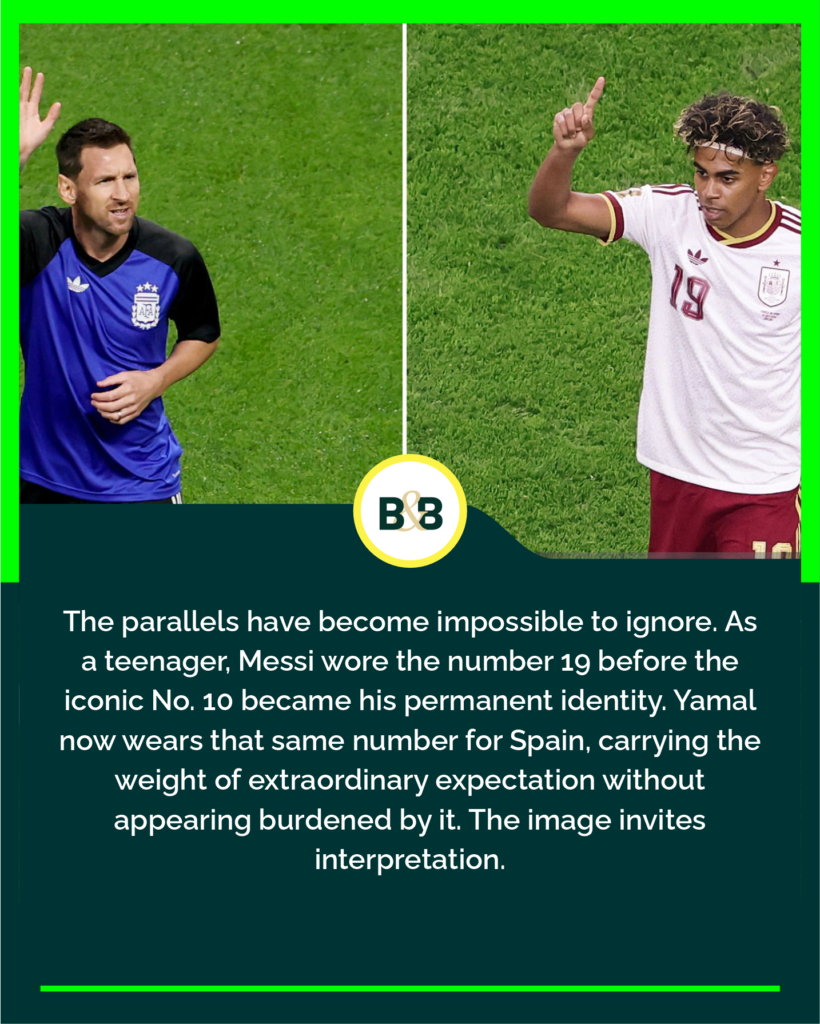
The parallels have become impossible to ignore. As a teenager, Messi wore the number 19 before the iconic No. 10 became his permanent identity. Yamal now wears that same number for Spain, carrying the weight of extraordinary expectation without appearing burdened by it. The image invites interpretation.
Number 19 has become a bridge between two generations, representing promise before fulfilment, potential before permanence. Football has always loved its rituals and recurring motifs, but this coincidence possesses an unusual emotional resonance because it links two players whose gifts have inspired the same sense of wonder.
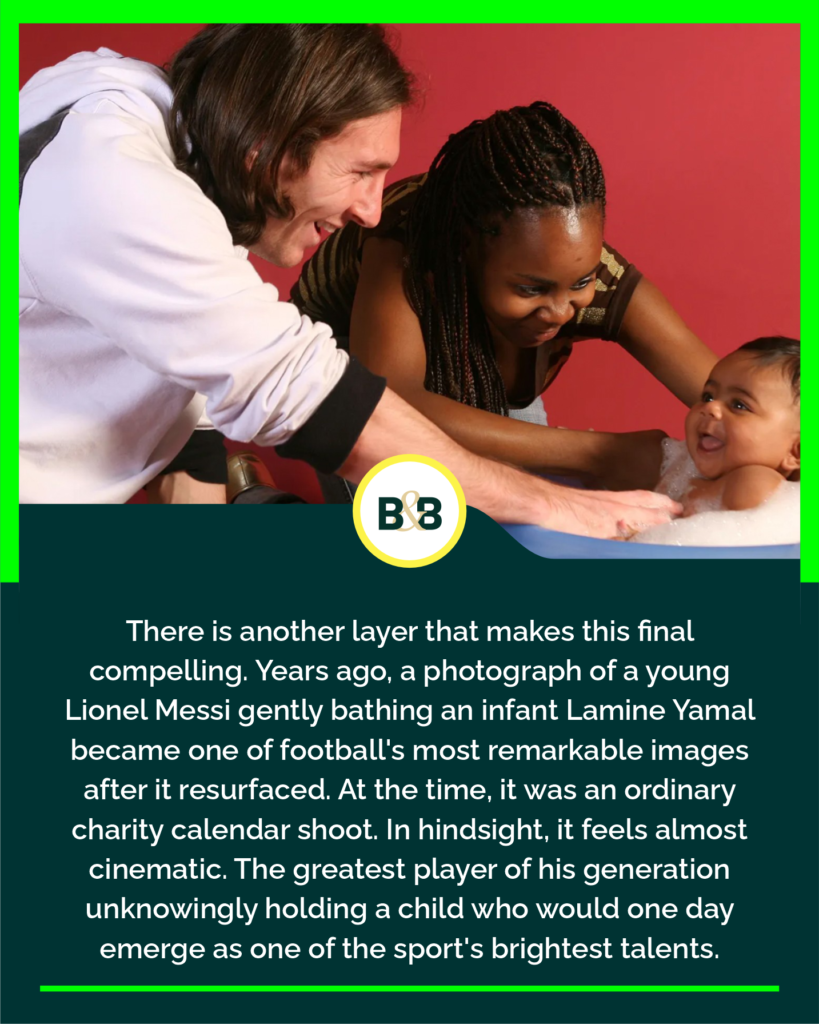
There is another layer that makes this final compelling. Years ago, a photograph of a young Lionel Messi gently bathing an infant Lamine Yamal became one of football’s most remarkable images after it resurfaced. At the time, it was an ordinary charity calendar shoot. In hindsight, it feels almost cinematic. The greatest player of his generation unknowingly holding a child who would one day emerge as one of the sport’s brightest talents. Nobody planned that story. Nobody could have written it convincingly. Football simply allowed it to exist.
This is why supporters often speak about a “football god.” Not because the sport determines destiny, but because it occasionally arranges moments that seem to defy probability. The phrase survives because football repeatedly creates narratives that logic struggles to explain. Whether that unseen author exists is ultimately a matter of belief. What is undeniable is that the game has an unmatched ability to place people, moments and memories into conversations that span decades.
So how should this story end? The obvious answer is with victory for one side and heartbreak for the other. Yet history rarely remembers great finals only for their scorelines. It remembers what they represent. If Messi were to lift one final World Cup, it would complete the most celebrated international career the game has known. If Yamal were to lead Spain to glory, football would witness the birth of a new global standard bearer on its grandest stage. Either outcome enriches the sport rather than diminishes it.
Perhaps that is the perfect ending. Not the triumph of one player over another, but the passing of football’s imagination from one generation to the next. Legends do not truly disappear. They leave behind ideas, standards and possibilities that others choose to pursue. Whether tomorrow belongs to Messi or Yamal, the game itself will emerge as the greatest winner, reminding the world that football’s finest stories are never manufactured. They are lived.