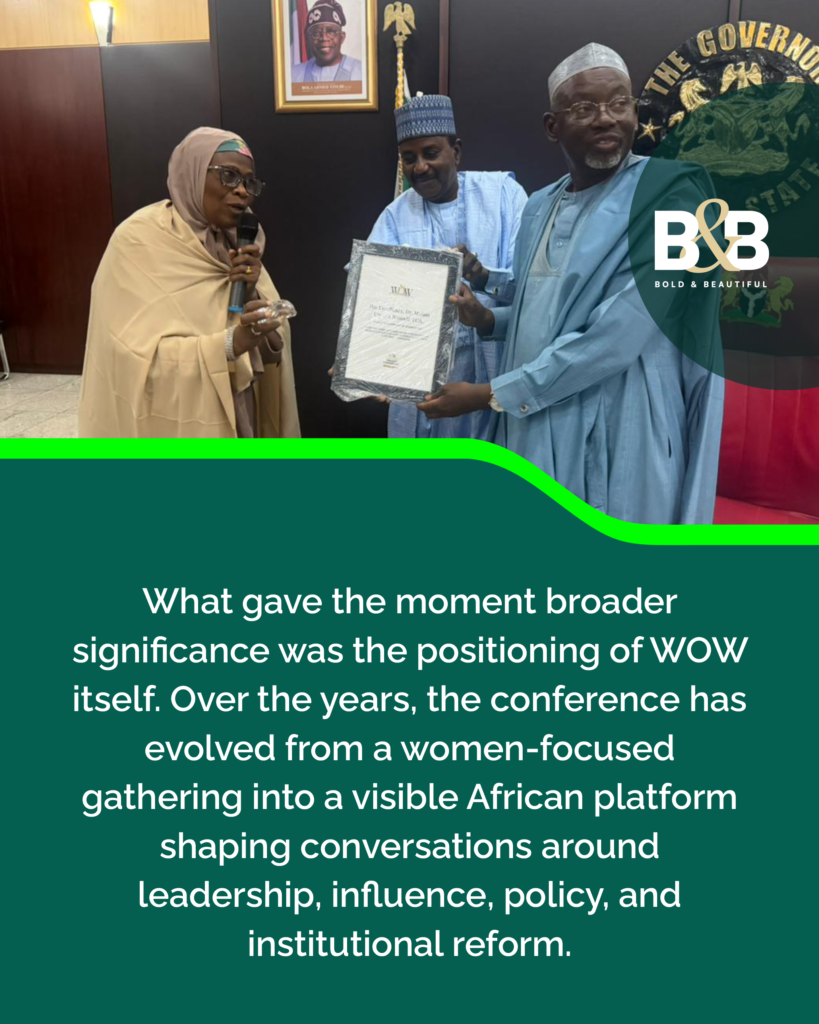
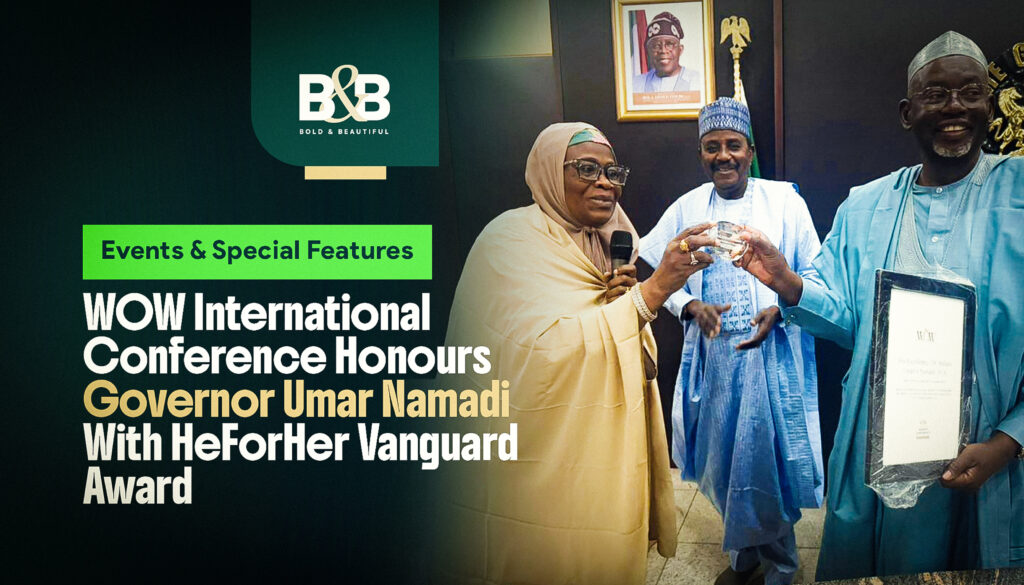
The Women of Will International extended its growing influence across African leadership circles with the presentation of the HeForHer Vanguard Award to Jigawa State Governor, Dr. Umar A. Namadi, during a formal ceremony at the Government House in Dutse. The recognition followed the governor’s earlier selection as an award recipient at the WOW International Women’s Conference RISE in Cairo 2026, which brought together policymakers, development experts, women leaders, and social impact advocates from across several countries between March 25 and 28.
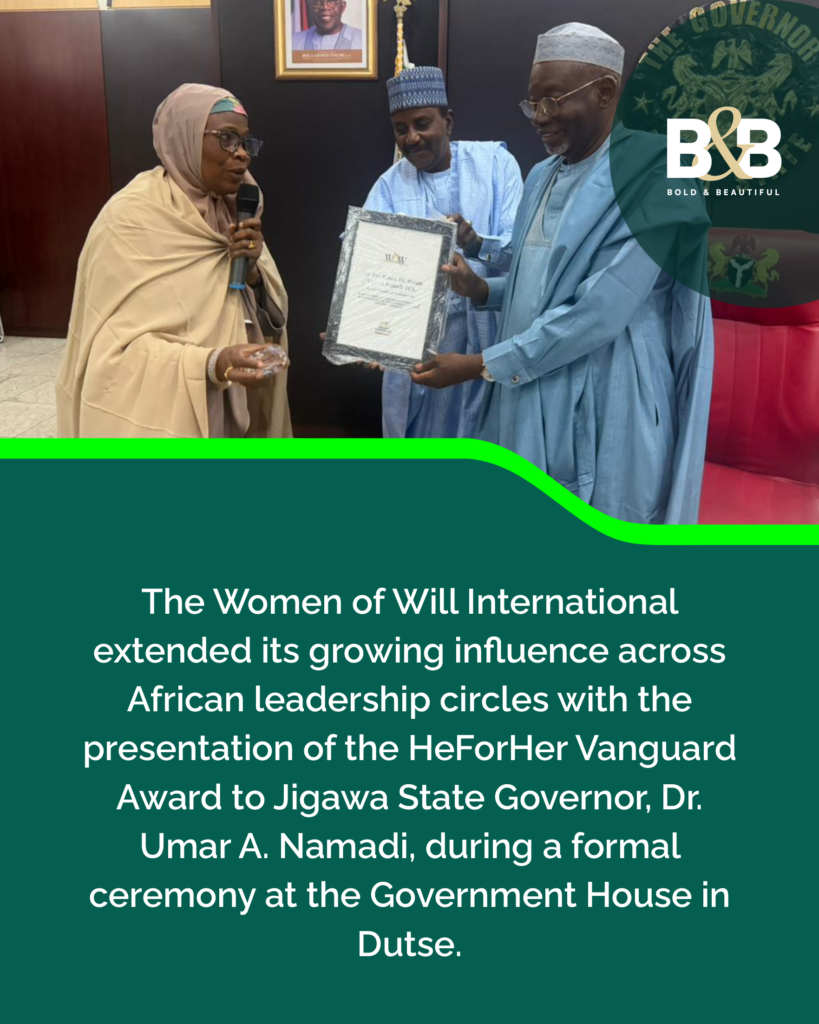
The award presentation at the State Executive Council chambers transformed a conference honour into a local political moment, placing women-centred governance at the forefront of public conversation in Jigawa State.
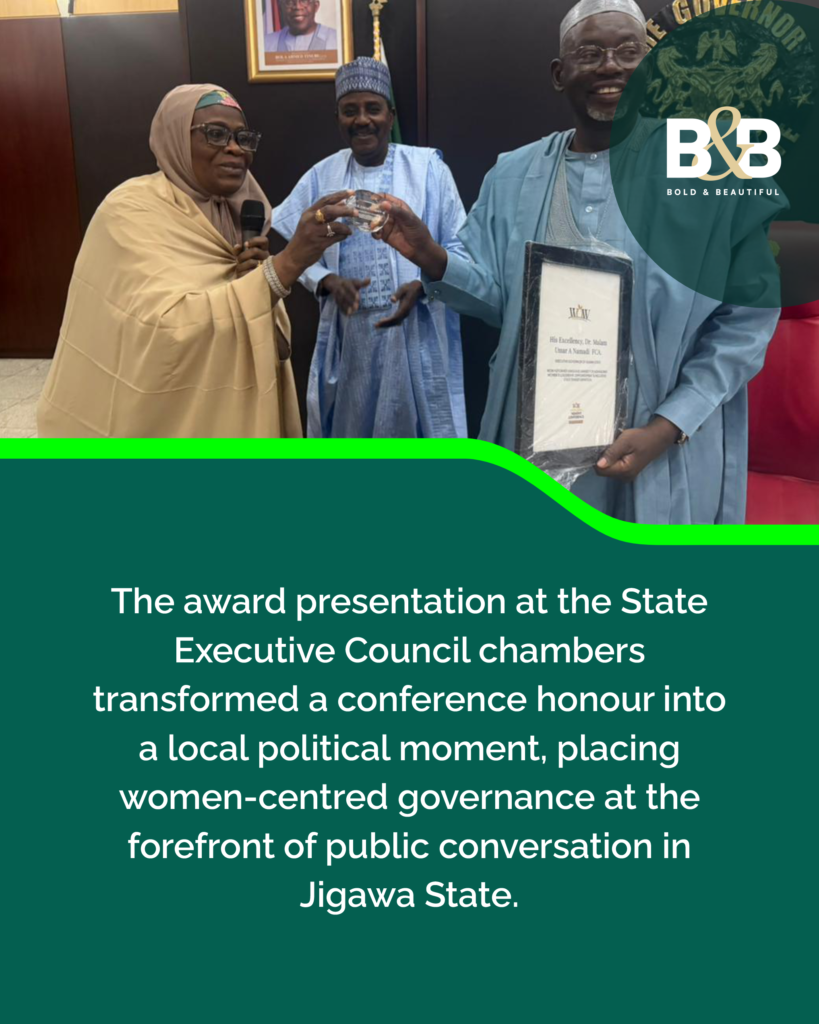
Presented through the office of the Commissioner for Women Affairs, the recognition reflected the conference organisers’ focus on spotlighting African leaders whose policies directly affect women’s participation in public life. In Jigawa, the Namadi administration has increasingly tied its governance messaging to social inclusion, women’s economic empowerment, education access, healthcare expansion, and human capital development. Those priorities formed the basis of the WOW recognition, particularly as conversations around gender equity continue to move from symbolic representation into measurable governance outcomes across the continent. For the conference organisers, leadership credibility now depends heavily on how governments create pathways for women within systems that historically excluded them.
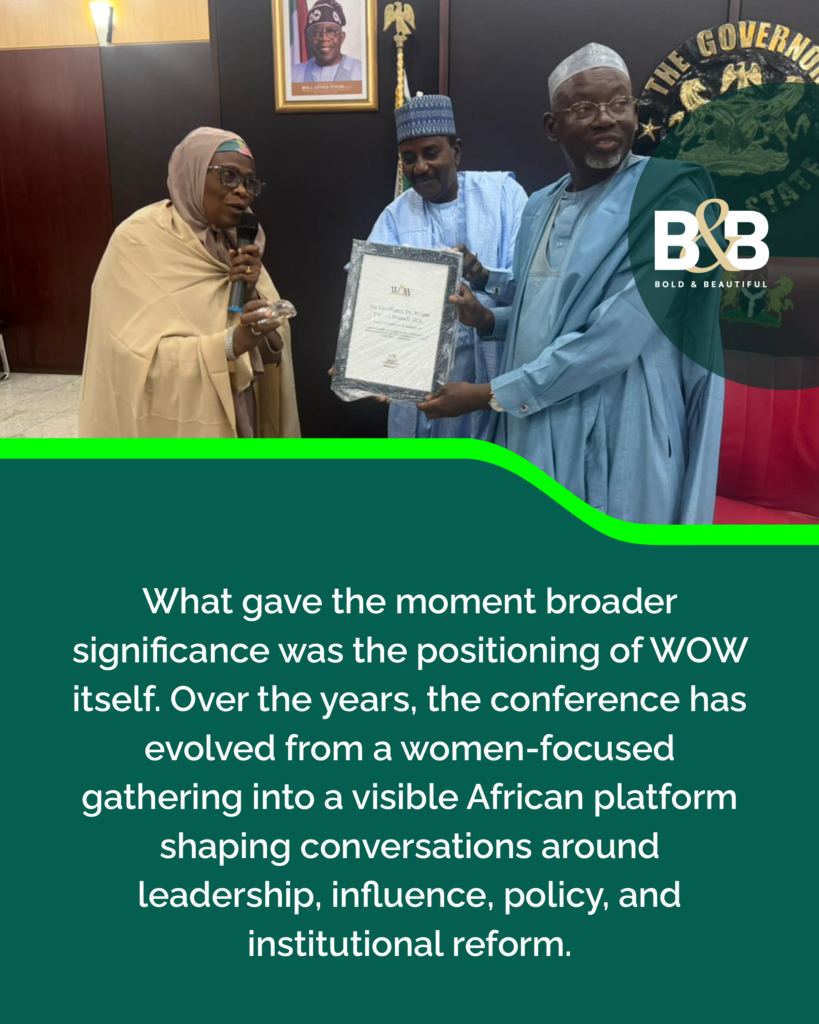
What gave the moment broader significance was the positioning of WOW itself. Over the years, the conference has evolved from a women-focused gathering into a visible African platform shaping conversations around leadership, influence, policy, and institutional reform. #RiseinCairo2026 attracted delegates from different sectors who examined how inclusion affects economic growth, political power, entrepreneurship, and community development, feminism from African women perspective.
By introducing honours such as the HeForHer Vanguard Award, the conference signalled a deliberate shift toward recognising male political leaders whose administrations actively support women-focused reforms. That decision reflects a wider understanding that sustainable gender progress requires institutional backing, budgetary commitment, and political will at the highest level.
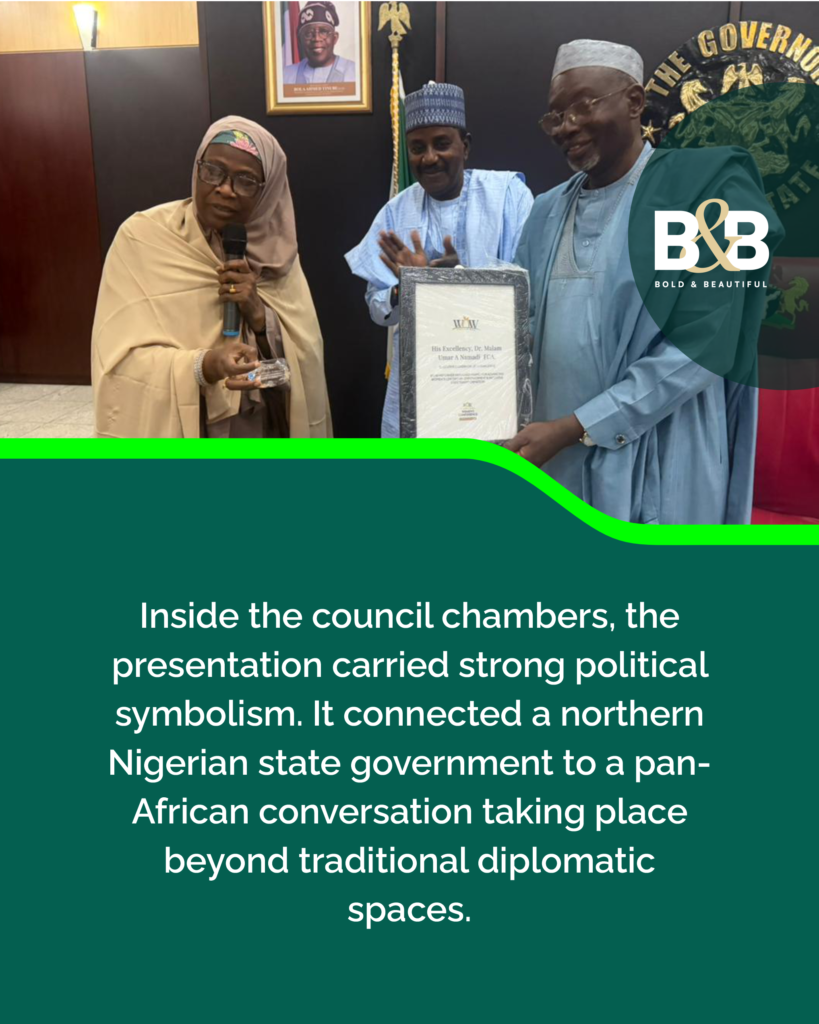
Inside the council chambers, the presentation carried strong political symbolism. It connected a northern Nigerian state government to a pan-African conversation taking place beyond traditional diplomatic spaces. Governor Namadi’s acceptance of the award also reinforced how international recognition increasingly shapes local political identity, particularly for leaders seeking to position their administrations within broader development conversations. In many ways, the story extended beyond a plaque or ceremonial presentation. It reflected how conferences such as WOW are steadily influencing the language of governance across Africa, where women’s inclusion is becoming part of how leadership itself is evaluated.