
Brighton’s Newest Gem and the Rise of Africa’s Next Football Story
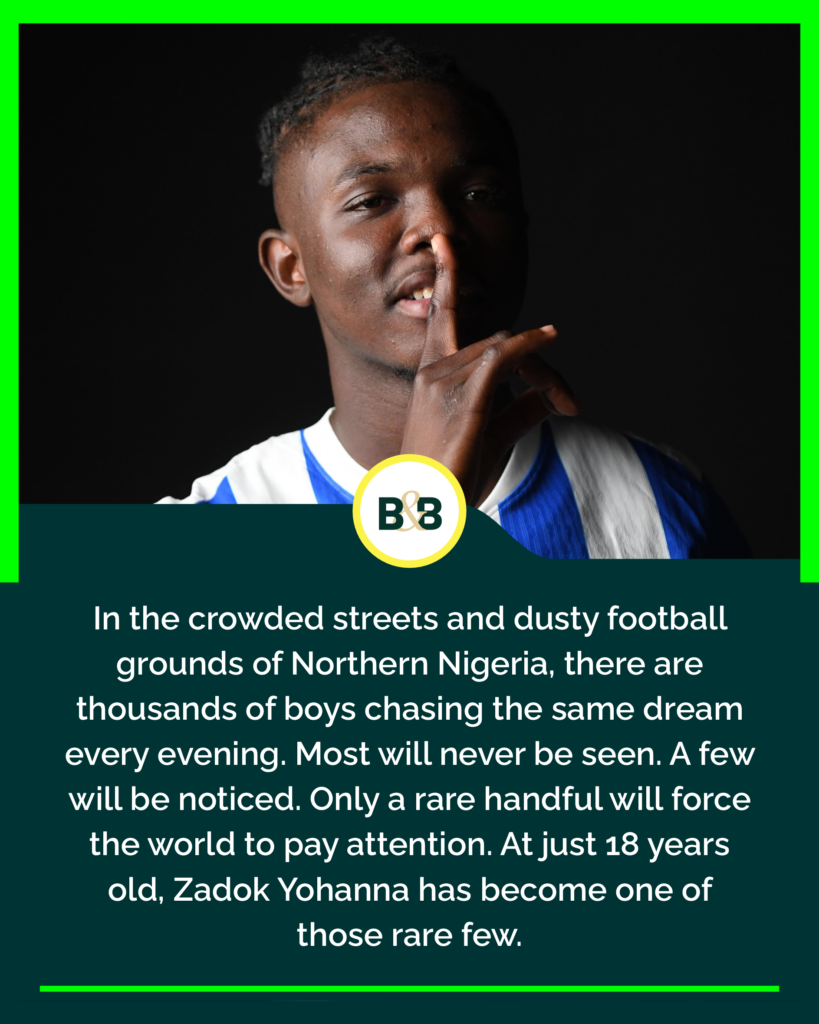
In the crowded streets and dusty football grounds of Northern Nigeria, there are thousands of boys chasing the same dream every evening.
Most will never be seen.
A few will be noticed.
Only a rare handful will force the world to pay attention.
At just 18 years old, Zadok Yohanna has become one of those rare few.
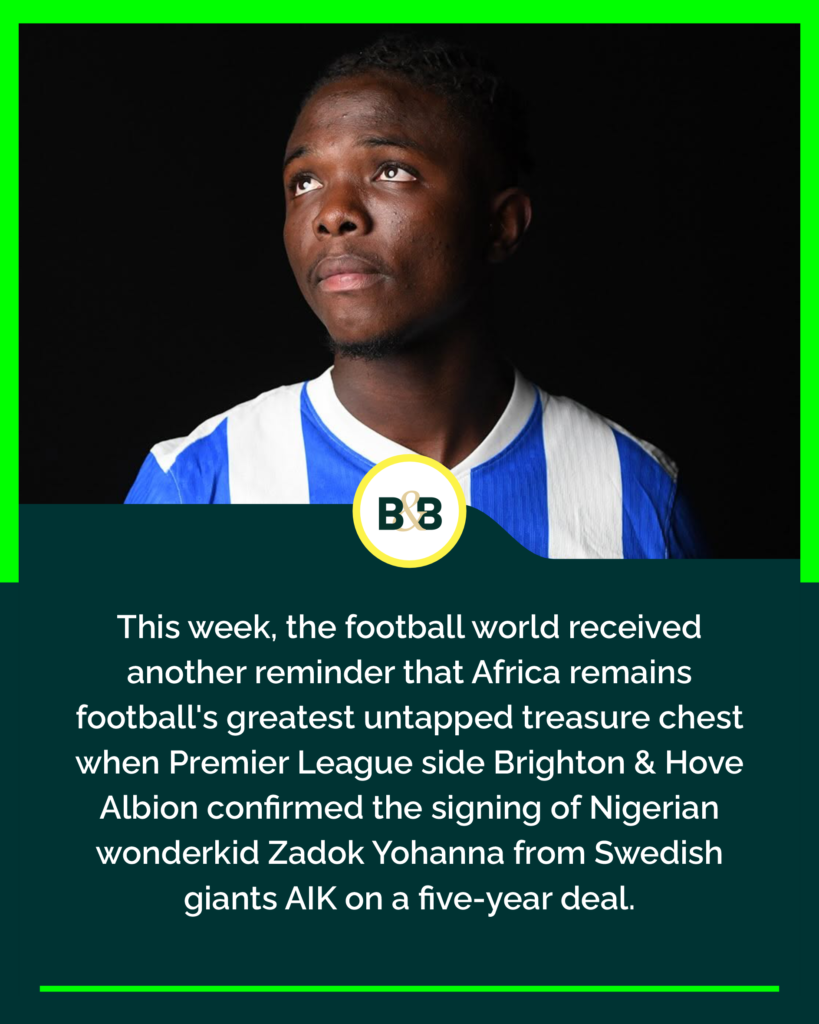
This week, the football world received another reminder that Africa remains football’s greatest untapped treasure chest when Premier League side Brighton & Hove Albion confirmed the signing of Nigerian wonderkid Zadok Yohanna from Swedish giants AIK on a five-year deal. Reports place the transfer fee at approximately £21.5 million, a figure that could make him one of the most expensive exports in Swedish football history. (Brighton & Hove Albion)

For many football fans, the announcement felt sudden.
For those who have been paying attention, however, this is a story that has been years in the making.
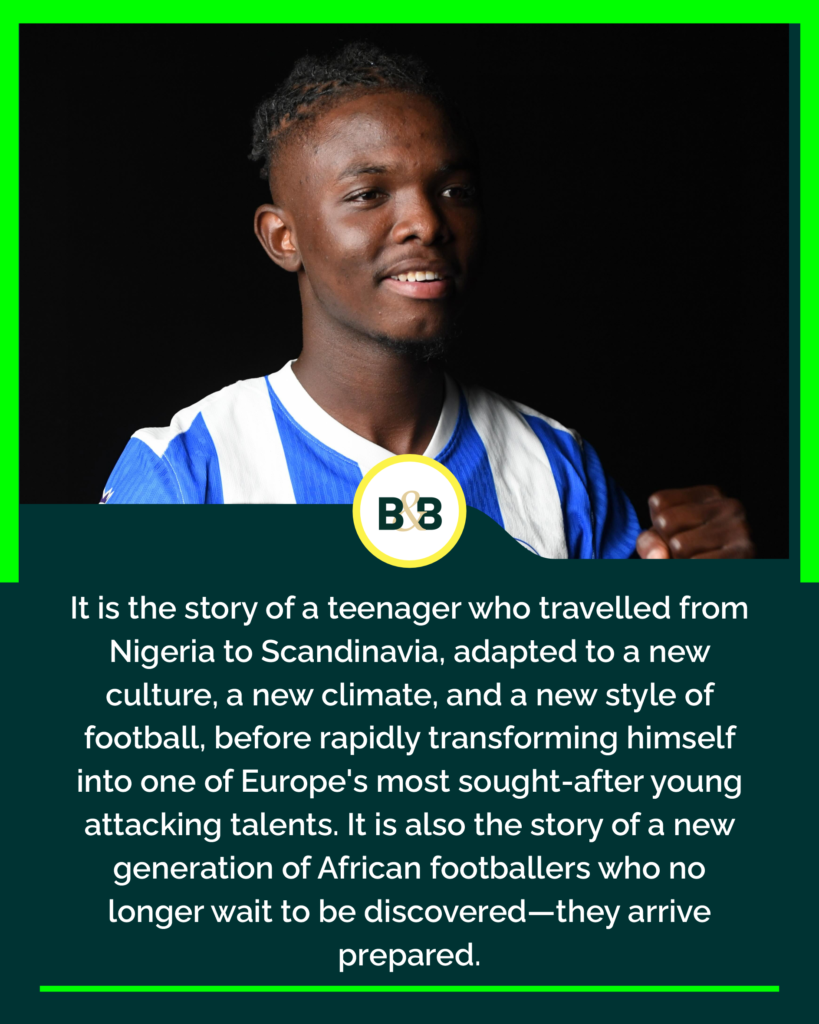
It is the story of a teenager who travelled from Nigeria to Scandinavia, adapted to a new culture, a new climate, and a new style of football, before rapidly transforming himself into one of Europe’s most sought-after young attacking talents. It is also the story of a new generation of African footballers who no longer wait to be discovered—they arrive prepared.
Brighton did not sign Yohanna because he is Nigerian.
They signed him because Europe could no longer ignore him.
Before putting pen to paper with the Seagulls, Yohanna had become one of the hottest names on the continent’s scouting reports. Chelsea, Newcastle United, RB Leipzig, Borussia Dortmund, Tottenham Hotspur and several other European clubs were reportedly monitoring his progress as his reputation exploded across Sweden. (Coming Home Newcastle)
What makes Yohanna’s rise remarkable is not merely the speed at which it happened.
It is the manner in which it happened.
Football today is obsessed with statistics. Goals. Assists. Expected goals. Progressive carries.
But scouts often speak about something less measurable.
Presence.
The ability of a player to change the atmosphere of a match the moment he receives possession.
At AIK, Yohanna became that player.
Supporters would rise from their seats when he collected the ball. Defenders doubled up against him. Opponents altered their tactical plans because of him. His direct running, explosive acceleration, fearless dribbling and willingness to attack defenders transformed him into the type of winger every modern coach desires. (Reddit)
Yet perhaps the most intriguing aspect of his story is what happened off the ball.
Those who watched him closely in Sweden consistently described him as humble, hardworking and unusually mature for his age. In an era where hype often arrives before substance, Yohanna’s character appears to be developing at the same pace as his talent. (Reddit)
That combination explains why Brighton moved decisively.
The club has built one of football’s most respected talent-identification systems. Long before the rest of Europe recognised players such as Moisés Caicedo, Alexis Mac Allister and Kaoru Mitoma as elite-level talents, Brighton had already invested in their potential.
The club’s model is simple.
Find tomorrow’s stars before they become today’s headlines.
The acquisition of Yohanna suggests Brighton believes they have found another one.
Yet the move represents something bigger than club football.
For Nigerian football, this transfer carries symbolic weight.
For decades, the nation has produced extraordinary talents who have illuminated Europe. From the artistry of Jay-Jay Okocha to the power of Nwankwo Kanu, from the elegance of John Obi Mikel to the brilliance of Victor Osimhen, Nigeria’s football story has always been rich with talent.
Yohanna now represents the next chapter.
A generation shaped by modern scouting networks, digital visibility and global opportunities.
A generation that understands football is no longer divided into local and international stages.
The stage is already global.
The challenge is earning your place on it.
There will, of course, be obstacles ahead.
The Premier League remains the most demanding domestic competition in world football. Expectations will rise. Defenders will be faster. Decisions must be sharper. The spotlight will become brighter.
Even Brighton manager Fabian Hürzeler has emphasised that the teenager will need time to adapt and develop. (Brighton & Hove Albion)
But perhaps that is exactly why Brighton feels like the perfect destination.
Unlike many clubs that buy potential and demand instant results, Brighton has built a reputation for nurturing talent patiently.
The club understands that diamonds are not discovered polished.
They are developed.
As football prepares for a new era following the 2026 World Cup, one truth remains unchanged.
The future of the game will continue to emerge from unexpected places.
Sometimes it will come from Buenos Aires.
Sometimes from Paris.
Sometimes from Barcelona.
And sometimes it will come from a young Nigerian boy who dared to believe that a football could carry him across continents.
Today, Zadok Yohanna arrives in England as one of the world’s most exciting young prospects.
Tomorrow, he may become one of Africa’s defining football figures.
For now, however, the story is only beginning.
And that might be the most exciting part of all.