

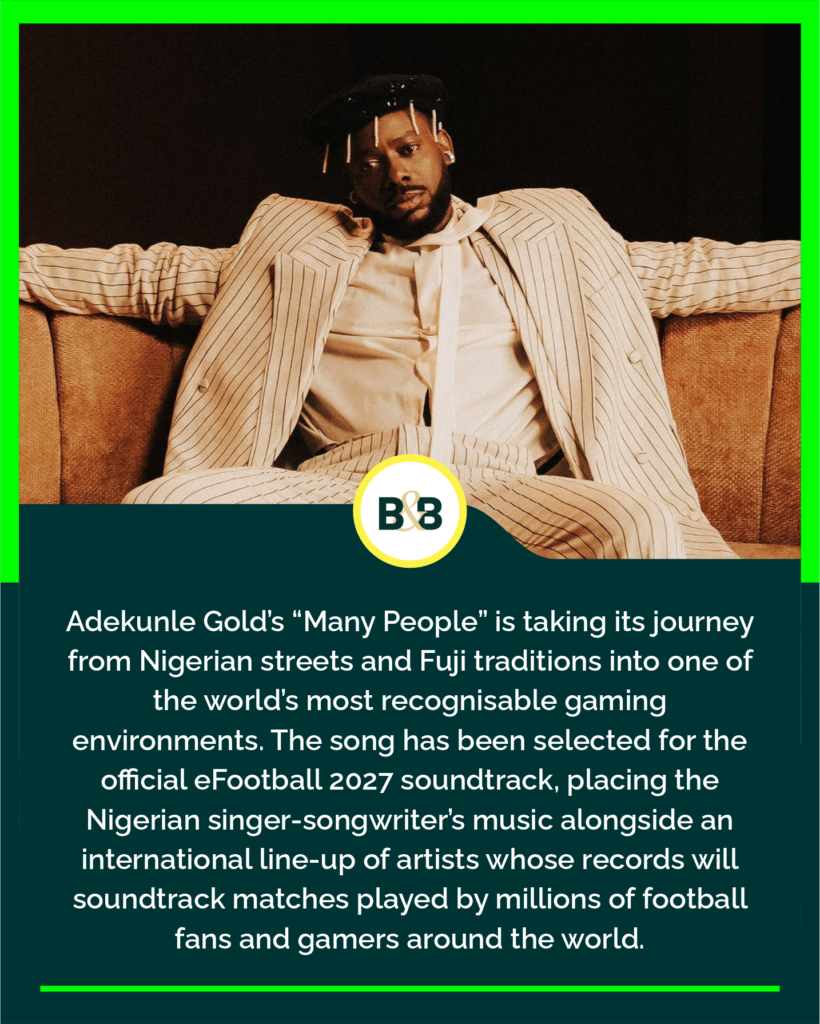
Adekunle Gold’s “Many People” is taking its journey from Nigerian streets and Fuji traditions into one of the world’s most recognisable gaming environments.
The song has been selected for the official eFootball 2027 soundtrack, placing the Nigerian singer-songwriter’s music alongside an international line-up of artists whose records will soundtrack matches played by millions of football fans and gamers around the world.

It is a fitting destination for a song built around movement.
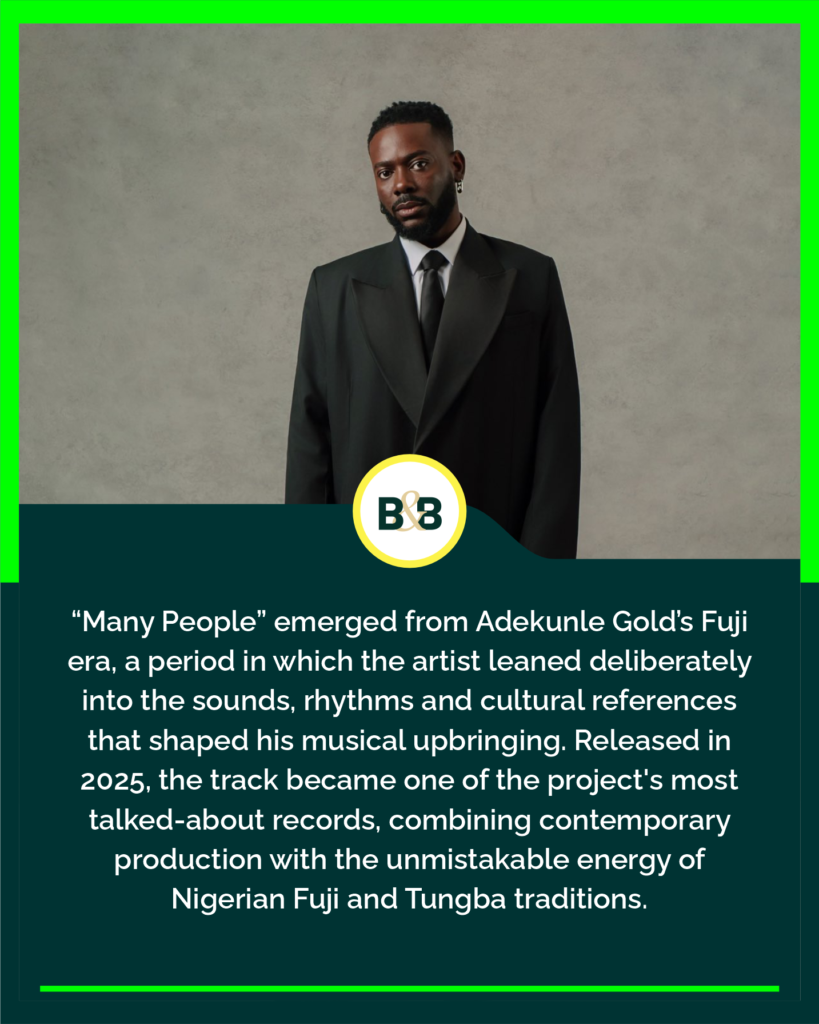
“Many People” emerged from Adekunle Gold’s Fuji era, a period in which the artist leaned deliberately into the sounds, rhythms and cultural references that shaped his musical upbringing. Released in 2025, the track became one of the project’s most talked-about records, combining contemporary production with the unmistakable energy of Nigerian Fuji and Tungba traditions. (Premium Times Nigeria)
Now, that distinctly Nigerian sound is entering a global gaming soundtrack.
There is a particular significance to hearing an African record inside a football game.
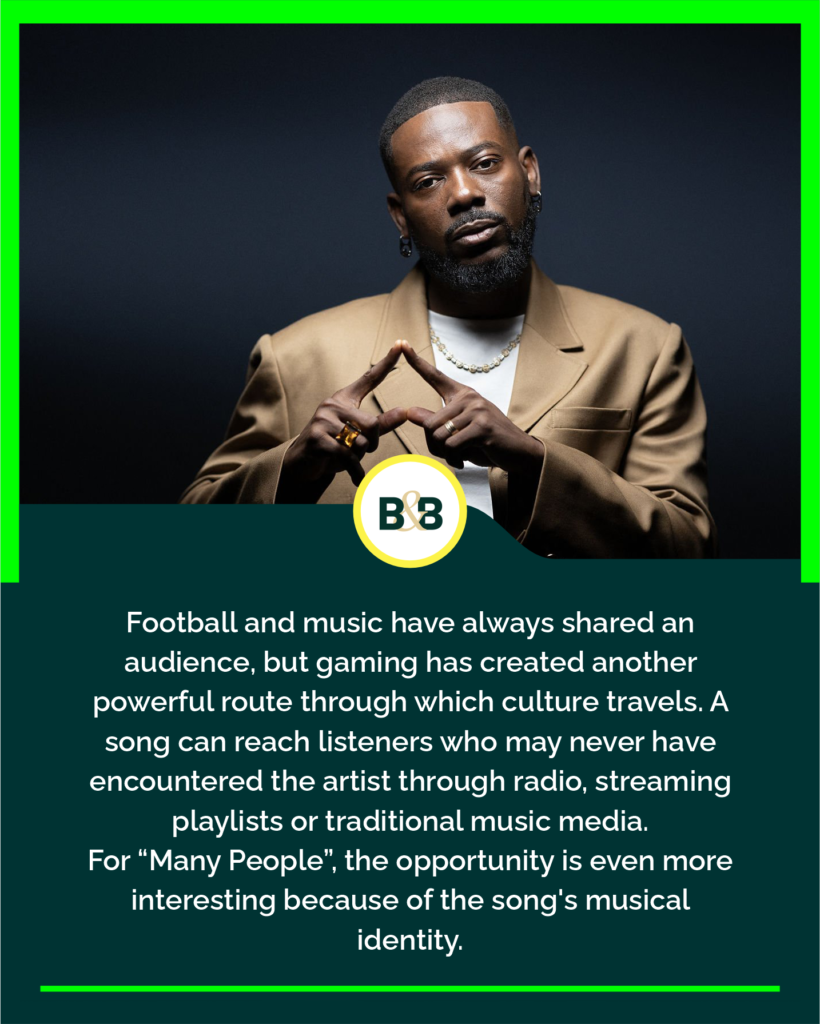
Football and music have always shared an audience, but gaming has created another powerful route through which culture travels. A song can reach listeners who may never have encountered the artist through radio, streaming playlists or traditional music media.
For “Many People”, the opportunity is even more interesting because of the song’s musical identity.
This is not a record that had to flatten its Nigerian character to travel.
Its appeal comes partly from the opposite approach.
Adekunle Gold built the song around sounds deeply connected to Yoruba popular culture, then placed them inside a contemporary framework capable of travelling beyond Nigeria.
That cultural confidence is becoming increasingly important to the global African music story.
The Sound Behind “Many People”
Part of what makes “Many People” distinctive is its relationship with Nigerian musical history.
The song draws on a vocal contribution from Yinka Ayefele, whose music has been influential in Nigerian popular culture. Adekunle Gold has also spoken about travelling to Ibadan personally to secure Ayefele’s participation, turning what might have been a conventional musical reference into a deliberate intergenerational collaboration. (NotjustOk)
The result is a record that feels contemporary without being detached from its roots.
That balance has become central to Adekunle Gold’s artistic evolution.
His career has moved considerably from the polished pop sound of his early breakthrough years. His recent work has increasingly embraced Nigerian musical traditions while retaining the songwriting instincts and production values that have helped him build an international audience.
“Many People” is one of the clearest examples of that evolution.
Why eFootball Matters
A soundtrack placement can appear modest beside the headline achievements of an international music career.
It is anything but insignificant.
Gaming has become one of the world’s most powerful cultural distribution systems. The music people discover while playing can become associated with particular memories, matches, victories and entire periods of their lives.
That creates a different kind of relationship between artist and audience.
A listener may hear “Many People” while building a Dream Team, scoring a last-minute winner or playing against a friend thousands of kilometres away.
The song becomes part of the experience.
That is cultural reach in a very modern form.
And for African music, these platforms create another avenue for global discovery.
A Bigger African Music Story
Adekunle Gold’s eFootball placement arrives during a period in which African music continues to move beyond conventional genre and geographic boundaries.
Afrobeats has already established a powerful global presence. The next stage is more nuanced.
It is about the world’s audiences encountering the full breadth of African musical traditions: Fuji, Highlife, Amapiano, Benga, Gqom, traditional percussion, alternative sounds and the countless hybrid forms emerging from the continent’s cities.
“Many People” belongs to that wider story.
It carries the sound of Nigeria into a global entertainment property without requiring an explanation of where it came from.
The music simply plays.
And somewhere, a player hears it for the first time.
The Game Is Getting Another Sound
The placement is another marker in Adekunle Gold’s career, increasingly defined by cultural confidence.
For Nigerian music, it represents something larger.
The routes through which African music travels are multiplying.
Streaming platforms brought the music into playlists.
Global festivals brought it onto international stages.
Film and television placed it inside visual storytelling.
And now gaming is becoming another important cultural bridge.
“Many People” has already had its Nigerian moment.
Its next audience may discover it with a controller in hand.