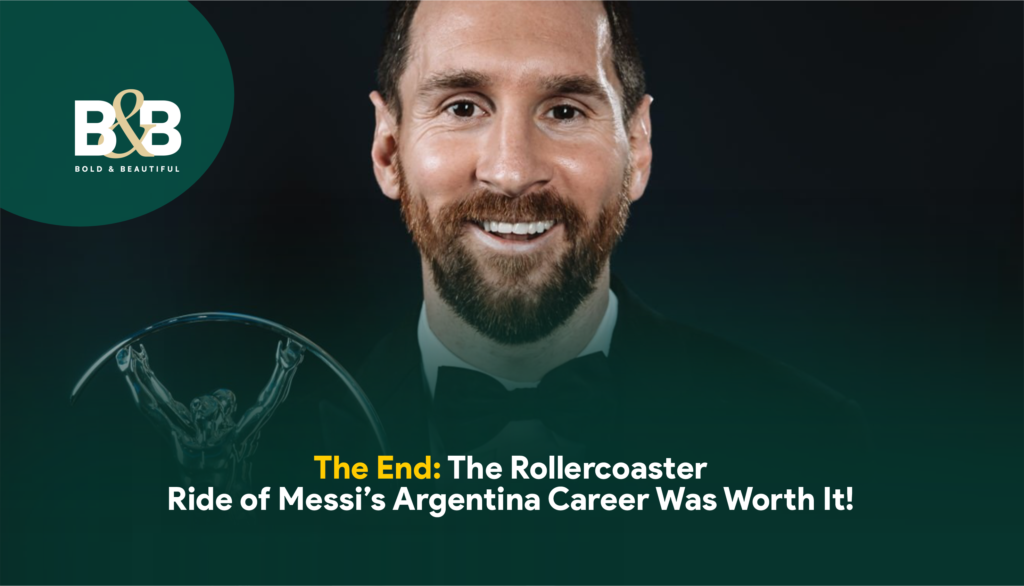
The Shirt, the Tears, the World Cup
From 47 Seconds to Forever
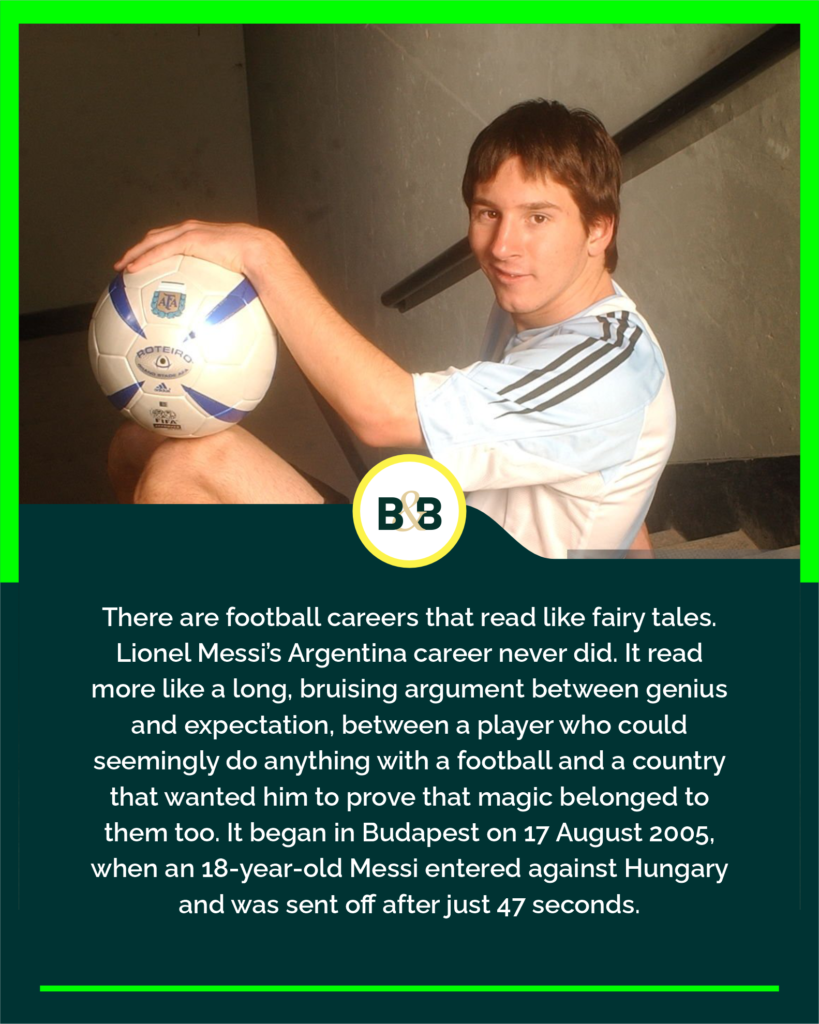
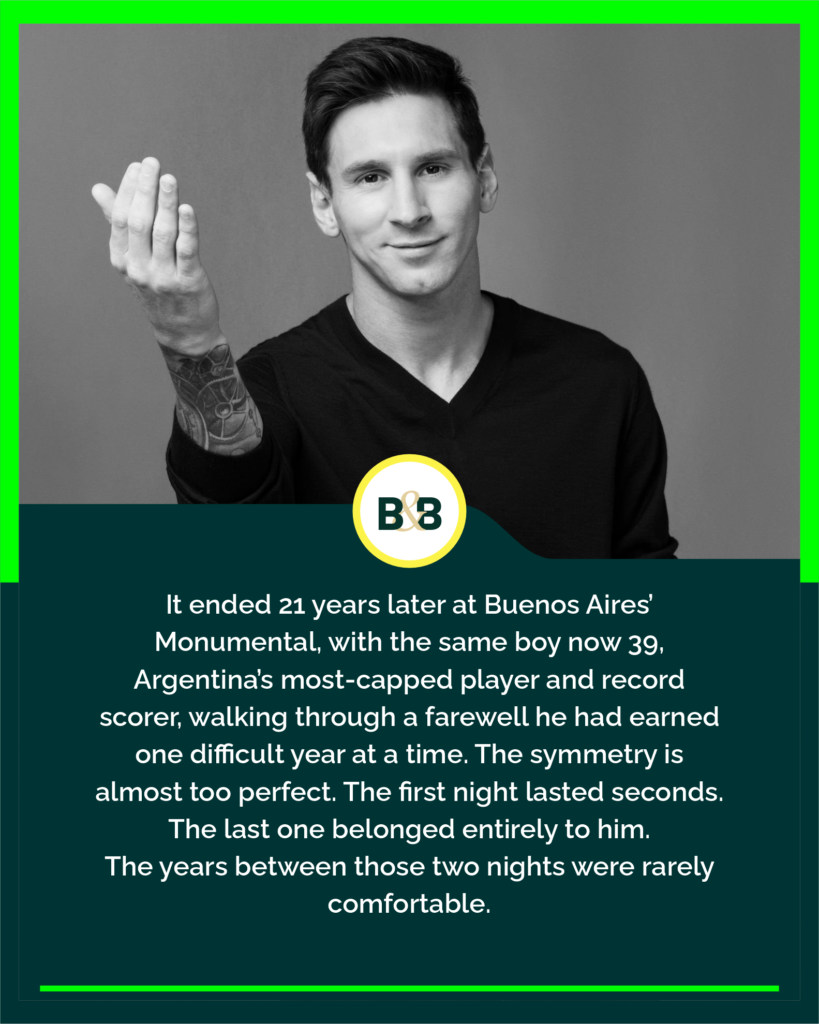
There are football careers that read like fairy tales. Lionel Messi’s Argentina career never did. It read more like a long, bruising argument between genius and expectation, between a player who could seemingly do anything with a football and a country that wanted him to prove that magic belonged to them too. It began in Budapest on 17 August 2005, when an 18-year-old Messi entered against Hungary and was sent off after just 47 seconds. It ended 21 years later at Buenos Aires’ Monumental, with the same boy now 39, Argentina’s most-capped player and record scorer, walking through a farewell he had earned one difficult year at a time. The symmetry is almost too perfect. The first night lasted seconds. The last one belonged entirely to him.

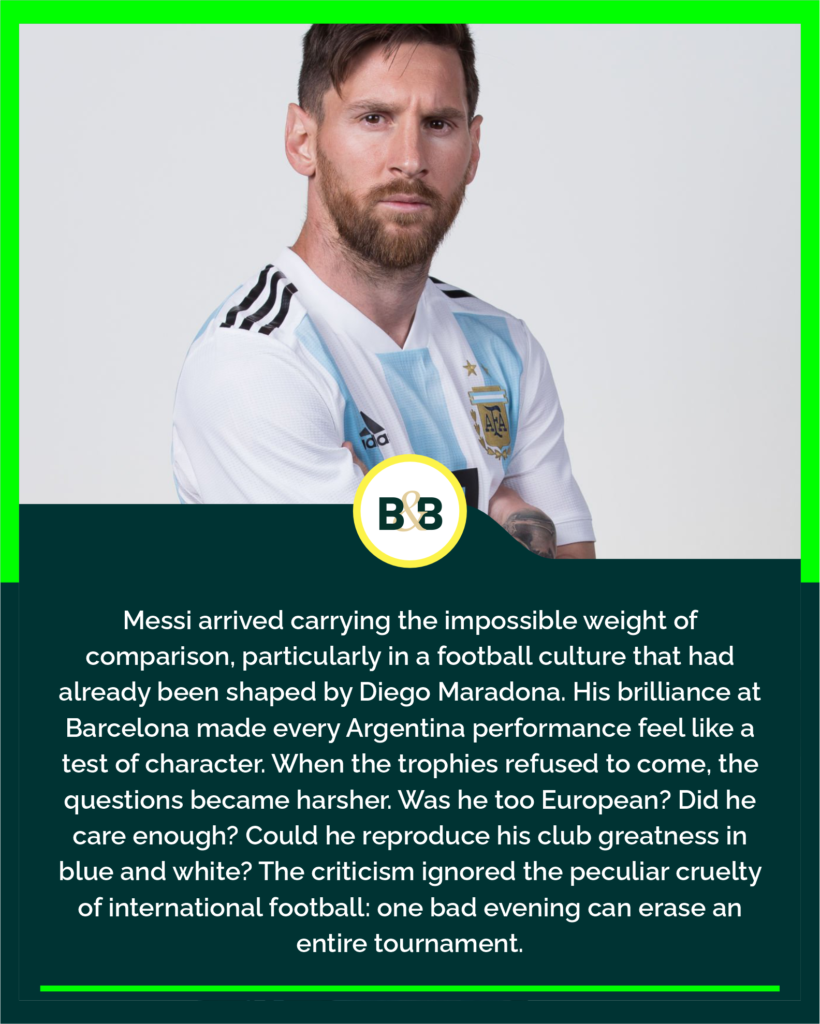
The years between those two nights were rarely comfortable. Messi arrived carrying the impossible weight of comparison, particularly in a football culture that had already been shaped by Diego Maradona. His brilliance at Barcelona made every Argentina performance feel like a test of character. When the trophies refused to come, the questions became harsher. Was he too European? Did he care enough? Could he reproduce his club greatness in blue and white? The criticism ignored the peculiar cruelty of international football: one bad evening can erase an entire tournament. Messi learned that lesson repeatedly. Brazil in the 2007 Copa América final. Germany in the 2014 World Cup final. Chile in the 2015 Copa América final. Then Chile again in 2016.
By the summer of 2016, something inside him finally broke. Argentina had lost another Copa América final on penalties, and Messi had missed his own spot-kick. He sat on the bench at MetLife Stadium, devastated, and later announced that he was finished with international football. It was one of the most startling decisions in sporting history. The greatest player of his generation had decided that the shirt he had spent more than a decade trying to honour had taken enough from him. For Argentina, it was grief. For Messi, perhaps it was exhaustion. The retirement lasted 66 days. Then came the return, a goal against Uruguay, and the beginning of a different Messi.
That difference mattered. The player who returned was no longer trying to win the argument every time he touched the ball. He had begun to understand the national team as something larger than his own performance. Lionel Scaloni’s arrival eventually gave Argentina a structure in which Messi did not have to carry every possession, every attack and every expectation. The 2021 Copa América finally broke the curse. Argentina beat Brazil at the Maracanã, and Messi lifted a senior international trophy with his country for the first time. The relief was visible. So was the change in Argentina itself. The relationship had finally moved beyond suspicion. The country that had once asked why he could not be Maradona had started asking a different question: how lucky are we to have him?
Then came Qatar. The 2022 World Cup turned Messi’s unfinished business into football history. He scored in the opening defeat to Saudi Arabia, scored against Mexico, scored against Australia, the Netherlands and Croatia, and then produced one of the most compelling World Cup finals ever played against France. Argentina won on penalties after a 3–3 classic, and Messi finally held the trophy that had been used for years as the measuring stick against him. He had won the argument, although by then the argument hardly mattered. The image that mattered was simpler: Messi, wrapped in an Argentine flag, lifting the World Cup in Lusail while his teammates gathered around him.
And yet the story did not stop there. Argentina won another Copa América in 2024, while Messi continued to reshape what longevity could look like at international level. At the 2026 World Cup, he added another remarkable chapter, becoming the tournament’s all-time leading scorer during Argentina’s campaign and scoring eight goals overall as the defending champions reached the final. The ending, however, refused to behave like a fairy tale. Spain beat Argentina 1–0 in the final. Messi had lost another World Cup final, ten years after the defeat that had first pushed him towards retirement. He announced his international retirement in August, writing that he had given everything and that the time had come for others to take their place. (FIFA)
Perhaps that is why the final farewell felt so moving. On 6 October, Messi returned to the Monumental for one last Argentina appearance against Benin. He scored Argentina’s second goal, created two others and stood before more than 85,000 people as the stadium turned into a national goodbye. He cried. His family watched. Former teammates returned. The crowd sang for him. The boy who had once left a Budapest pitch in confusion after less than a minute was now leaving the national team as its most capped player, its leading scorer and the captain who had delivered a World Cup, two Copa América titles and an era of football that Argentina will spend decades trying to explain. (Reuters)
The beautiful thing about Messi’s Argentina story is that the ending did not erase the suffering that came before it. It made the suffering matter. Had he won everything immediately, the trophies would have been impressive. Because he waited, lost, walked away, returned and lost again, the eventual triumph became something closer to a national memory. His greatest achievement was never simply winning the World Cup. It was surviving the years when winning it looked impossible. Messi leaves Argentina without the perfect ending, and perhaps that is precisely why the story feels complete. The red card, the tears, the retirement, the return, the Maracanã, Lusail, the second Copa América, the final defeat and finally the Monumental. Twenty-one years. One shirt. Everything given. The end was worth the ride.