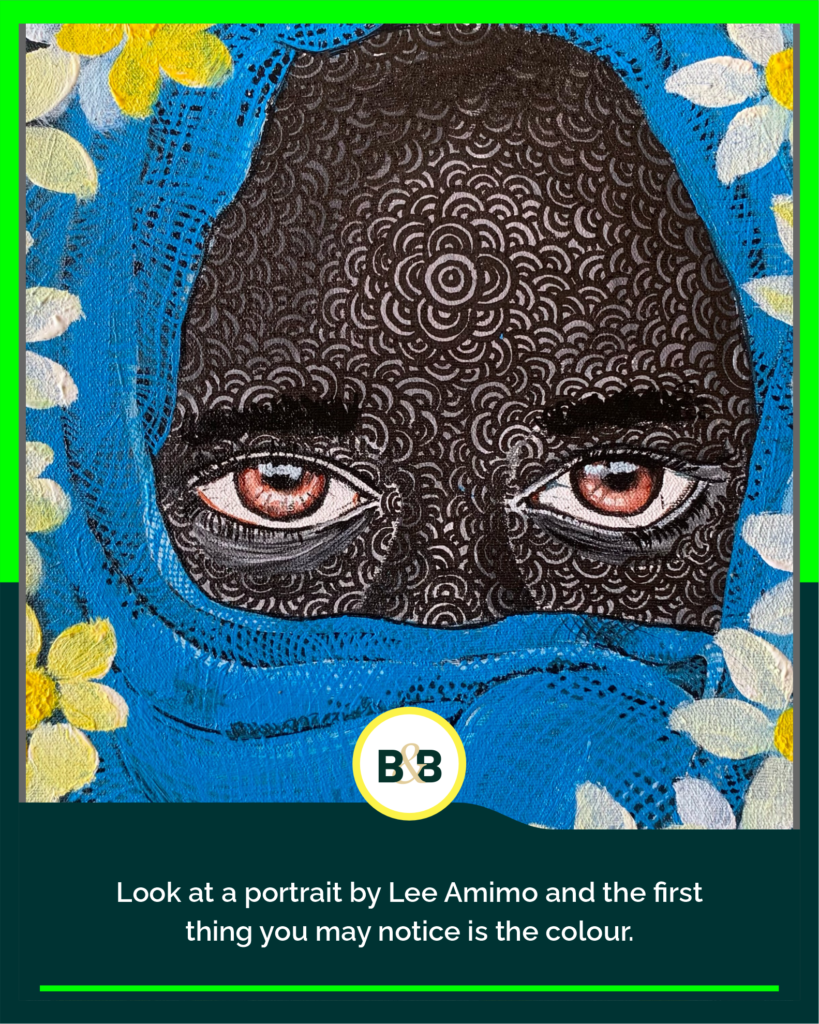
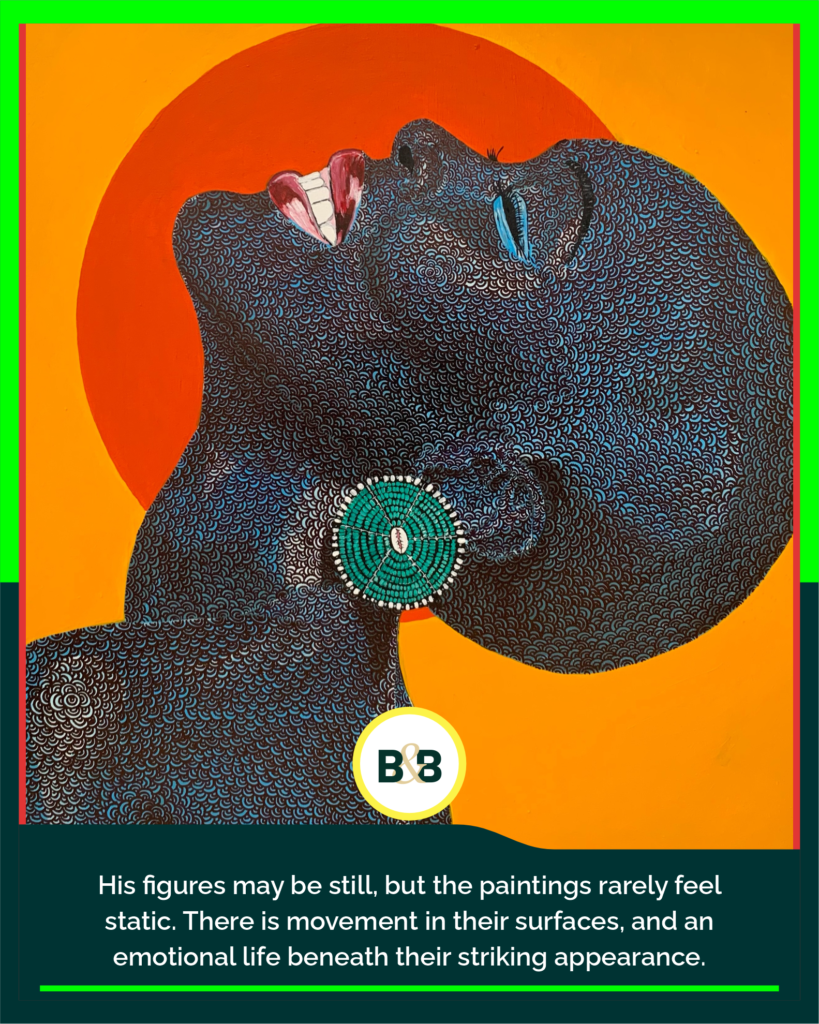
Look at a portrait by Lee Amimo and the first thing you may notice is the colour. Deep blues, vivid greens and expressive patterns give his subjects an almost otherworldly presence. Then the details begin to emerge: the directness of a gaze, the arrangement of a face, the small circles that move across the composition like ripples on water. His figures may be still, but the paintings rarely feel static. There is movement in their surfaces, and an emotional life beneath their striking appearance.
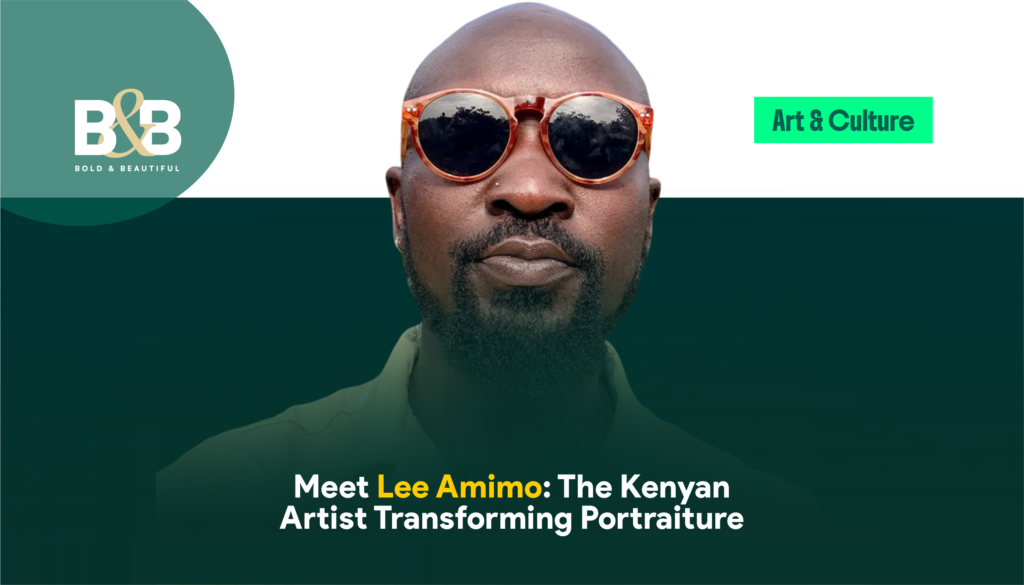
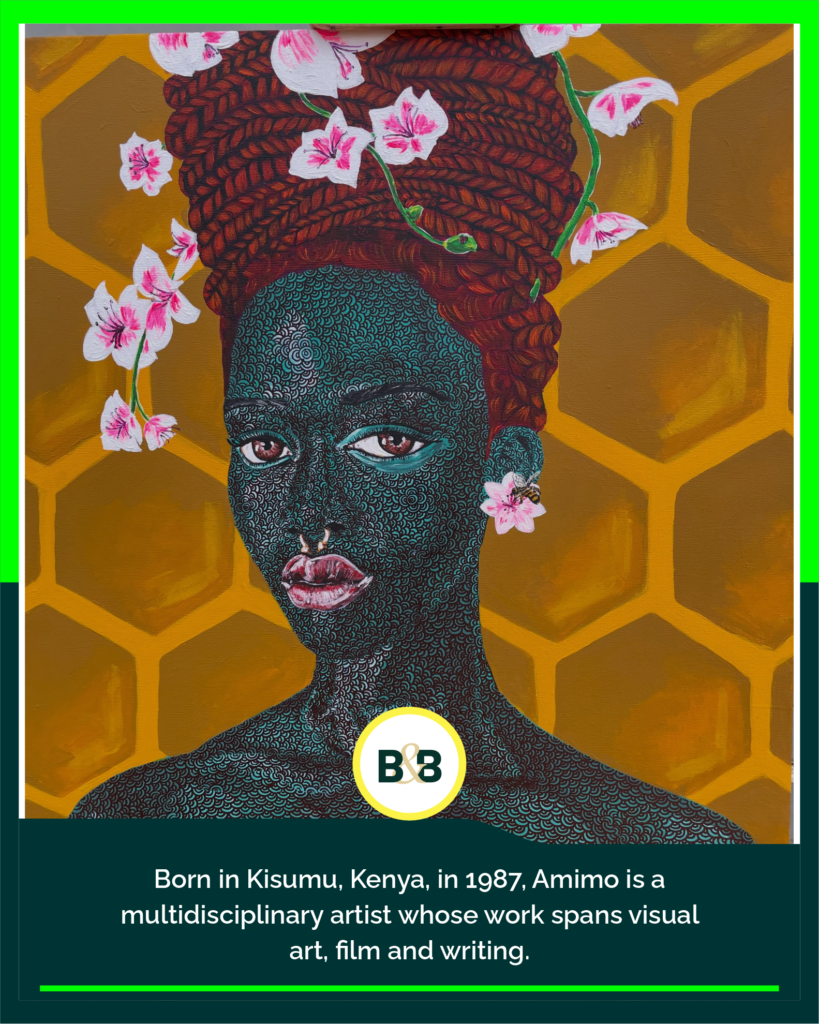
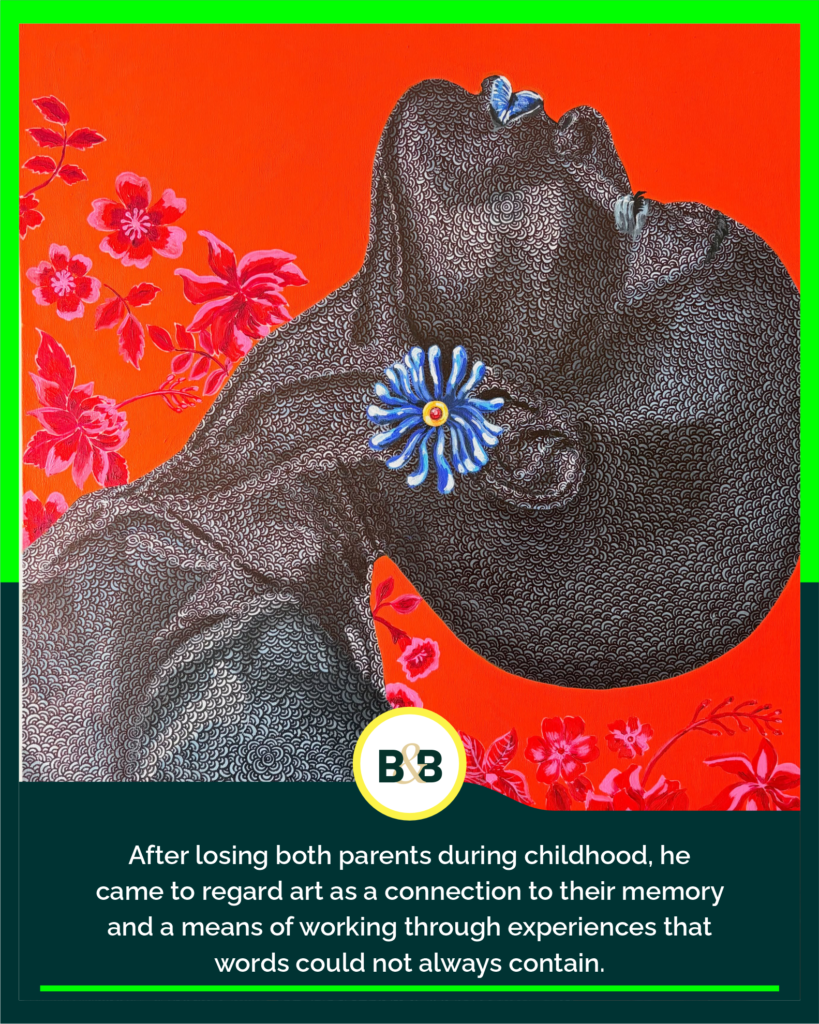
Born in Kisumu, Kenya, in 1987, Amimo is a multidisciplinary artist whose work spans visual art, film and writing. He studied Design, specialising in Illustration, at the University of Nairobi, graduating in 2011. Yet his relationship with art began much earlier. His father gave him his first drawing when he was three, introducing him to a practice that would eventually become a way of understanding the world. After losing both parents during childhood, he came to regard art as a connection to their memory and a means of working through experiences that words could not always contain.
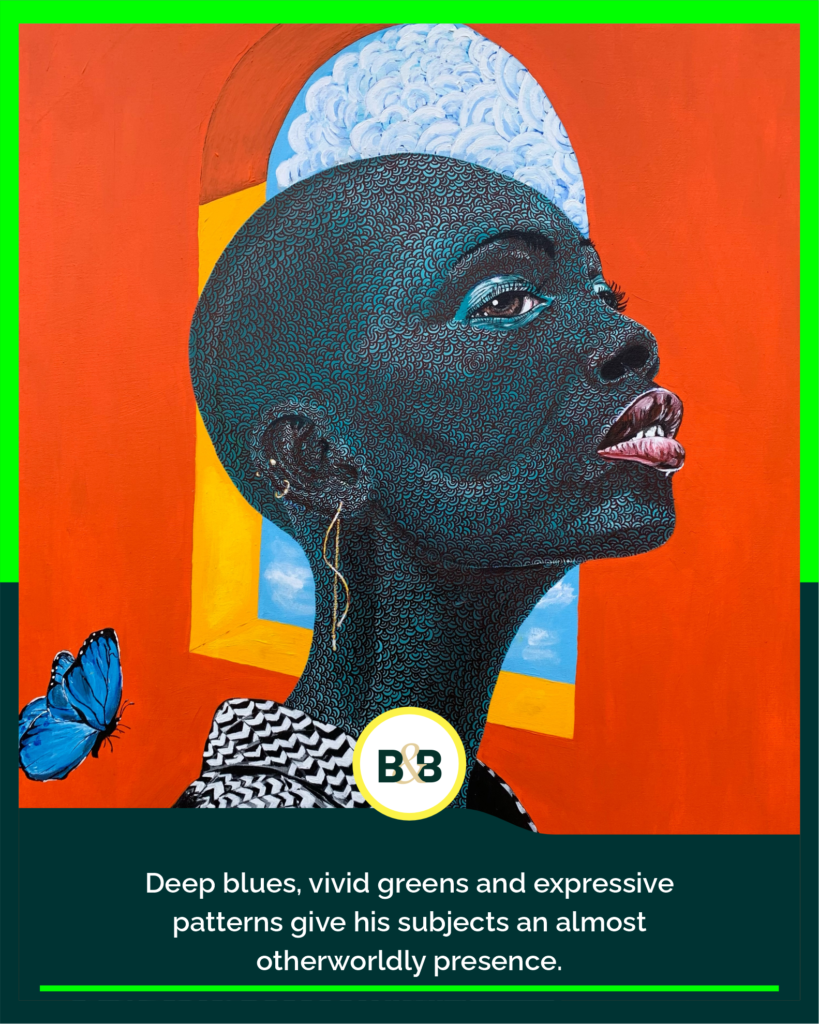
Today, he signs his paintings as Lee Amimo and describes his distinctive visual language as Ethereal Wheels. The name refers to the recurring circular patterns that move through his compositions, often arranged in groups of three. He associates these forms with energy, vibration and the less visible forces beneath everyday experience. The patterns are not simply decorative additions to a portrait. They give the figures a sense of motion and continuity, suggesting that identity is shaped by forces that cannot always be captured in a conventional likeness.
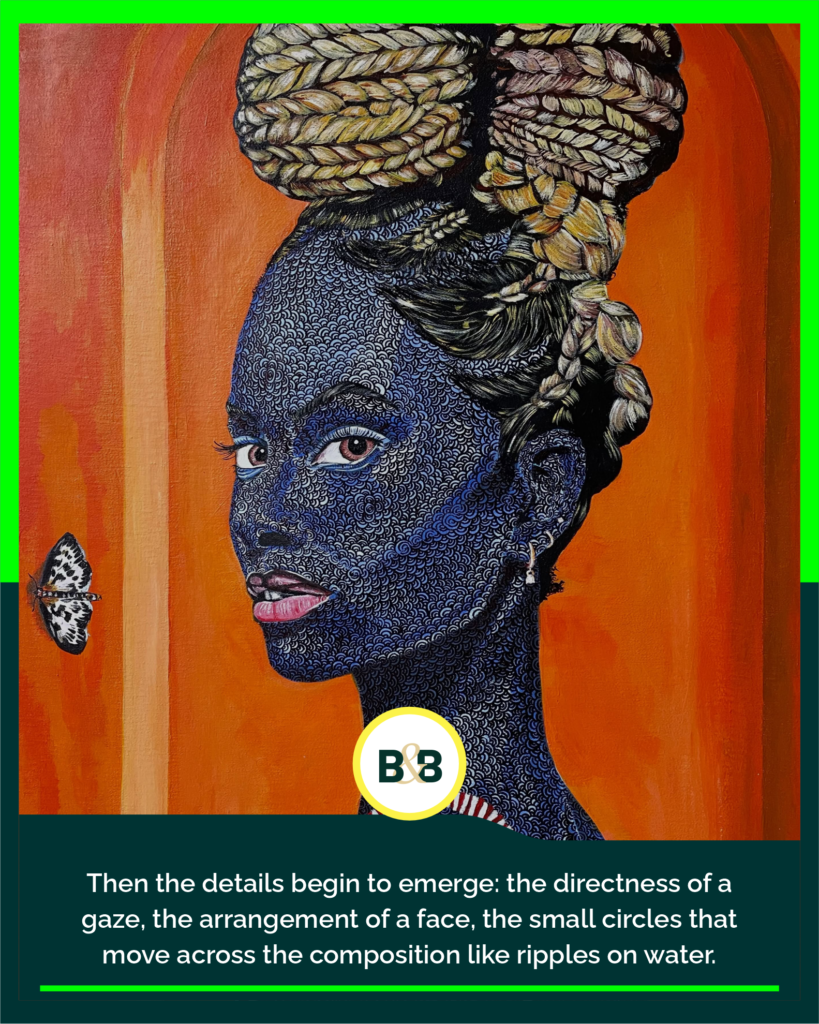
Women occupy a central place in this body of work. Amimo frequently paints female figures, often presenting them in shades of blue, with carefully considered clothing, expressive faces and elaborate patterns. His interest is not limited to physical beauty. He speaks of women as central to human existence and wants viewers to encounter qualities such as calm, hope and the desire to keep moving through his paintings. The subjects are composed with an attention that allows them to hold the viewer’s gaze rather than simply serve as objects of it.
His approach to portraiture sits between figurative painting and abstraction. The human form remains recognisable, but colour, pattern and symbolic detail alter how the viewer experiences it. A portrait can become an exploration of memory; a face can carry a feeling that is difficult to name. In Oguyo, for instance, the subject’s deep blue skin, intricate circular markings, vivid background and butterfly create a composition that moves beyond physical resemblance. The title refers to the Luo word for butterfly, connecting the image to a cultural reference while reinforcing the artist’s interest in transformation and beauty.
Amimo’s return to painting was not a straightforward progression from art school into a full-time artistic career. After graduating, he struggled to find sustainable opportunities in the creative industry and turned to writing, a profession he pursued for approximately a decade. He returned to drawing in 2022 after spending time managing another artist and observing the discipline of studio practice. By 2024, he was painting seriously again and developing the style that now defines his work. In a 2026 interview with Business Daily, he described a process guided largely by instinct, with individual paintings sometimes taking more than 200 hours to complete, including the time spent developing an idea.
That return has also brought a more personal understanding of what a portrait can do. Amimo has spoken about works finding unexpected connections with the people who acquire them. One painting, Ada, resonated with a woman who had recently lost her mother, whose name was also Ada. Another, Zahara, found a buyer whose new surroundings carried the same name. Such encounters have reinforced his interest in the relationship between an artwork and the private experiences people bring to it. The artist creates the image, but its meaning can continue to develop in the eyes of someone else.
Amimo’s growing body of work, including his Ethereal Whirls: Women in Blue series and his explorations of cultural traditions, places him within a wider generation of African artists expanding the possibilities of contemporary portraiture. His work does not depend on photographic likeness or a single conventional idea of beauty. Instead, it uses colour, pattern and emotional association to make the human figure a meeting point for personal history and cultural expression. The transformation he brings to portraiture is found in that shift: the face is no longer only something to be observed. It becomes a place to encounter memory, feeling and the many things that make a person who they are.