
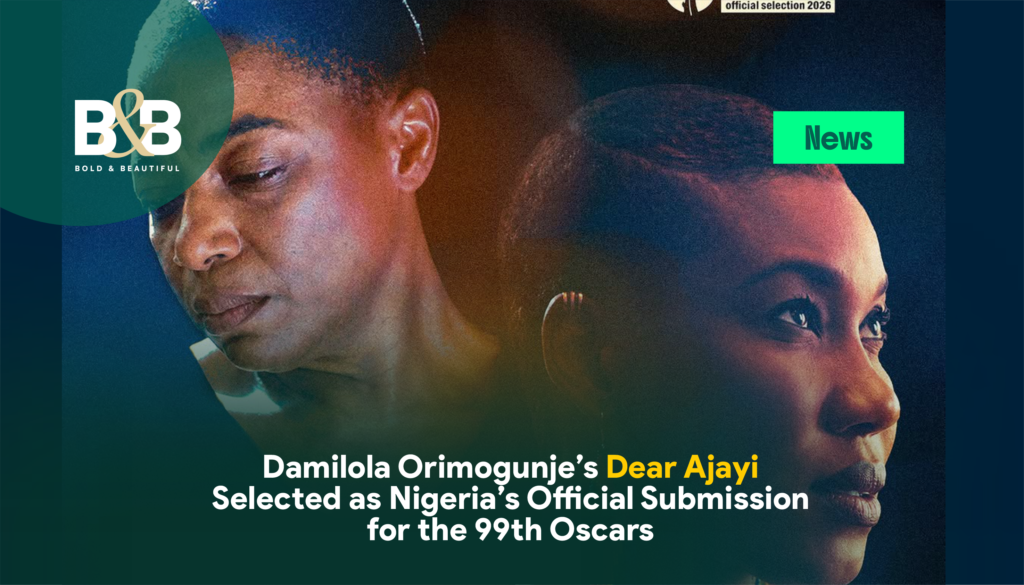
Nigeria is back in the Oscar conversation, and this time the film carrying the country’s hopes is a quiet family drama rather than a spectacle built for easy headlines. Damilola Orimogunje’s Dear Ajayi has been selected as Nigeria’s official submission for the Best International Feature Film category at the 99th Academy Awards, putting the Nigeria-Germany co-production on the road to Hollywood. The Nigerian Official Selection Committee made its choice after reviewing films submitted during its August call for entries. For a country that did not submit a film for the previous Oscars, the return carries its own significance.

At the heart of Dear Ajayi is a family already carrying years of unfinished business. Set in southwestern Nigeria in the 1990s, the film follows two estranged sisters, Ade and Titi Ajayi, who are forced back under the same roof to care for their paralysed mother. Ade, a devout Christian and the family breadwinner, has built her life around responsibility. Titi, an aspiring singer with a fiercely independent spirit, represents another way of living. Their reunion brings old resentments, grief and conflicting ideas about duty to the surface.
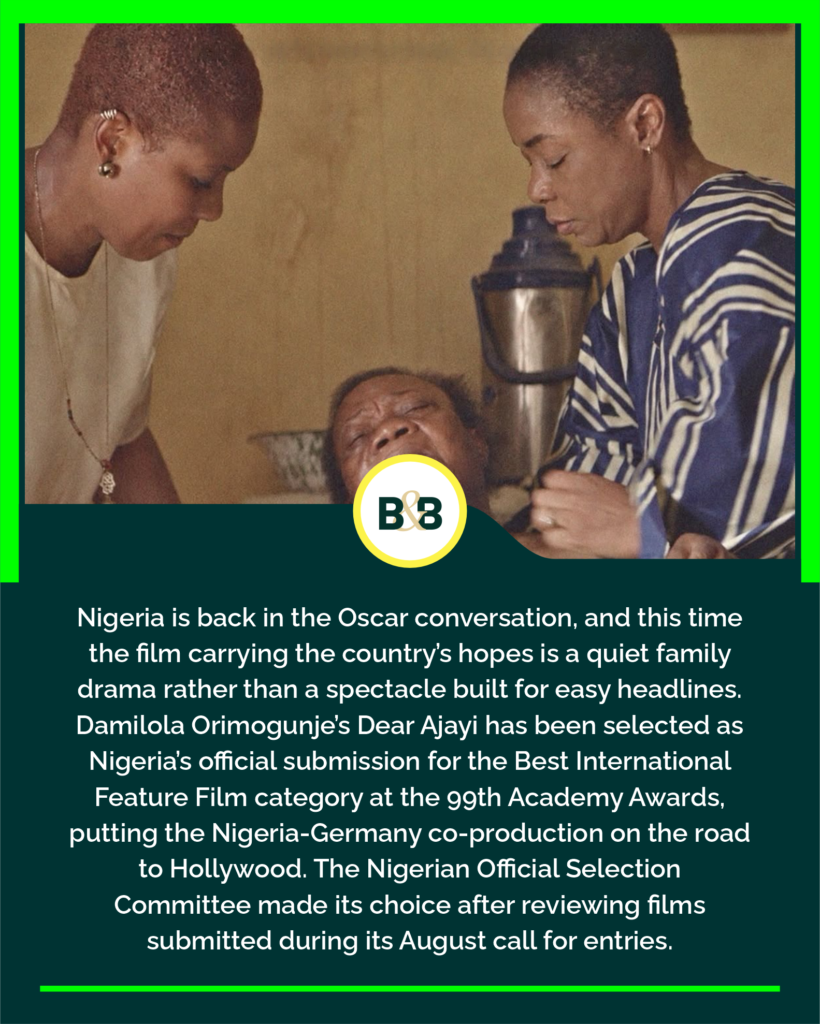
Orimogunje wrote and directed the film, assembling a cast led by Bimbo Akintola as Ade, Tosin Adeyemi as Titi and veteran actress Lanre Hassan as their mother. William Benson, Antar Laniyan, Uzoamaka Power, Michelle Dede and Chioma Omeruah, known professionally as Chigul, are also part of the ensemble. The film moves between Yoruba, English and Igbo, grounding its story in the linguistic and social textures of Nigeria rather than sanding them down for international consumption.

The film’s journey to the Oscars began years before the Academy entered the picture. Orimogunje started developing Dear Ajayi around 2017, with the screenplay passing through international development programmes including Ouaga Film Lab, Sud Écriture, the Berlinale Strategic Audience Design Lab and the Nouveau Marché in Montréal. Production eventually took place in Ibadan in 2025. The project was developed as a collaboration between Nigerian companies 2o9ine Films, Depth and Optics Productions and Germany’s Mayana Films, with support including the Hubert Bals Fund+ Europe.
Its international credentials had already begun accumulating before Nigeria’s Oscar committee made its decision. In 2026, Dear Ajayi became the first Nigerian feature selected for the competition section of Giornate degli Autori, the independent programme running alongside the Venice International Film Festival. The film subsequently won the Bisato d’Oro Award for Best Cast and Performances as well as the CICT-UNESCO Enrico Fulchignoni Prize, recognition that placed the production within a broader international conversation about contemporary African cinema.
That matters because Nigeria’s relationship with the International Feature Film category has been complicated. Genevieve Nnaji’s Lionheart, the country’s first submission, was disqualified from the 2020 race after the Academy determined that its predominantly English dialogue made it ineligible. Desmond Ovbiagele’s The Milkmaid later became the first Nigerian submission accepted into the category, although it did not reach the final shortlist. Mami Wata and Mai Martaba followed, while Nigeria made no submission for the 98th Academy Awards. Dear Ajayi therefore arrives carrying both a film and a renewed national ambition.
The road ahead is still long. Being selected by Nigeria does not mean the film has been nominated for an Academy Award. The Academy must first determine eligibility before the wider voting process produces a 15-film shortlist and eventually five nominees. The 99th Oscars are scheduled for March 14, 2027, in Los Angeles. Until then, Dear Ajayi has to compete in one of the world’s most crowded and closely watched international film fields, where critical recognition, visibility and sustained campaigning can become as important as the initial submission.
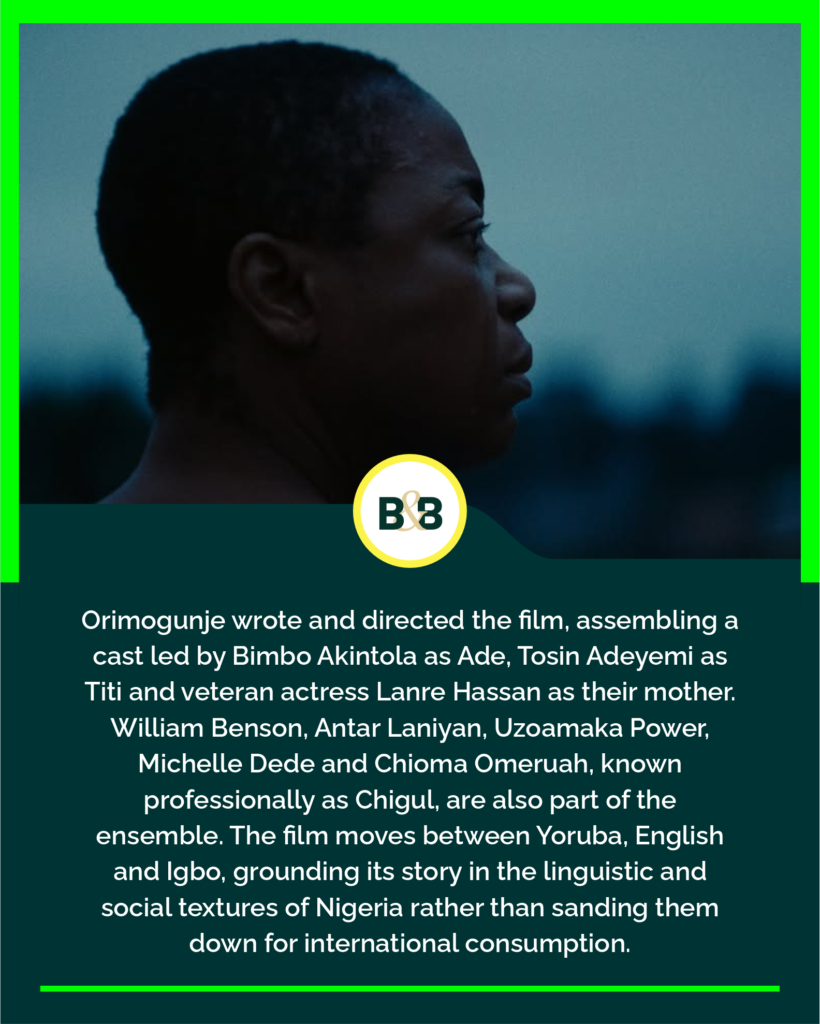
What makes the selection worth watching, however, is the kind of Nigerian story being placed before the world. Dear Ajayi is built around family, faith, music, responsibility, resentment and the complicated business of forgiveness. Its scale is intimate, but its questions are widely recognisable. After nearly a decade of development, Orimogunje’s film now has the opportunity to carry that distinctly Nigerian emotional landscape into one of cinema’s biggest international races. Whether it reaches the shortlist or goes further, Nigeria has placed another carefully made African story on the table. Now the Academy gets to decide how far it travels.