
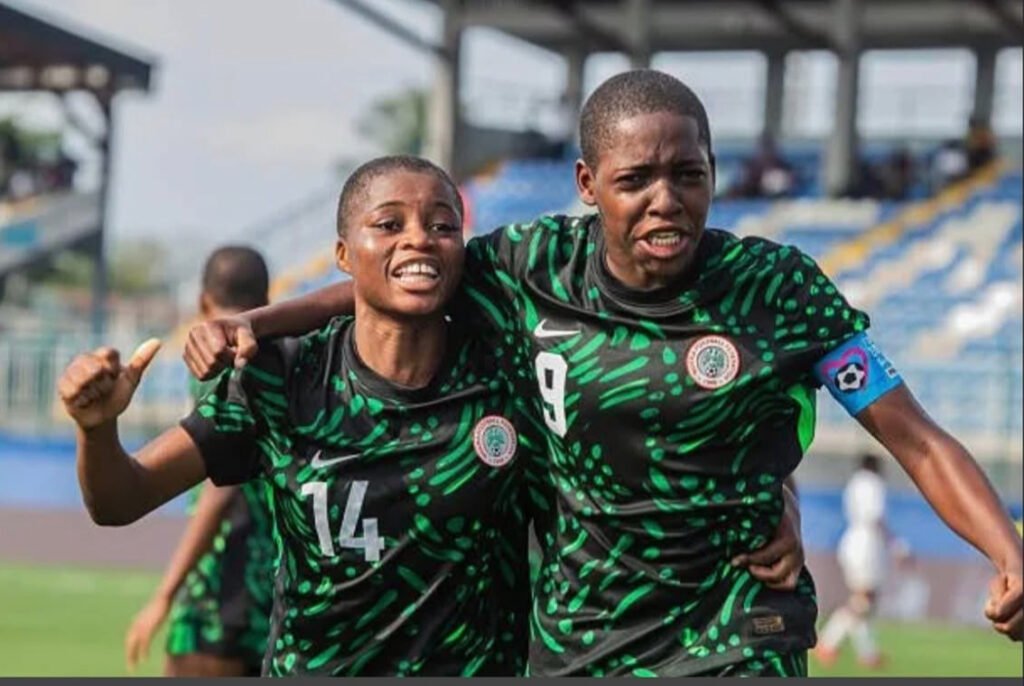
Nigeria’s Flamingos have taken African women’s football into new territory, defeating Japan 2-1 in Rabat, Morocco, on 7 November to win the FIFA U-17 Women’s World Cup for the first time. The victory makes Nigeria the first African nation to claim the title and the first African women’s team to win a FIFA World Cup at any level. For the players who delivered it, the achievement is both a national triumph and a moment that changes what young African footballers can see as possible.
The final was decided by two goals, one at the end of a closely contested first half and another almost immediately after the restart. Awawu Bashiru opened the scoring in the 39th minute, putting Nigeria ahead with an effort from distance. Japan were still trying to find their way back into the contest when Oluebube Umejiaku doubled the lead in the 47th minute, finishing a move created by Esther Stephen. The second goal gave Nigeria a valuable advantage, but the match was far from settled.
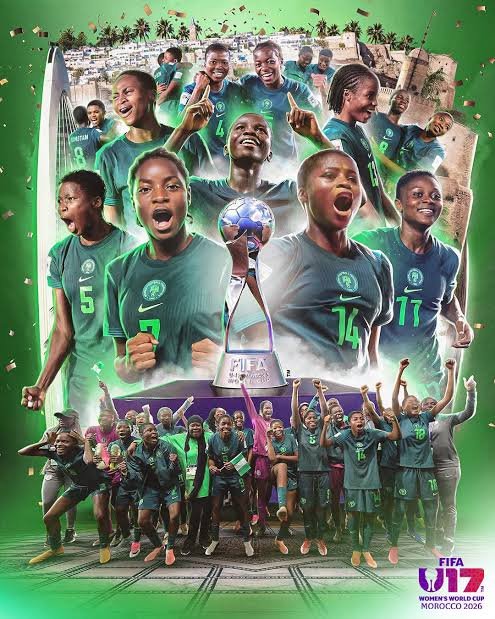
Japan, appearing in their fourth final in the competition, gradually increased the pressure. Their response arrived in the 80th minute, when Fuki Ito found the net to reduce the deficit. The closing stages brought a sustained Japanese push for an equaliser, but Nigeria kept their shape and protected their lead through five minutes of added time. The final whistle confirmed a result that had eluded every African team since the tournament began in 2008.
Nigeria’s route to the trophy makes the achievement even more striking. The Flamingos opened their campaign with a 2-1 defeat to Poland, a setback that left little room for further mistakes. They responded by finding their rhythm, defeating defending champions DPR Korea in the group stage and building a run of victories that carried them through the knockout rounds. Wins over Mexico and Venezuela were followed by a 3-1 semi-final victory against Brazil, earning Nigeria their first appearance in the final.
Umejiaku became one of the defining figures of that journey. She began the tournament among the substitutes but grew into a central attacking presence, scoring important goals as Nigeria advanced. Her finish against Japan proved decisive, while her performances across the competition earned her the Golden Ball as the tournament’s outstanding player. Bashiru also made her mark, scoring in the final after playing a decisive role in the semi-final victory over Brazil. Their contributions reflected a team whose threat came from several players rather than one source.
Head coach Akeem Busari’s side also had to manage the demands of a tournament in which every match brought a different test. Japan required patience and defensive discipline; Brazil had to be overcome in a high-stakes semi-final; and the final demanded composure after the late Japanese goal. Nigeria answered each challenge with a collective performance that gave the team its first world title at this level.

The victory carries particular weight for Nigerian football. The country has a distinguished record in the boys’ FIFA U-17 World Cup, having won the competition five times, but the women’s team had never reached the summit of its own tournament. The Flamingos have now added a landmark achievement to that history, becoming the first African country to win both the men’s and women’s editions of the FIFA U-17 World Cup. Their success also gives African women’s football a new reference point in a competition long dominated by teams from other regions.
For the players, the trophy will be the defining achievement of their young careers. For the next generation watching from Nigeria and across the continent, it offers something equally important: evidence that an African women’s team can compete for, and win, the highest prize in its age category. The Flamingos have returned from Morocco as world champions. African women’s football now has a new standard to build on.