

Seun Kuti and Egypt 80 have released their new album, Na Dem, bringing more than two years of work to a close with a record that takes Afrobeat’s political instincts into a contemporary, international setting. Available on digital platforms from 6 November 2026, the six-track project was recorded across Lagos, London, Paris, Rio de Janeiro, Los Angeles and Miami. Produced by Femi Koleoso, drummer and bandleader of British jazz collective Ezra Collective, the album brings together a cross-continental creative process without losing sight of the social questions at its centre.

Kuti describes the project as an exploration of Afrobeat’s ability to expose and challenge society’s problems. That intention is evident in the album’s title, Na Dem, a Nigerian expression that translates roughly as “It’s them”. The phrase carries an accusatory edge, directing attention towards those who exercise power while evading responsibility for the conditions around them. Across the record, Kuti takes aim at political hypocrisy, exploitation, inequality and the everyday pressures experienced by ordinary people. The result is music that invites movement while refusing to leave its subject matter at the door.
The album opens with Adara, named after Kuti’s daughter. Its meaning, “hope for a better day”, establishes an intimate point of departure for a record largely concerned with public life and collective frustration. From there, Real Life turns towards the contradictions of contemporary society, examining the gap between the lives people want and the realities they are forced to navigate. The opening tracks give the project a progression from personal hope to a broader examination of the world surrounding it.

On Problems, Jamaican reggae artist Kabaka Pyramid joins Kuti in a collaboration that connects Afrobeat with the socially conscious traditions of reggae. The track confronts the struggles and contradictions that shape everyday life, extending the album’s political conversation into a pan-African musical exchange. DJB, meanwhile, places the rhythm section of Egypt 80 at the forefront, allowing the band’s instrumentation and tightly constructed grooves to carry much of the track’s force.
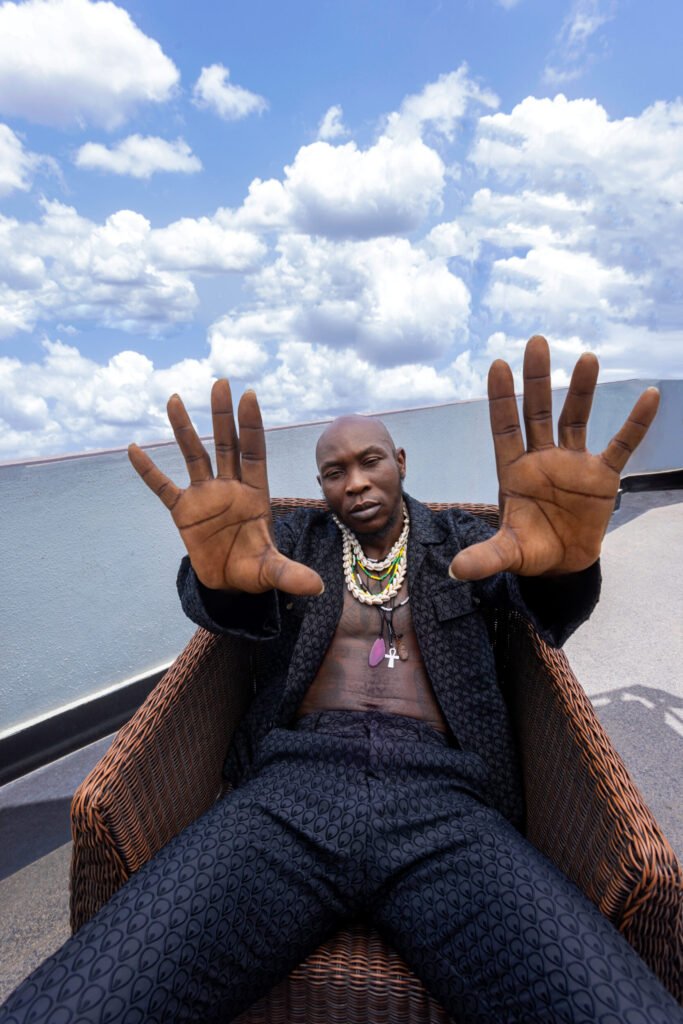
The title track features an especially striking collaboration with American guitarist Tom Morello, known for his work with Rage Against the Machine. Morello’s guitar adds a distinctive rock dimension to Egypt 80’s brass-driven sound, creating a meeting point between two musical traditions with a history of political dissent. The collaboration had already attracted attention before the album’s release, but its place within the full project gives it a wider context. Na Dem is the record’s centrepiece, bringing its musical ambition and confrontational message into sharp focus.

The album closes with As How, whose infectious grooves provide a rhythmic conclusion to a project that moves between reflection, criticism and resistance. Across its six principal tracks, the arrangements draw on the discipline and depth of Egypt 80, while Koleoso’s production gives the ensemble a contemporary framework. His involvement is particularly notable: as a musician associated with the expanding British jazz scene, he brings a different generational and musical perspective to a band whose history is inseparable from the development of Afrobeat.

Seun Kuti inherited leadership of Egypt 80, the band founded by his father, Fela Anikulapo-Kuti, following Fela’s death in 1997. Over the years, he has continued to perform and record within the musical tradition his father helped establish, while developing his own voice as a musician and outspoken social commentator. Fela used Afrobeat to confront military rule, corruption and abuses of power in Nigeria. Seun’s work carries that confrontational spirit into a different political and cultural landscape, addressing issues that now extend across national borders.

With Na Dem, Seun Kuti and Egypt 80 offer a record shaped by six cities, international collaborators and a production approach that draws on contemporary musical influences. Yet its defining concern is not geography or genre experimentation. It is the relationship between power and the people who live with its consequences. The album’s release adds another chapter to Afrobeat’s continuing evolution, with Kuti insisting that the music can remain rhythmically adventurous without becoming detached from the realities it seeks to confront.