
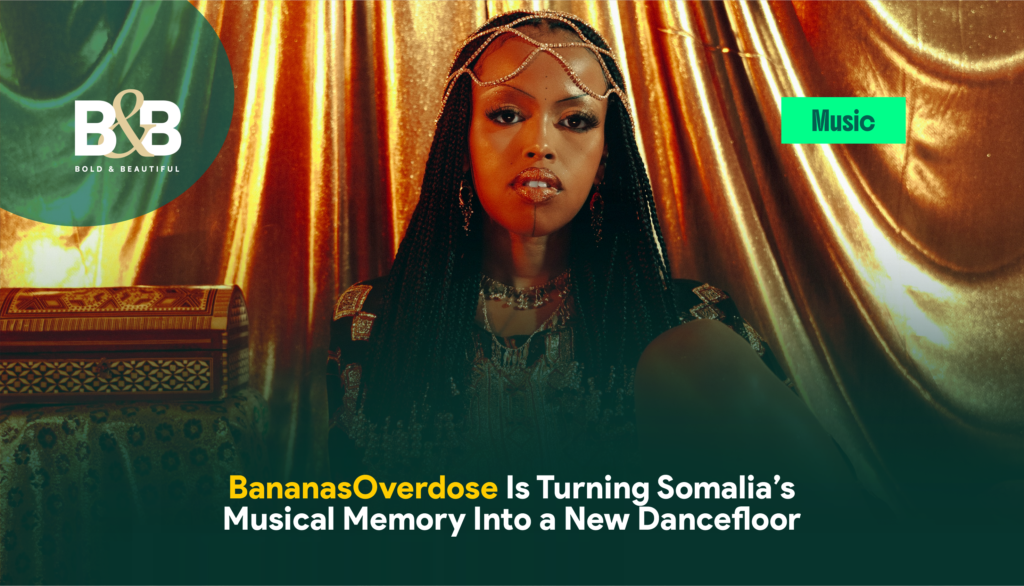
In BananasOverdose’s imagined Mogadishu, the music is loud, the colours are unapologetic and the women are free to take up space. It is a dancefloor shaped by the funk and disco of another era, but it belongs firmly to the present. For the Somali-Ethiopian artist, this is the world taking shape around Neo Mogadisco, her forthcoming debut album and an ambitious exploration of what happens when a country’s musical past meets one artist’s imagination.
The project began with a growing fascination with Somali music from the 1960s, 1970s and 1980s. In recordings from that period, BananasOverdose, whose given name is Yasmine, encountered a musical culture that was adventurous, expressive and difficult to reconcile with the narrower picture of Somali identity she had come to know. The sound caught her attention first. The performances held it. She became particularly drawn to the Dur Dur Band’s “Gorof” and the voice of its lead singer, Sahra Dawo. She also found herself returning to the work of Magool, Hibo Nuura, Khadra Dahir and Qamar Cabdilaahi Harawo, women whose voices helped define the era.
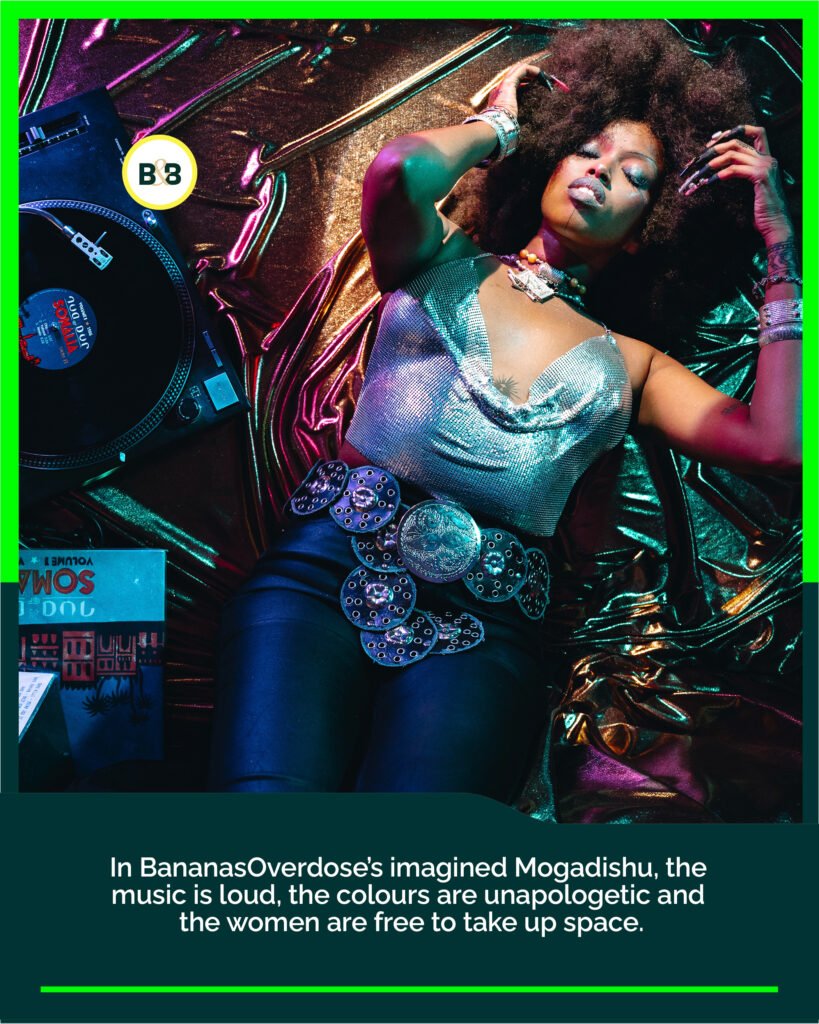
What interested her was not nostalgia for a lost decade. It was the evidence of creative freedom. The women in those old performances dressed boldly, moved confidently and occupied the stage without appearing to apologise for themselves. For Yasmine, that image opened up a different way of relating to her heritage. She had grown up in a Muslim household in Saudi Arabia, where, by her account, the environment offered limited room for the kind of creative expression she naturally gravitated towards. Looking back at Somalia’s musical history, she found artists who challenged the idea that culture had to be experienced through a single set of expectations.
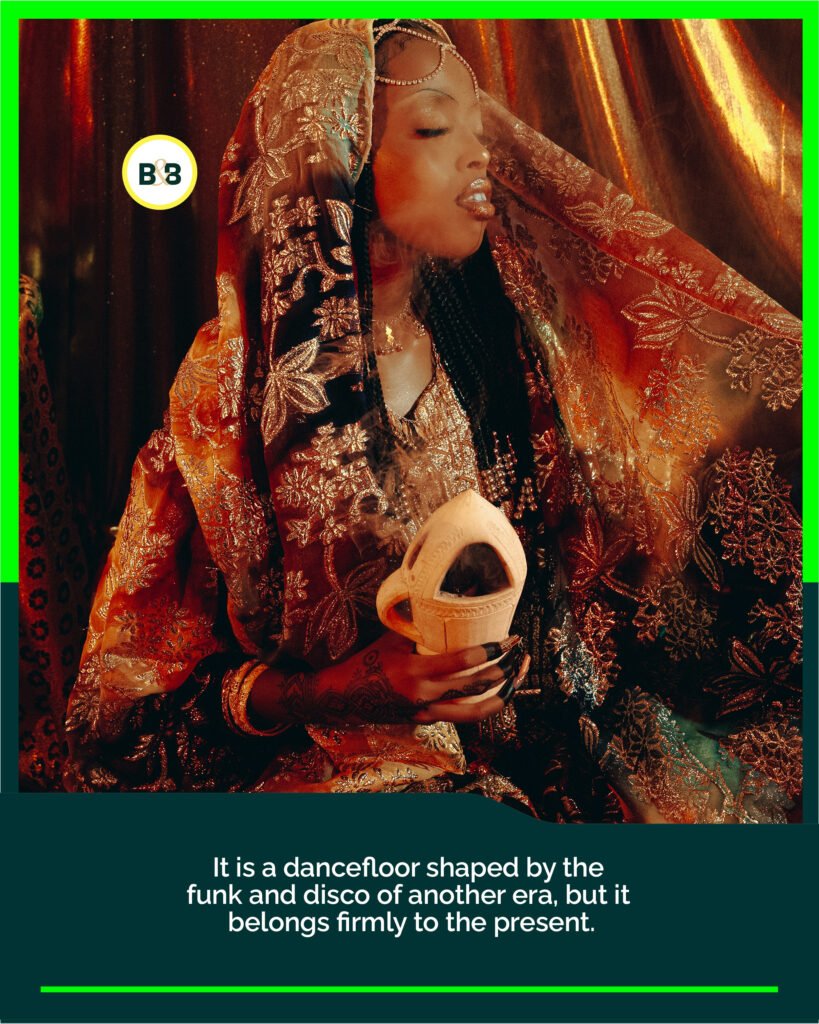
That search also gave new direction to an artist who had spent years developing a sound outside conventional categories. In 2020, she released “Fuckboy Farax”, a Somali-language rap track that emerged from her anger at online attempts to silence women speaking out after a schoolgirl was sexually assaulted near Mogadishu. The song introduced the confrontational side of BananasOverdose’s work, where music becomes a way to address gender, power and social attitudes. Her 2024 track “SomAlien” explored the distance she felt from her own culture. The historical recordings she later discovered offered another possibility: she could question parts of her inheritance without turning away from the whole.
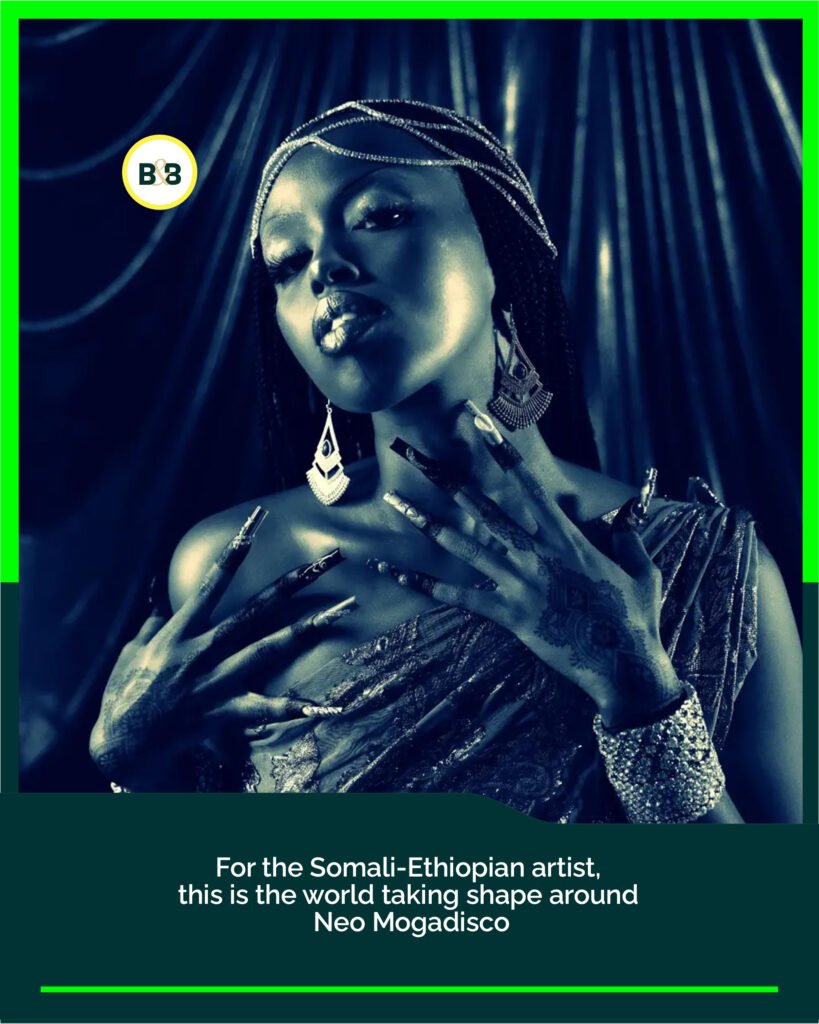
That relationship between past and present became more direct with “Keen Lacagta”, released in 2025 as the first single from Neo Mogadisco. The track reimagines “Itaataabo”, a song by Qamar Cabdilaahi Harawo from the 1975 theatre production Hablayahow Hadmaad Guursan Doontaan? The original production used questions of romance and marriage to examine social expectations. Yasmine was drawn to its provocative spirit and the space it created for women to speak about their own lives. Her interpretation carries that history into a different musical setting, allowing an older work to speak to a new audience without being confined to its original moment.
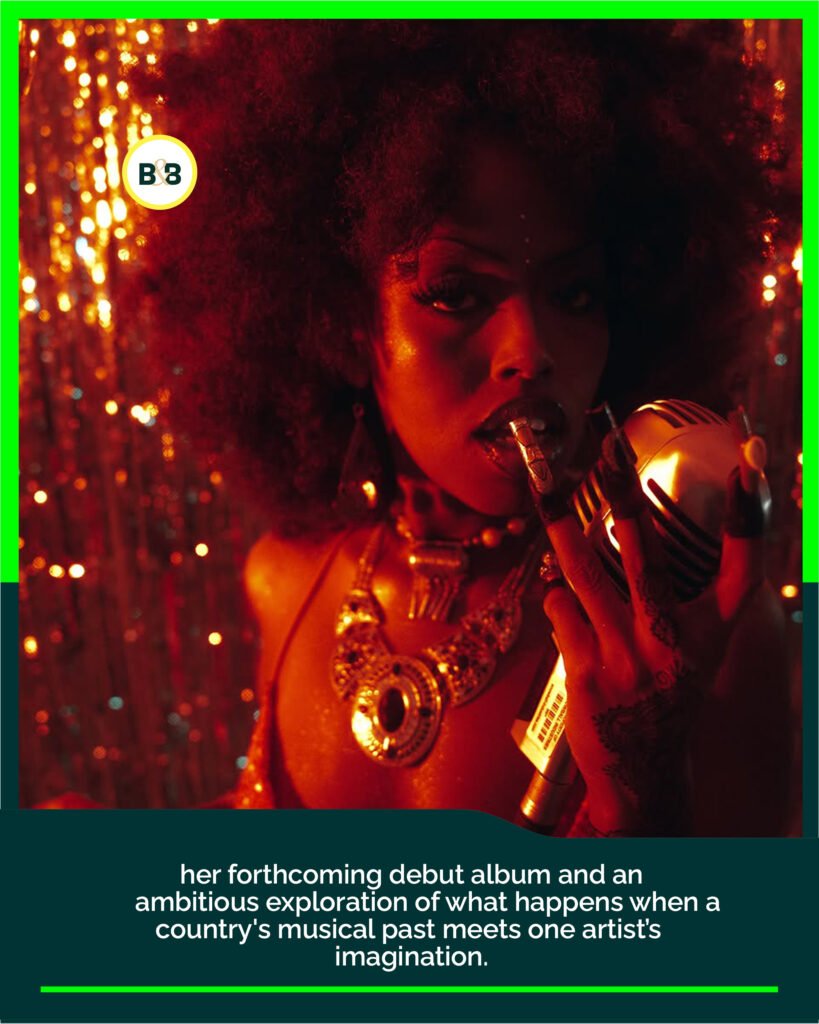
The album’s second single, “MOGADISCO!”, offers a more immediate glimpse of the world she is building. Its disco and funk references are recognisable, but the intention is not to reproduce the sound of 1970s or 1980s Somalia. Yasmine has described her approach as absorbing those influences and allowing them to emerge through her own instincts as a rapper and experimental artist. The music moves between playful, dance-led passages and more reflective moods. Its collaborators include her husband, a guitarist and producer, and a Dutch producer who shares her interest in the Mogadishu sound. Some of the early work that shaped the album took place in her apartment, where an idea she had carried for years began to find its form.
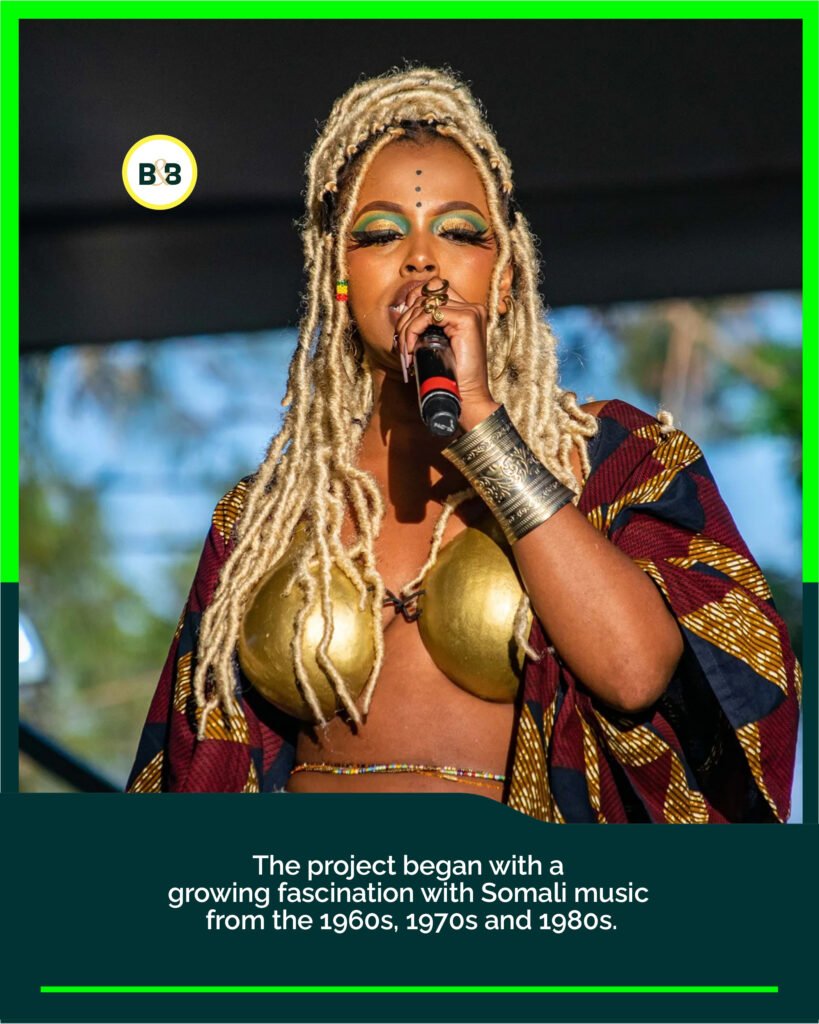
There is a personal dimension to the album’s theatrical presentation, too. The dramatic styling, oversized Afro, gold details and expressive visual identity connect with the kind of representation Yasmine wishes she had encountered as a child. She has spoken openly about the restrictions she experienced growing up and the impact of female genital mutilation on her understanding of womanhood and sexuality. Those experiences inform the wider context of her work, but they do not define its entire vocabulary. Neo Mogadisco makes room for pleasure, humour, experimentation and the freedom to create without constantly explaining oneself. That freedom has come with resistance, including online harassment serious enough to delay the album’s rollout and affect her sense of safety.
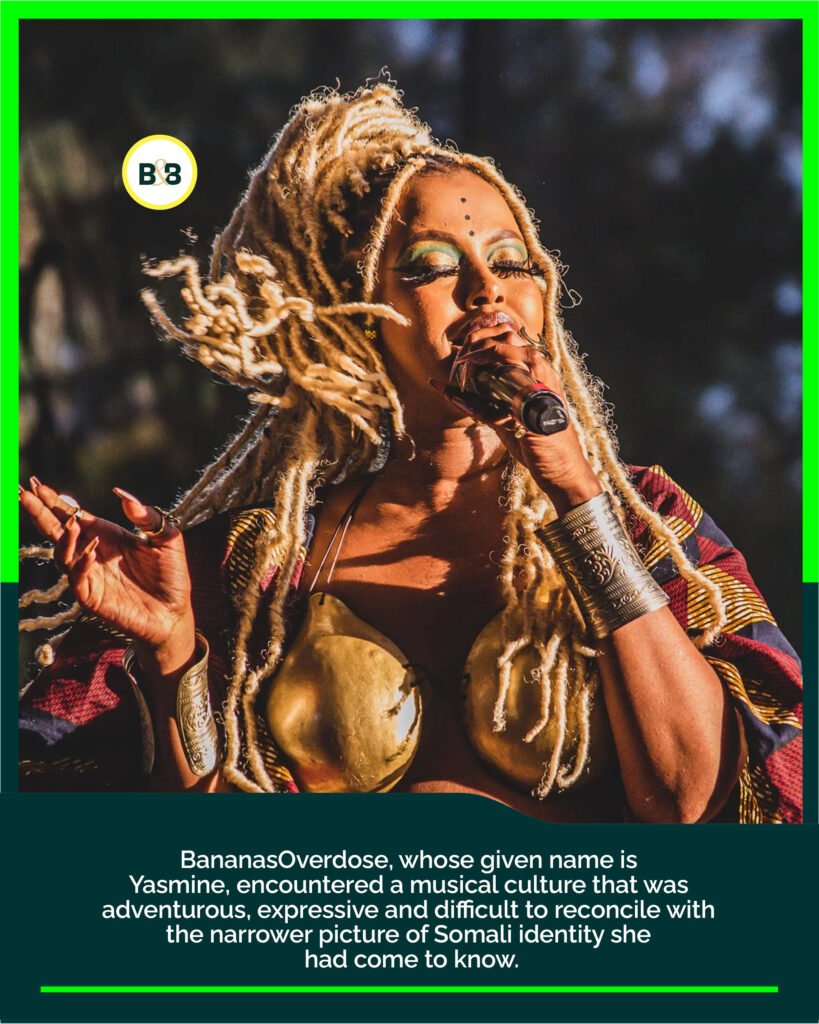
Yasmine is not asking the past to return exactly as it was. She is interested in what its music, its performers and its possibilities can make available to the present. Her relationship with Somali culture has moved away from the pressure to accept or reject it as a whole. As she has put it, “I can pick what I want from it and leave what I don’t.” That choice sits at the centre of Neo Mogadisco. The album is taking shape as a place where old recordings can meet new production, where Somali women’s musical history can be heard beyond the archive, and where an artist can build a cultural home on her own terms. The dancefloor she imagines may look back to Mogadishu in 1978, but the invitation is for anyone ready to move with her into what comes next.


