
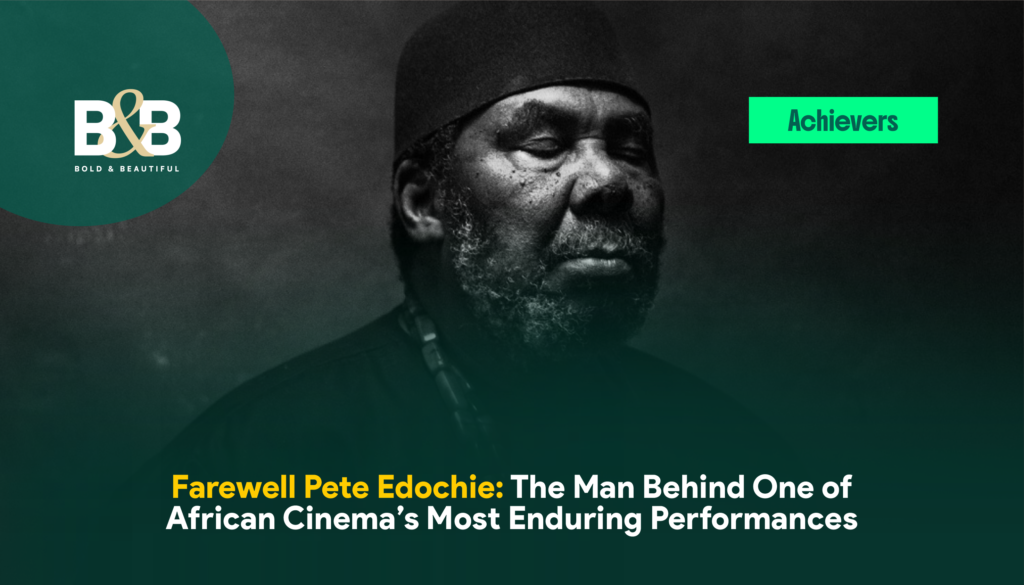
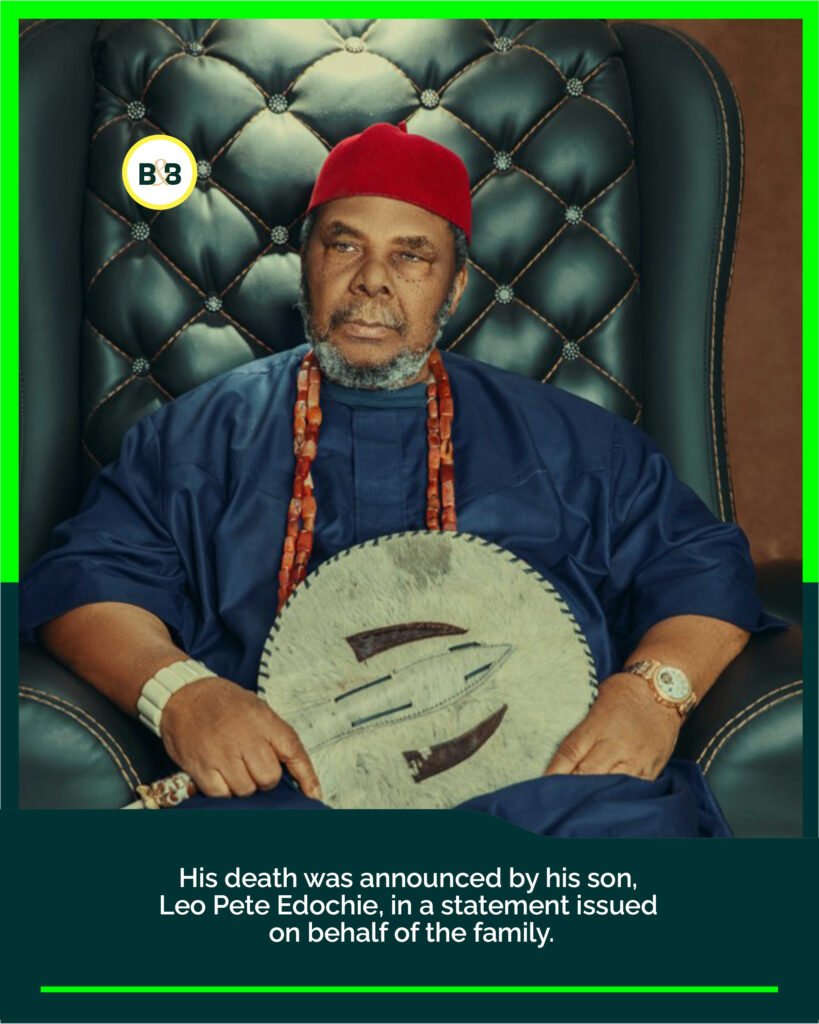
Before Nollywood became an industry with a name, before its films travelled through video shops, cinemas and streaming platforms, Pete Edochie had already given Nigerian television one of its defining performances. His portrayal of Okonkwo in the Nigerian Television Authority’s adaptation of Chinua Achebe’s Things Fall Apart introduced audiences to an actor who understood the weight of a character, the power of language and the difference between being heard and being understood. Nearly four decades later, that performance remains a reference point in discussions about Nigerian acting. Edochie died in Enugu at 12:30 a.m. on Wednesday, 25 November 2026, aged 79, following a prolonged battle with prostate cancer. His death was announced by his son, Leo Pete Edochie, in a statement issued on behalf of the family.
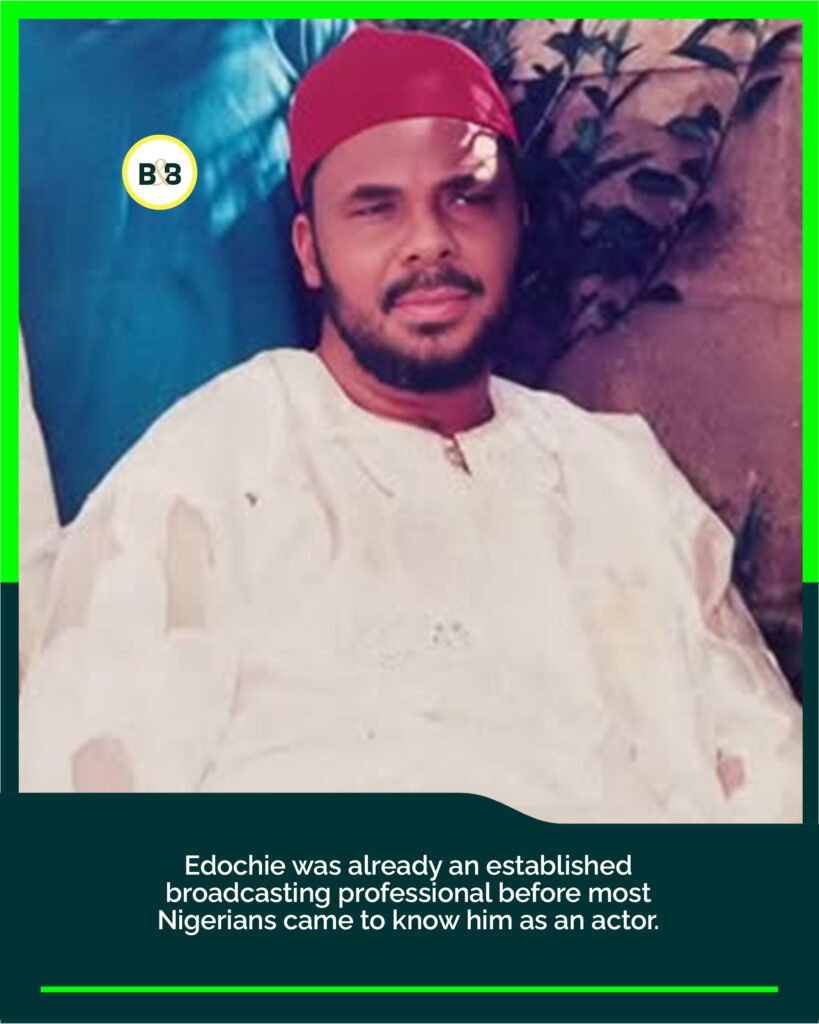
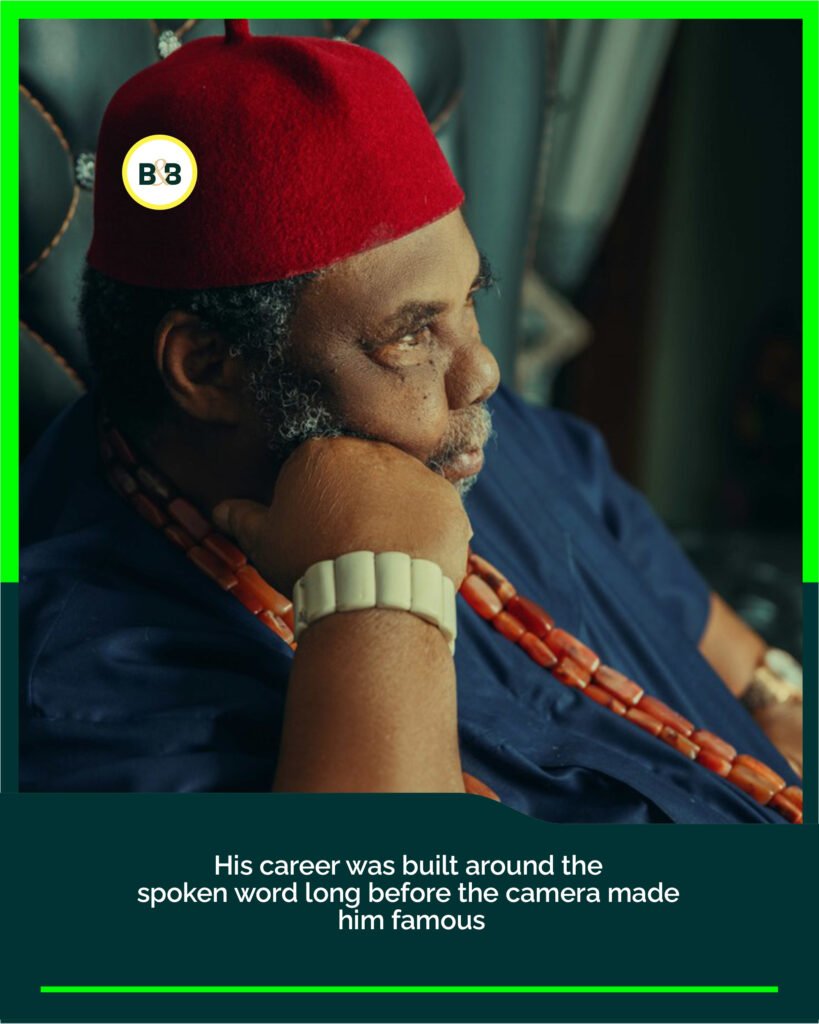
There is an interesting detail about the career that preceded his fame: Edochie was already an established broadcasting professional before most Nigerians came to know him as an actor. He joined the Eastern Nigerian Broadcasting Corporation in February 1967, initially as a junior programmes assistant. He would spend more than three decades in broadcasting, working through the upheavals of the civil war, serving with the Voice of Biafra and later rising to senior management positions at the Anambra Broadcasting Service. He trained with the BBC in 1980 and worked across radio, television and drama. In a 2022 interview, he recalled presenting Music from the Masters, a programme devoted to classical music. His career was built around the spoken word long before the camera made him famous.
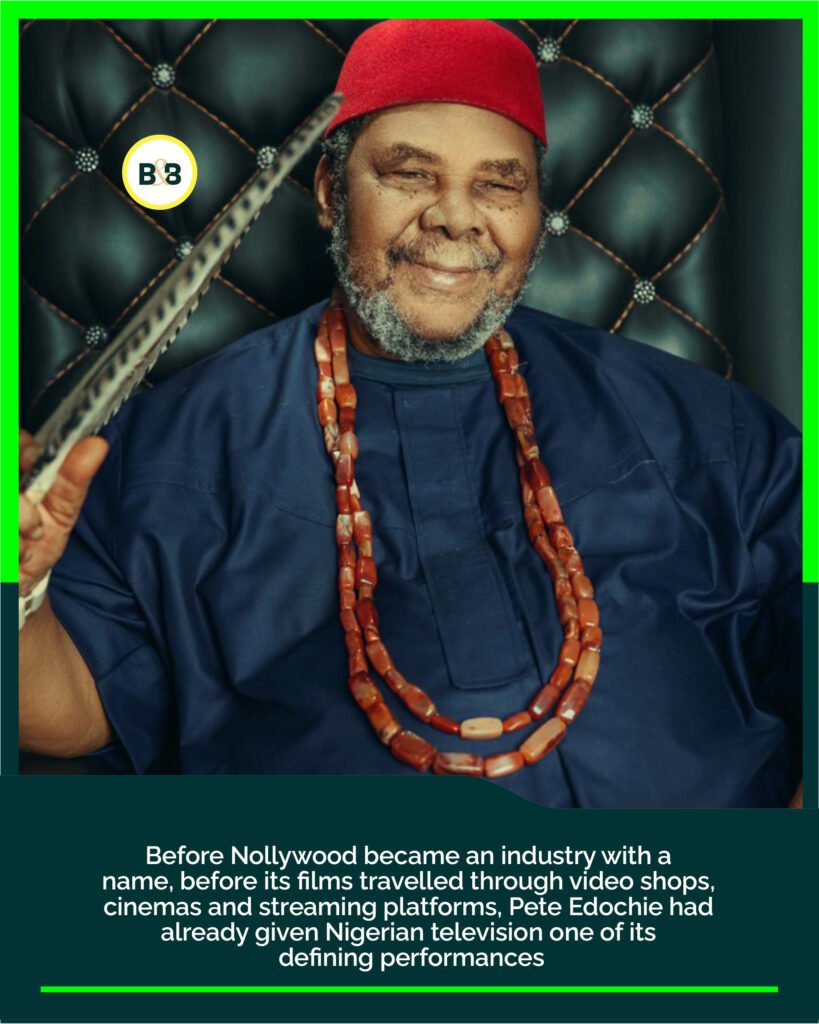
Acting, therefore, was not an accidental discovery made when an opportunity arrived. Edochie had performed in school productions of Shakespeare, including Julius Caesar and The Merchant of Venice. He also appeared in television drama productions such as Every Man and Sons and Daughters while working in broadcasting. When the opportunity to play Okonkwo came, he was not approaching the character as an inexperienced newcomer. He brought years of performance, voice work and an understanding of television production to the role. In later interviews, he recalled that the adaptation gave him international exposure and that Chinua Achebe had praised his interpretation. The author, he said, continued to call him Okonkwo.
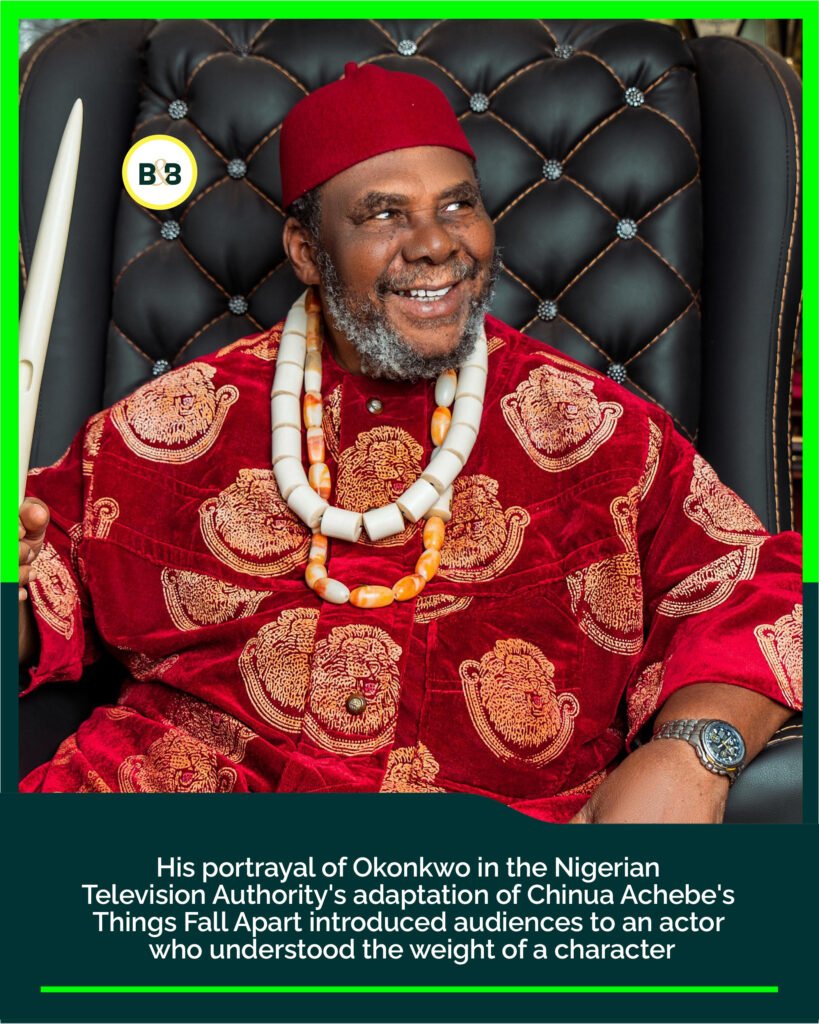
The achievement of that performance deserves a closer look. Okonkwo is often remembered as a powerful warrior and respected man in Umuofia, but Achebe’s character is driven by a fear he cannot admit: the fear of resembling his father, Unoka, whom he considers weak and unsuccessful. His reputation for strength becomes a prison. He struggles to recognise tenderness as anything other than weakness, and his refusal to bend eventually contributes to his destruction. Edochie played the contradiction. He gave Okonkwo the physical authority the character demanded without losing the insecurity beneath it. That distinction is central to why the performance endured. He did not simply play a powerful man; he played a man whose idea of power was slowly undoing him.
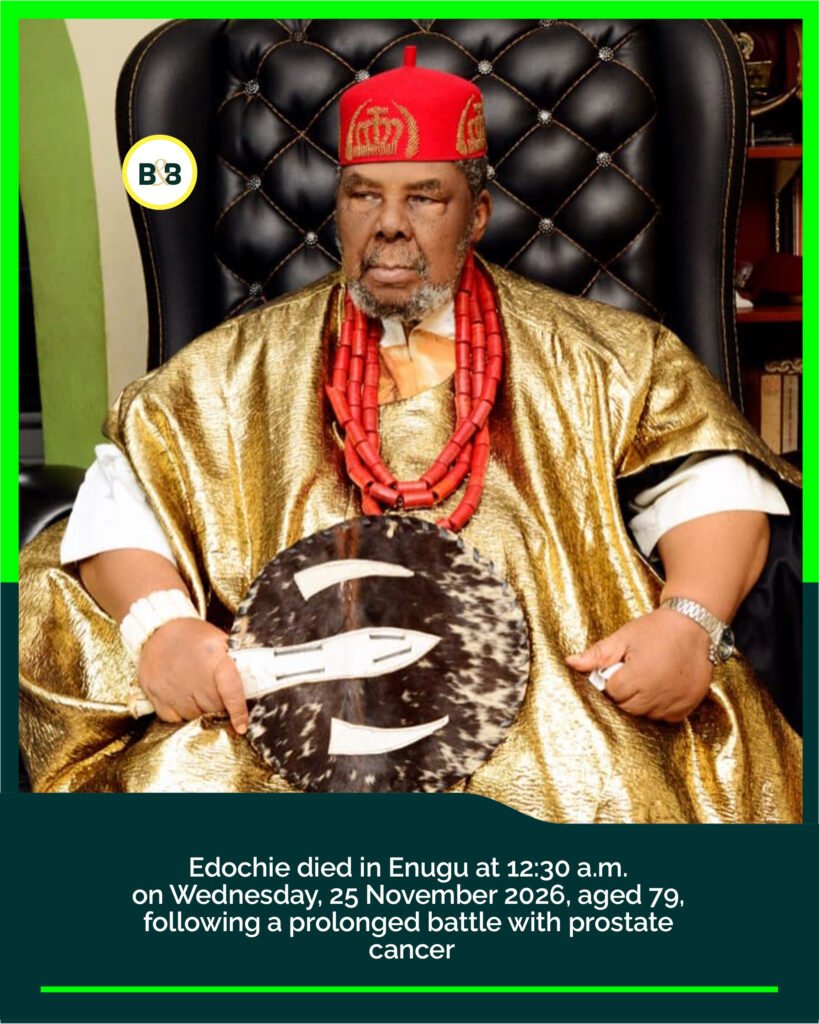
The role also placed an important Nigerian literary work before television audiences in a form that carried its language, setting and cultural detail into people’s homes. Achebe’s novel had already travelled internationally, but the screen adaptation gave its characters a visible presence for another generation of readers and viewers. Edochie’s interpretation became the image through which many encountered Okonkwo. The BBC sent a team to Nigeria to interview him after the performance attracted international attention. The connection between actor and character became so strong that Edochie would later speak of how audiences continued to address him by the name. It was an extraordinary professional achievement, although it would also shape the kinds of roles producers repeatedly brought to him.
After Things Fall Apart, Edochie moved into a Nigerian film industry that was taking shape around a new home-video economy. He appeared in productions including Ikuku, Igodo and Rituals, becoming a familiar presence in stories about family, power, inheritance, tradition and social order. His commanding delivery and fluency in proverbs made him a natural choice for chiefs, fathers and traditional rulers. But the frequency of those roles sometimes obscured the range of his earlier experience. He had worked in broadcasting, stage drama and television long before the industry began to market him through the familiar image of the uncompromising patriarch. In a 2022 interview with TheCable, he made the point plainly: Things Fall Apart predated Nollywood by several years.
His career continued into a period when Nigerian films began reaching audiences through international festivals and global distribution platforms. In Genevieve Nnaji’s Lionheart (2018), he played Chief Ernest Obiagu, a business owner whose health and succession concerns place his family company under pressure. The film gave audiences a different setting for his familiar screen presence, while introducing him to viewers who had discovered Nollywood through a newer generation of productions. Edochie also received the national honour of Member of the Order of the Niger in 2003, alongside industry recognition including the Africa Magic Industry Merit Award and a Lifetime Achievement Award from the Africa Film Academy.
He leaves behind his wife, Barrister Josephine Edochie, their children, including actors Yul and Linc Edochie, and a body of work that belongs to several chapters of Nigerian screen history. Yet his most consequential performance remains tied to a character whose tragedy was rooted in the inability to accept change. That is a fitting point from which to reconsider Edochie’s career, not because actor and character were the same, but because his interpretation made the conflict legible to millions of viewers. He gave Okonkwo a voice, a face and a human complexity that outlived the production. Nigerian television had many actors before him and Nollywood has produced many since. Few performances have travelled as far into the country’s cultural memory.