
Inside her creative connection with Angélique Kidjo.
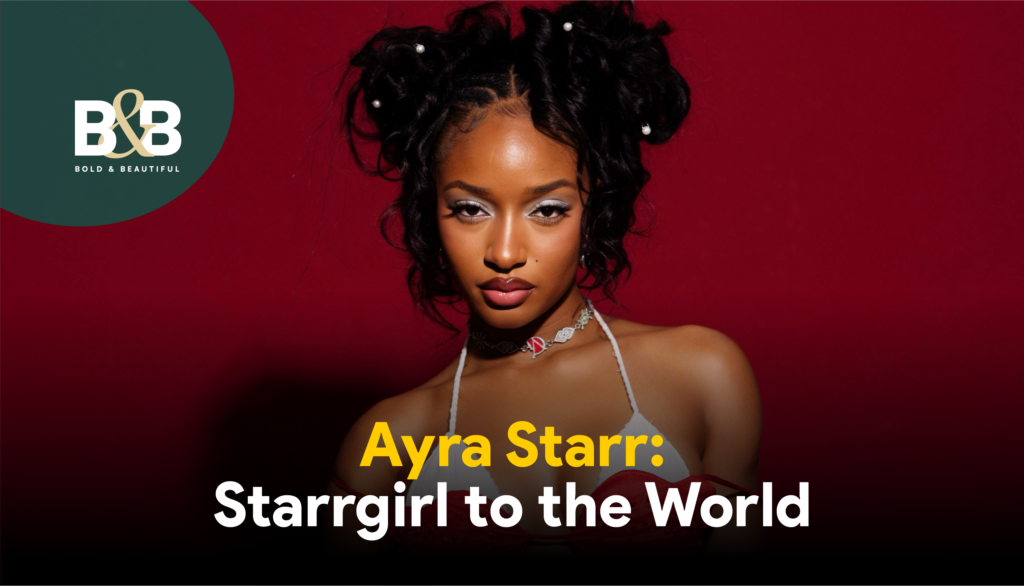
There is a particular confidence in the way Ayra Starr now introduces herself. Not as an artist waiting to be discovered, or a young singer hoping to earn her place in the room, but as a woman increasingly comfortable with the space she occupies. On the cover of her third studio album, Starrgirl, she wears a gele, an unmistakable expression of her Yoruba identity, while the imagery around her reaches towards something celestial. The message is personal, but its ambition is global. Ayra knows where she comes from. She is also increasingly clear about where she intends to go.

The 2027 Grammy nominations have given that confidence another significant platform. Ayra has received two nominations at the 69th Annual Grammy Awards: Best Global Music Album for Starrgirl and Best African Music Performance for “Aye Kan (Are You Coming Back?)”, her collaboration with five-time Grammy winner Angélique Kidjo. The nominations recognise two different dimensions of her artistry. One celebrates a full-length body of work under her own name; the other acknowledges a musical partnership with an artist whose influence helped shape her earliest understanding of what an African woman could achieve in international music.

Released on 14 August 2026 through Mavin Records and Republic Records, Starrgirl contains 16 tracks and features an unusually broad range of collaborators, including Wizkid, Rema, ZAYN, Leon Thomas, kwn, Theodora and Danny Ocean. Its sound moves between Afrobeats, R&B, pop, amapiano and electronic influences, without treating those styles as separate destinations. The album allows Ayra to move between moods and musical settings while retaining the vocal character that has made her recognisable. On “Dangerous”, she leans into a commanding, rhythm-driven sound; “Heaven Baby”, featuring ZAYN, takes a more intimate pop direction; while “Letter to God” offers a more reflective moment. The variety is deliberate. Starrgirl is an artist testing the extent of her creative range without surrendering her centre.

In an interview with The FADER, Ayra explained the thinking behind the project with a distinction that says much about her development. Previously, she had approached her career from the perspective of who she needed to become. With Starrgirl, she said, “it’s just like, I am.” That shift is important. Her earlier work often carried the urgency of a young woman establishing boundaries, announcing her ambitions and making herself heard. The new album finds her less concerned with proving that she belongs and more interested in exploring what she can do with the position she has earned. Even its title reads as an assertion of identity rather than an invitation for approval.

Born Oyinkansola Sarah Aderibigbe in Cotonou, Benin, on 14 June 2002, Ayra grew up between Beninese and Nigerian cultural influences before building her musical career in Lagos. She began singing in church and sharing covers and original recordings online. One of those early recordings, “Damage”, attracted the attention of Mavin Records founder Don Jazzy, leading to her signing with the label. Her self-titled debut EP arrived in 2021, followed by 19 & Dangerous, an album that introduced a young artist with a sharp sense of melody, an instinct for memorable hooks and a willingness to place her personality at the centre of her music. “Bloody Samaritan” and, later, “Rush” carried that introduction far beyond Nigeria.

Her rise has not depended on one sound or a single defining hit. The Year I Turned 21, released in 2024, documented another stage of her growth, while collaborations and international performances expanded her reach. “Rush” became a major international success, and her work with artists from different musical backgrounds has allowed her to move between audiences without losing the identity that first attracted them. Her appearances alongside Wizkid, Rema and other established names have also placed her within a generation of Nigerian artists whose collaborations increasingly cross borders, genres and established industry categories. The Grammy recognition for Starrgirl is another step in that progression, but the album itself offers a fuller account of the artist behind the growing profile.

The second nomination carries a particularly personal story. “Aye Kan (Are You Coming Back?)” brings Ayra together with Angélique Kidjo, the Beninese music icon whose Grammy win in 2008 had a lasting effect on her. Ayra has recalled watching Kidjo receive that recognition as a child and recognising, through her, that an African woman could reach that stage. Years later, the two artists found themselves working together. Kidjo revealed that she had reached out to Ayra after becoming familiar with her music, and their collaboration took shape during a recording session at New York’s Power Station studio in February 2026. The song moves between generations and languages, with Ayra’s contemporary Afropop sensibility meeting Kidjo’s expansive musical experience. Its nomination gives the younger artist an opportunity to share recognition with someone who had once represented the possibility of the very achievement she is now pursuing.

There is a wider African music story in this year’s Best Global Music Album nominations. Ayra is joined in the category by Nigerian artists Davido and Tems, as well as Beninese legend Angélique Kidjo; Brazilian singer Anitta completes the five-album shortlist. The presence of four African artists in the category reflects the range of music now reaching the Recording Academy’s global audience. For Ayra, however, the significance is also individual. She is building a career in which African identity, contemporary pop ambition and personal expression can occupy the same space without having to compete. Starrgirl gives that position a name. Its Grammy nomination gives it another international audience. From Cotonou and Lagos to the world’s biggest stages, Ayra Starr is no longer introducing herself as a possibility. She is defining what comes next.


