
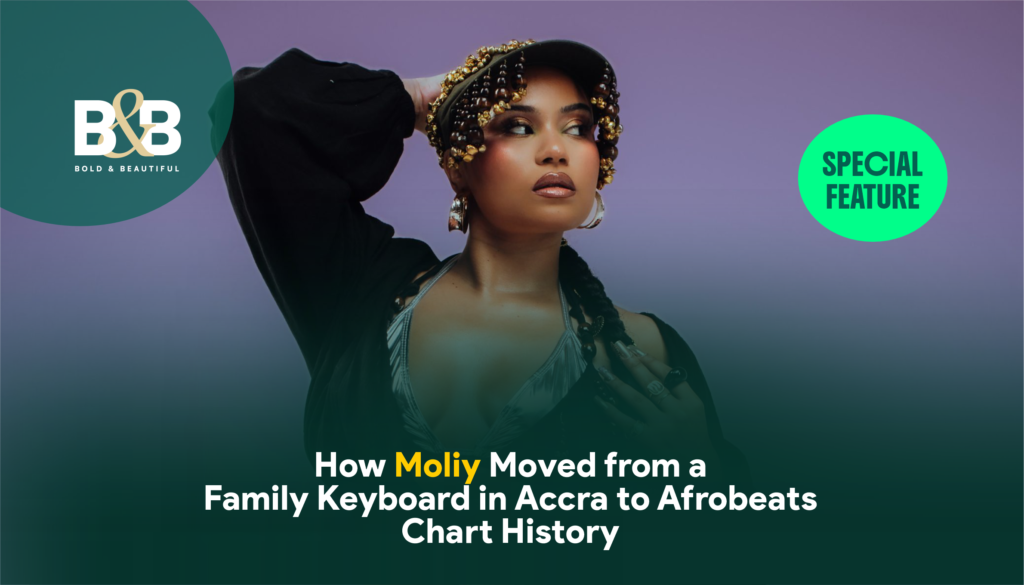
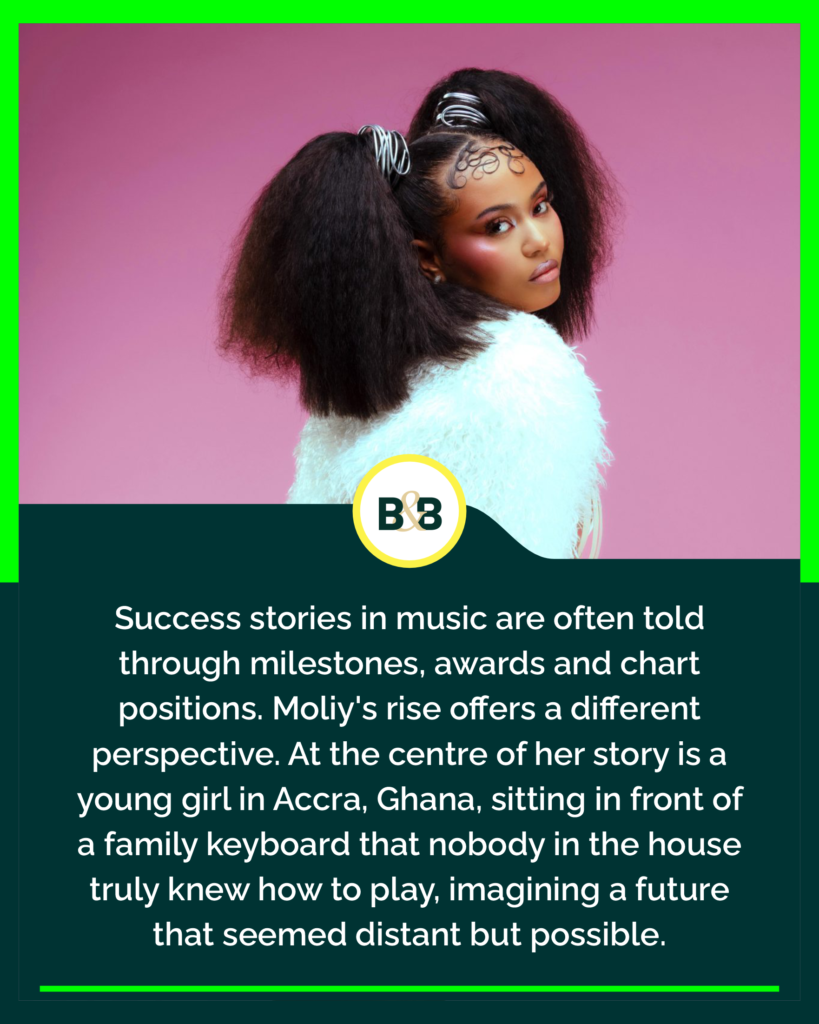
Success stories in music are often told through milestones, awards and chart positions. Moliy’s rise offers a different perspective. At the centre of her story is a young girl in Accra, Ghana, sitting in front of a family keyboard that nobody in the house truly knew how to play, imagining a future that seemed distant but possible. Years before international recognition, streaming numbers and sold-out performances, Molly Ama Montgomery was already nurturing a belief that would eventually reshape her life.
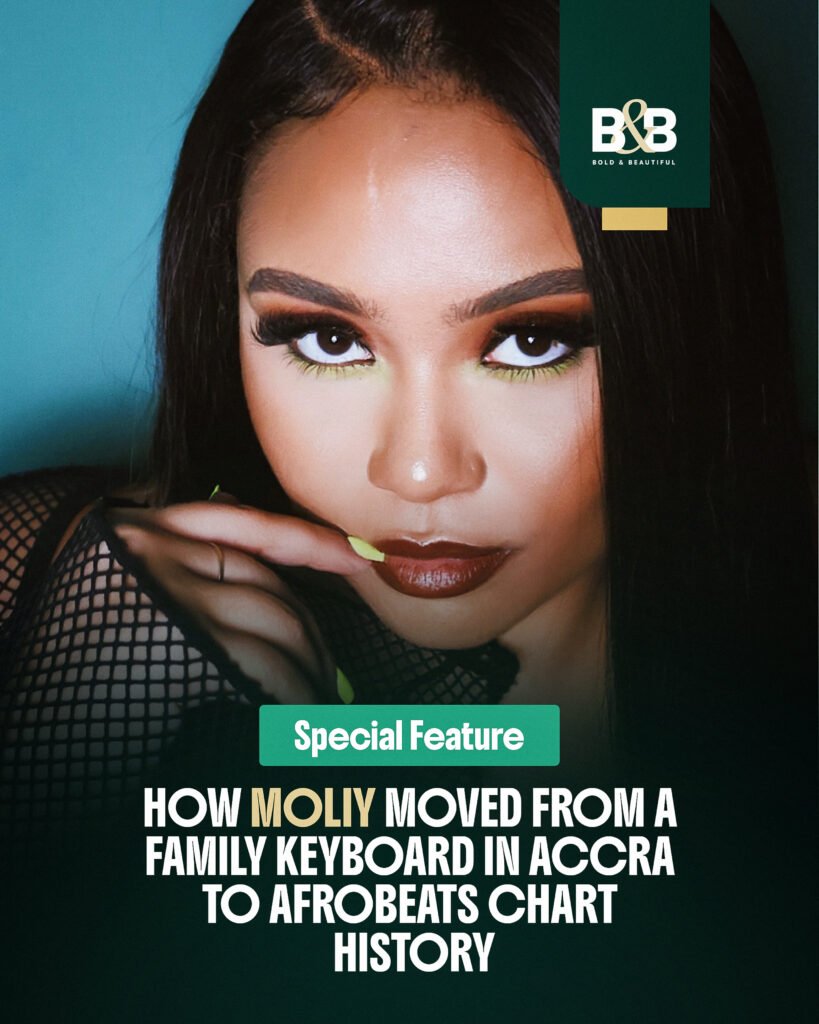
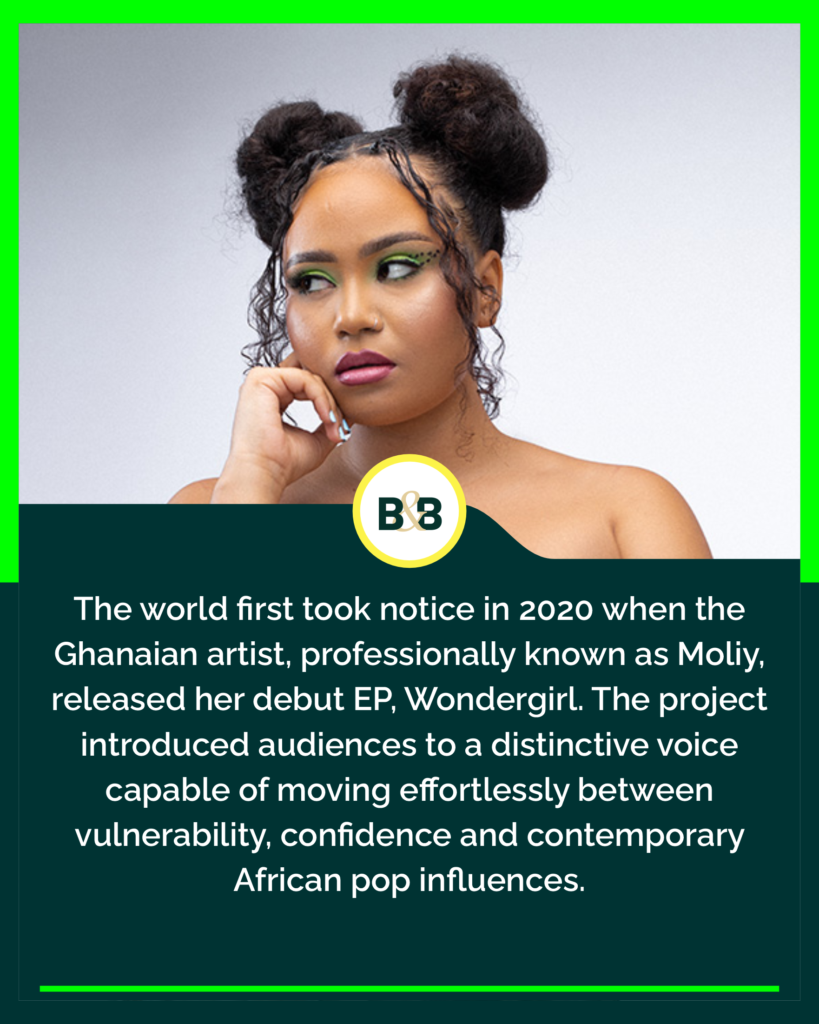
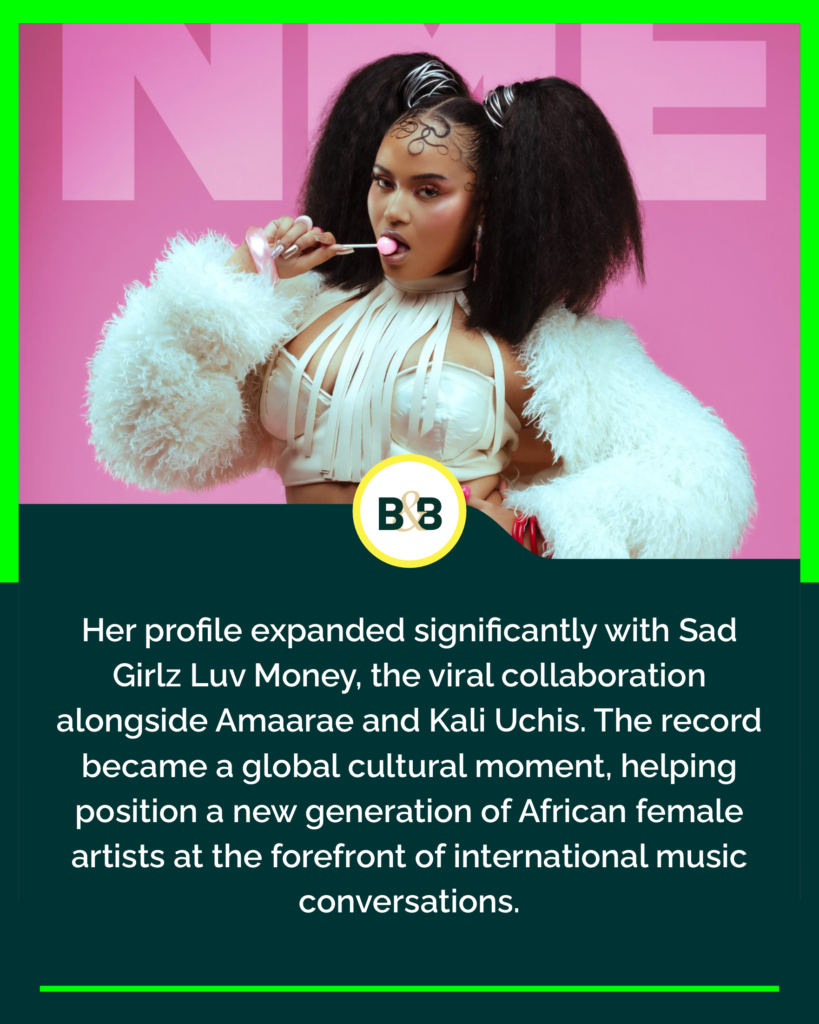
The world first took notice in 2020 when the Ghanaian artist, professionally known as Moliy, released her debut EP, Wondergirl. The project introduced audiences to a distinctive voice capable of moving effortlessly between vulnerability, confidence and contemporary African pop influences. Her profile expanded significantly with Sad Girlz Luv Money, the viral collaboration alongside Amaarae and Kali Uchis. The record became a global cultural moment, helping position a new generation of African female artists at the forefront of international music conversations.
Yet Moliy’s evolution did not stop there. While many artists struggle to move beyond the song that first brought them widespread attention, she continued building her catalogue, refining her sound and strengthening her artistic identity. That persistence culminated in one of the most remarkable achievements in recent Afrobeats history. Her hit single Shake It To The Max dominated the Billboard U.S. Afrobeats Songs Chart, spending an extraordinary 27 consecutive weeks at number one. The accomplishment transformed the song from a commercial success into a landmark cultural achievement.
What makes Moliy’s ascent particularly compelling is her refusal to be confined by geography or genre. Her music draws from African rhythms, global pop sensibilities, dancehall influences and contemporary R&B, creating a sound that feels both personal and internationally accessible. She belongs to a generation of African artists who understand that global relevance no longer requires abandoning local identity. Instead, they are expanding the definition of what African music can sound like on the world stage.
Today, Moliy stands as one of Ghana’s most influential contemporary music exports, but her story continues to resonate because of its simplicity. It began with imagination, conviction and the willingness to believe in a possibility before there was evidence to support it. The family keyboard in Accra may not have produced perfect melodies, but it helped inspire a dream. Years later, that dream has become one of the most compelling success stories in modern African music.