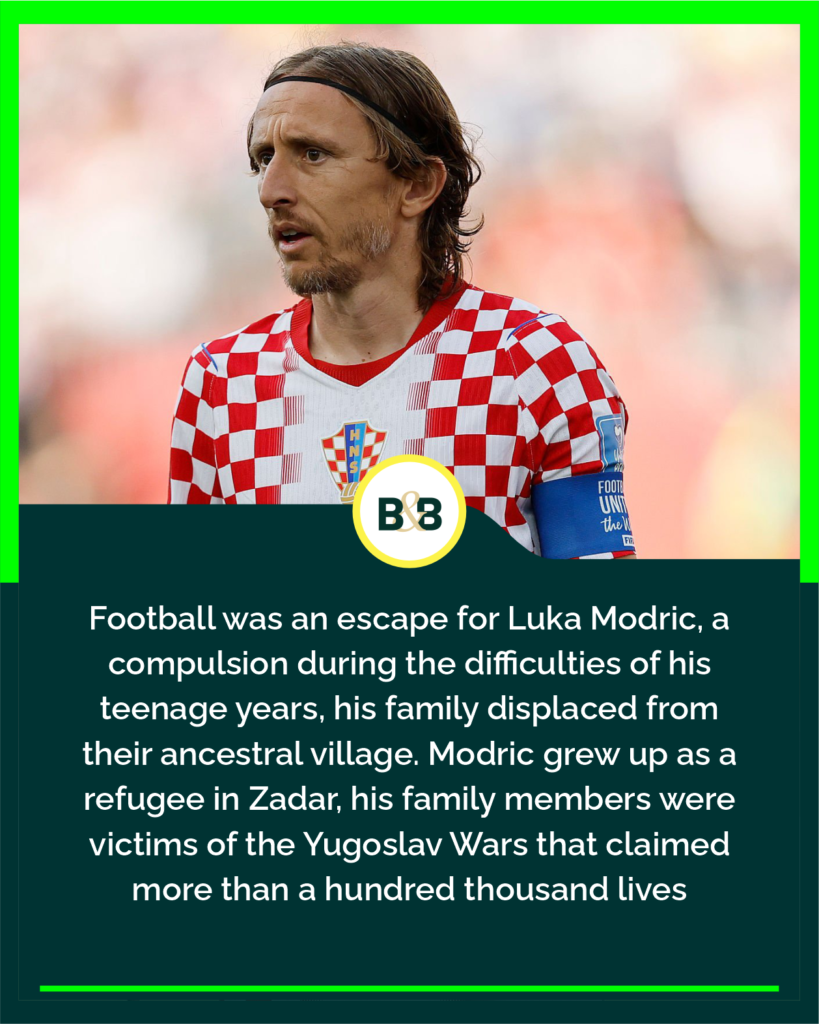
Football was an escape for Luka Modric, a compulsion during the difficulties of his teenage years, his family displaced from their ancestral village.
Modric grew up as a refugee in Zadar, his family members were victims of the Yugoslav Wars that claimed more than a hundred thousand lives. Modric’s grandfather was one of the victims executed by Serb rebels in the tiny mountain hamlet that the family called home.
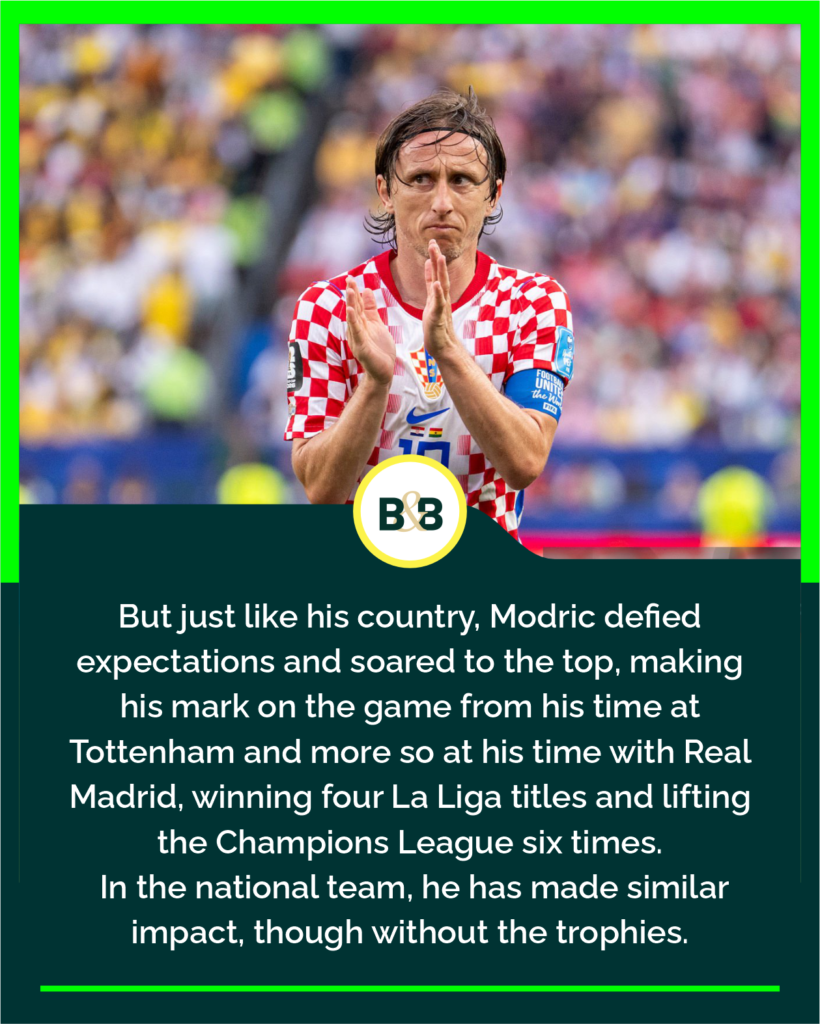
Before the war started, Modric would shepherd goats as a child in the hills. But just like his country, Modric defied expectations and soared to the top, making his mark on the game from his time at Tottenham and more so at his time with Real Madrid, winning four La Liga titles and lifting the Champions League six times.
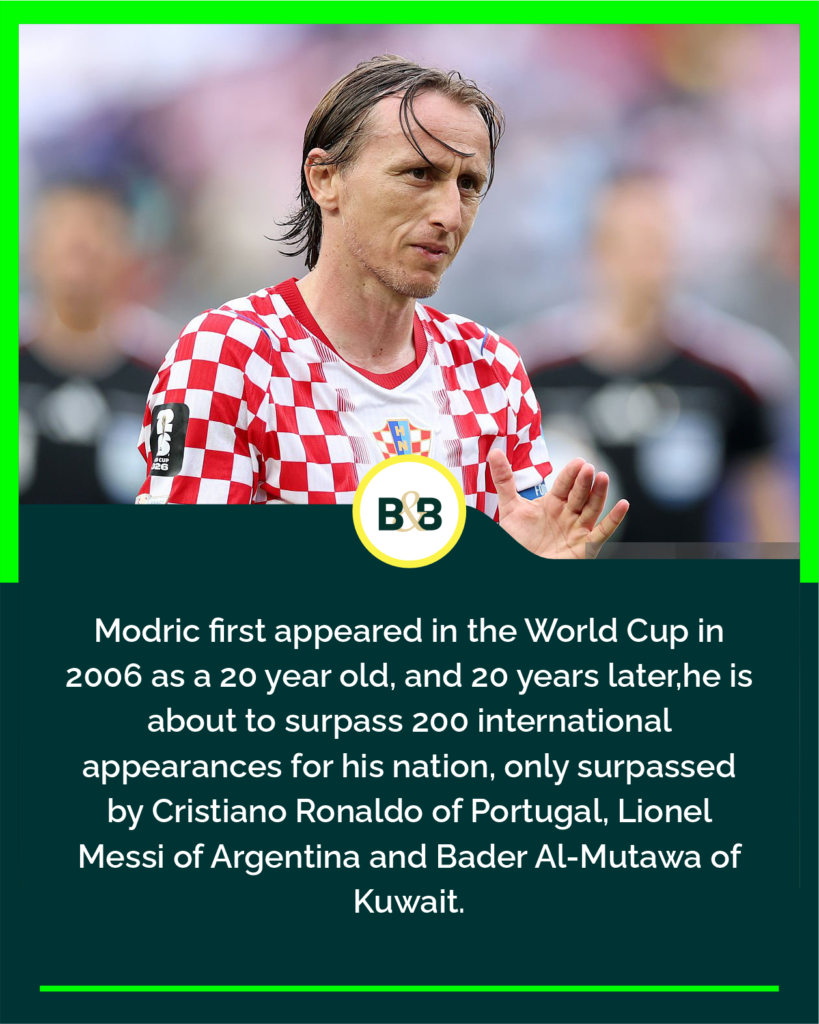
In the national team, he has made similar impact, though without the trophies. Modric first appeared in the World Cup in 2006 as a 20 year old, and 20 years later,he is about to surpass 200 international appearances for his nation, only surpassed by Cristiano Ronaldo of Portugal, Lionel Messi of Argentina and Bader Al-Mutawa of Kuwait.
Modric has been the lynchpin in the greatest years of Croatian football, culminating in a World Cup final appearance in 2018. A feat that led to him receiving the prestigious Balon d’Or award that year.
They also managed to claim bronze four years later in Qatar, an achievement of great acclaim for a nation of under 4 million people that gained independence in 1991. It is no wonder to see why Luka is so revered in his homeland.
He goes into the World Cup as the second oldest outfield player at 40 years and 8 months, only behind Ronaldo. That is a testament to his longevity and quality. Even now, in the twilight of his career, the skills that defined him continue to shine through with every touch and glance.
Modric’s core ability is manipulation, which includes mastery of both space and the ball itself. He has never been one to rely heavily on his physical traits, but his technical and intellectual gifts more than make up for that.
That is a big reason why he is still going into his 40s. But every good thing comes to an end at some point. You get the feeling Modric is close to saying goodbye to football. At the end of June, the midfielder’s contract with Milan will expire and it remains to be seen what he will do.
The end of his season in Italy has not gone as planned, and unless something unexpected happens, his World Cup appearance in North America could be the stage for his final masterclasses in the game. Croatia and Luka Modrić are frequently mentioned during World Cup discussions, and with good reason.
They have one of the most impressive records in the World Cup for a nation of that size. This is their seventh appearance in the tournament and they have gone home with a medal in three of the previous six. Four years on from the last one, the story is repeated, with the Croatian national team commanding respect from all opponents, particularly with Modric still in the side, even though he may not be as influential as before.
This is a largely changed squad from the overachievers of 2018 and 2022. Retired heroes in the background, new faces at the forefront. Will they perform like the previous teams? Time will tell.