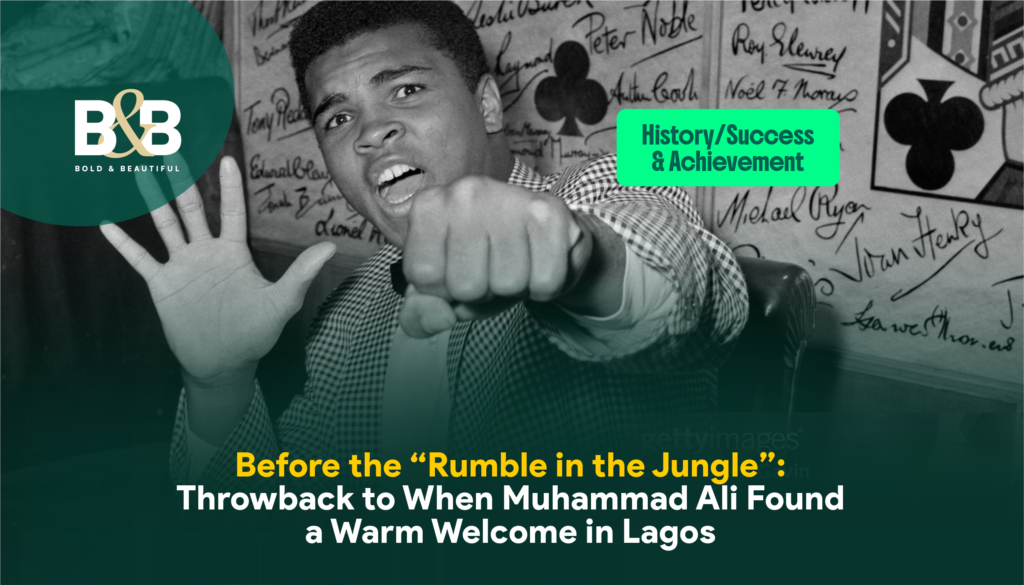
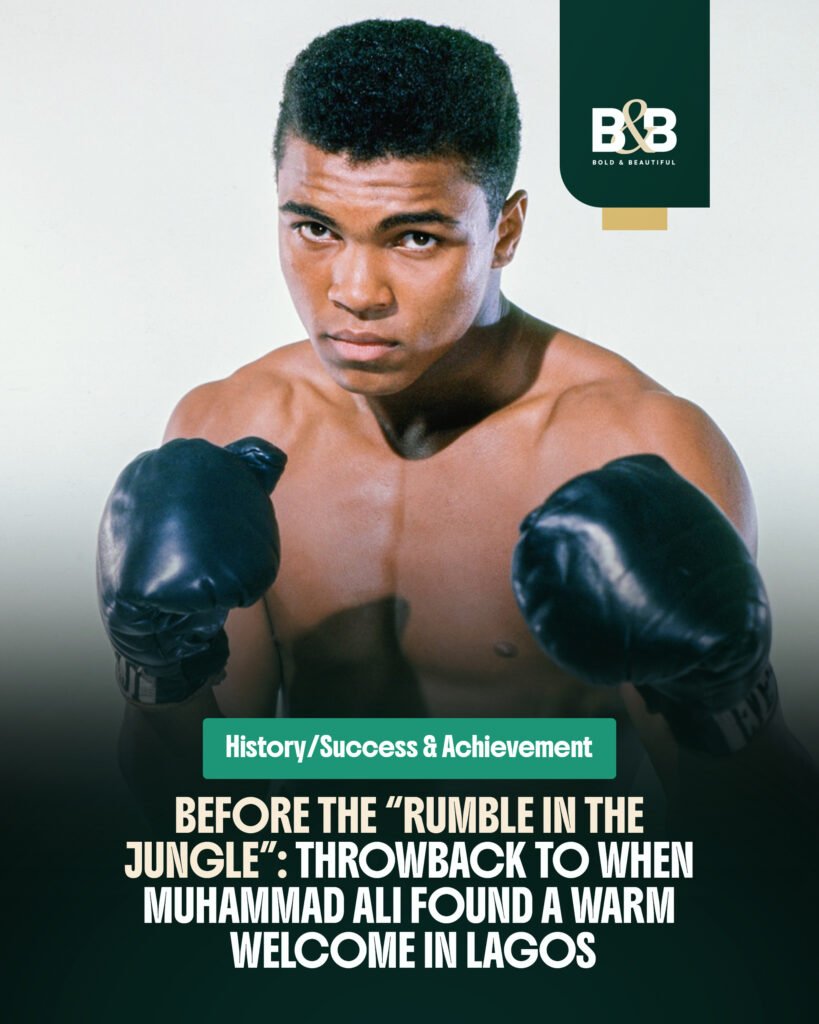
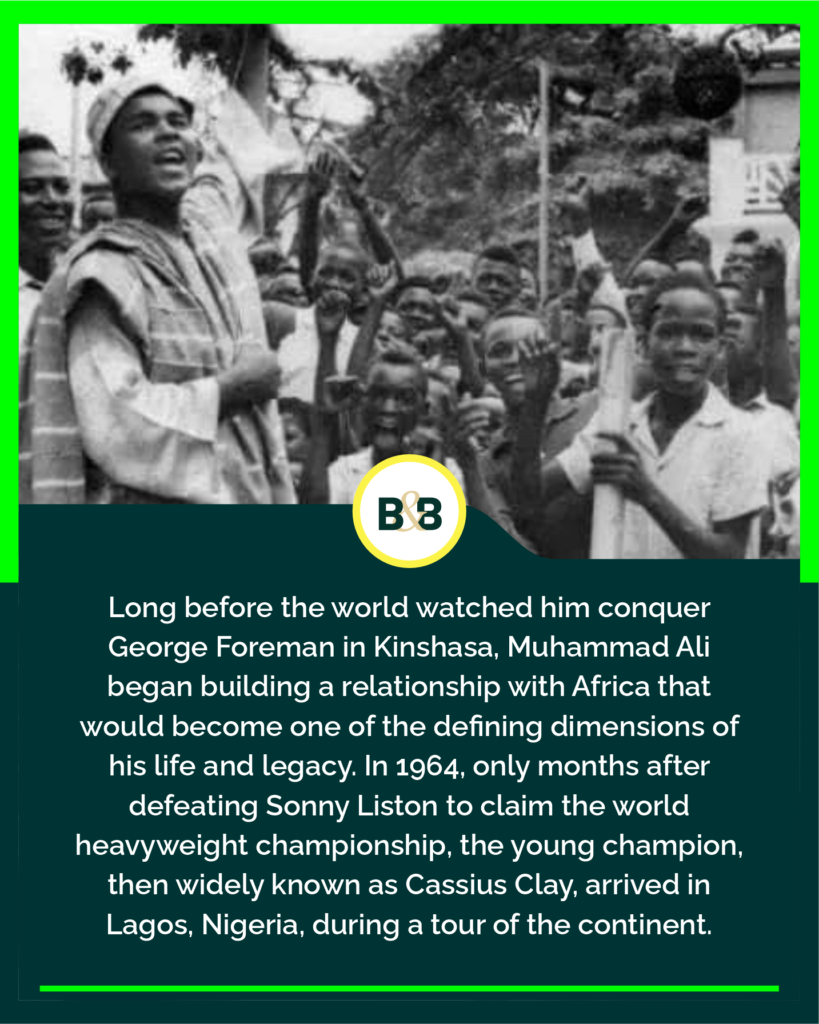
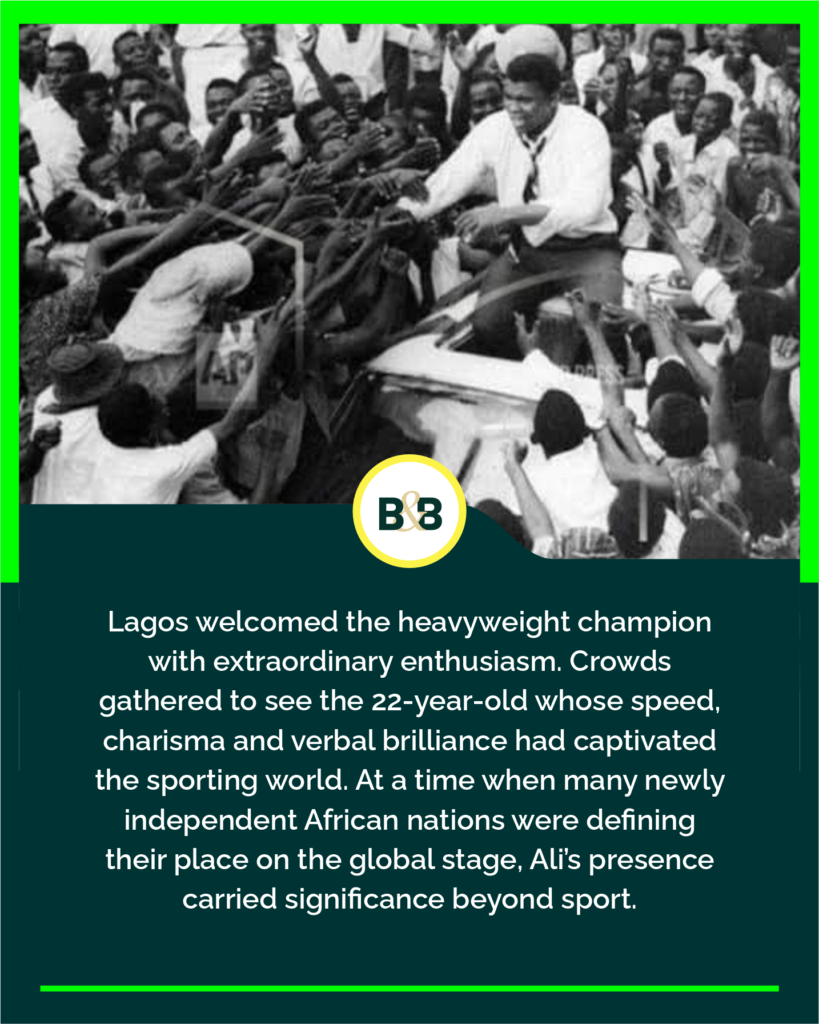
Long before the world watched him conquer George Foreman in Kinshasa, Muhammad Ali began building a relationship with Africa that would become one of the defining dimensions of his life and legacy. In 1964, only months after defeating Sonny Liston to claim the world heavyweight championship, the young champion, then widely known as Cassius Clay, arrived in Lagos, Nigeria, during a tour of the continent. It was more than a celebratory visit. It marked one of the earliest encounters between a newly crowned global sports icon and an African audience eager to embrace a figure whose confidence, brilliance and unapologetic identity were already reshaping boxing.
Lagos welcomed the heavyweight champion with extraordinary enthusiasm. Crowds gathered to see the 22-year-old whose speed, charisma and verbal brilliance had captivated the sporting world. At a time when many newly independent African nations were defining their place on the global stage, Ali’s presence carried significance beyond sport. He represented excellence achieved against expectation, a young Black athlete challenging convention while commanding international attention on his own terms. For many Nigerians, his visit reflected a growing sense of shared pride across the African world and its diaspora.
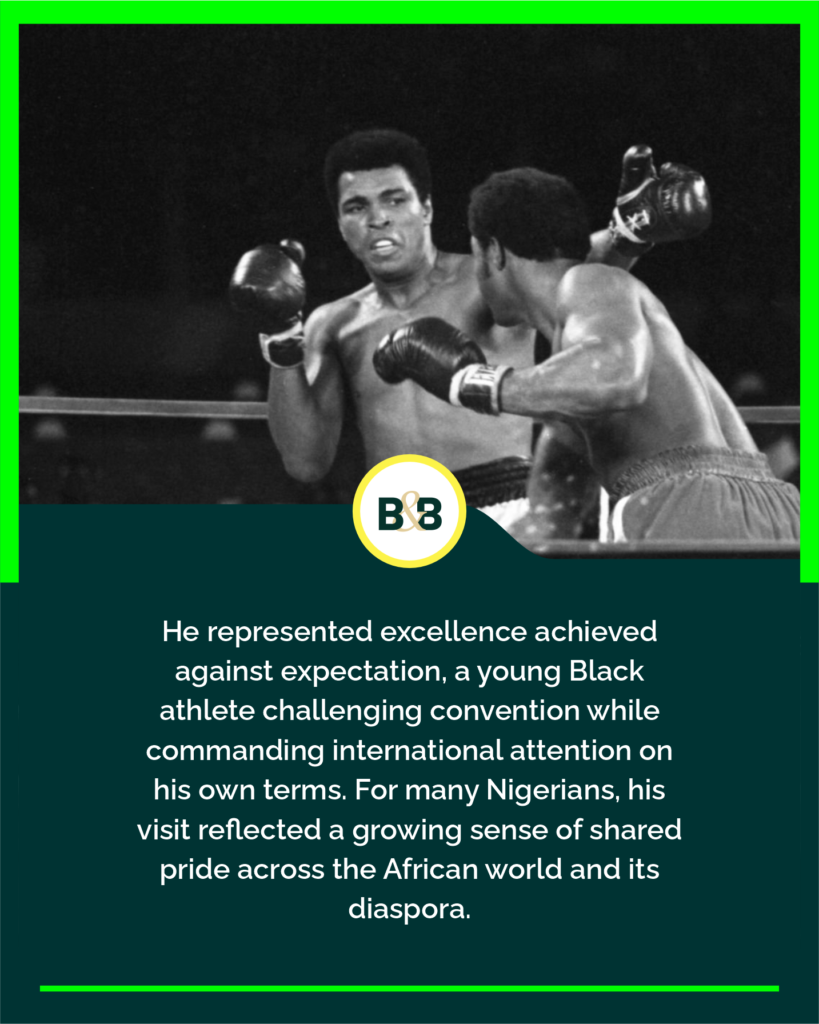
History would soon give that connection even greater meaning. Later in 1964, Clay announced his affiliation with the Nation of Islam and adopted the name Muhammad Ali, a decision that transformed both his public identity and his place in history. Over the following decade, his relationship with Africa deepened through cultural engagement, political consciousness and personal conviction. That journey reached its most celebrated chapter in 1974 when Ali returned to the continent for the legendary “Rumble in the Jungle” against George Foreman in Kinshasa, then Zaire, one of the most iconic sporting events ever staged. Yet the emotional foundation of that relationship had been established years earlier, during visits such as the one that brought him to Lagos.
Looking back today, Ali’s 1964 visit offers a valuable reminder that sport has long served as a bridge between cultures, identities and generations. It also forms part of a broader narrative that continues to shape African sporting history. Across the pages of B&B International Magazine, we have consistently documented the achievements of African athletes and global sporting figures whose influence extends beyond competition, from record-breaking weightlifters and football icons to champions whose careers have reshaped international perceptions of African excellence. Ali’s story remains one of the earliest and most powerful examples of that enduring connection.
More than six decades later, the images of Muhammad Ali in Lagos still resonate because they captured something timeless. They preserved the meeting of a city full of optimism and a young champion on the threshold of immortality. Before he became a global statesman, humanitarian and arguably the most influential athlete of the twentieth century, Muhammad Ali walked the streets of Lagos and discovered an audience that recognised greatness before history had fully written his legend. That encounter remains an important chapter in the shared story of Africa and one of sport’s greatest figures.