
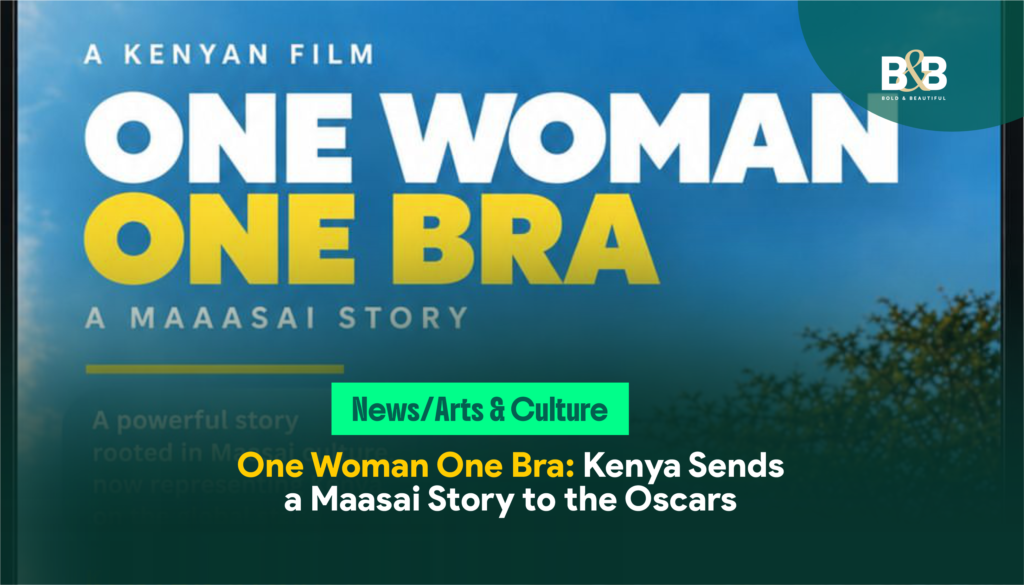
Kenya has chosen a story rooted in the Maasai community to carry its cinema to the 99th Academy Awards. One Woman One Bra, written and directed by Kenyan filmmaker Vincho Nchogu and produced by Nigerian filmmaker Josh Olaoluwa, was selected on 23 September as Kenya’s official submission for the International Feature Film category. The Kenya Oscars Selection Committee considered three films before unanimously settling on the Kenya-Nigeria production, giving a small independent film with an intimate story an unexpectedly large international stage. According to the committee, its decision was shaped by the film’s storytelling, performances, originality and cultural authenticity.
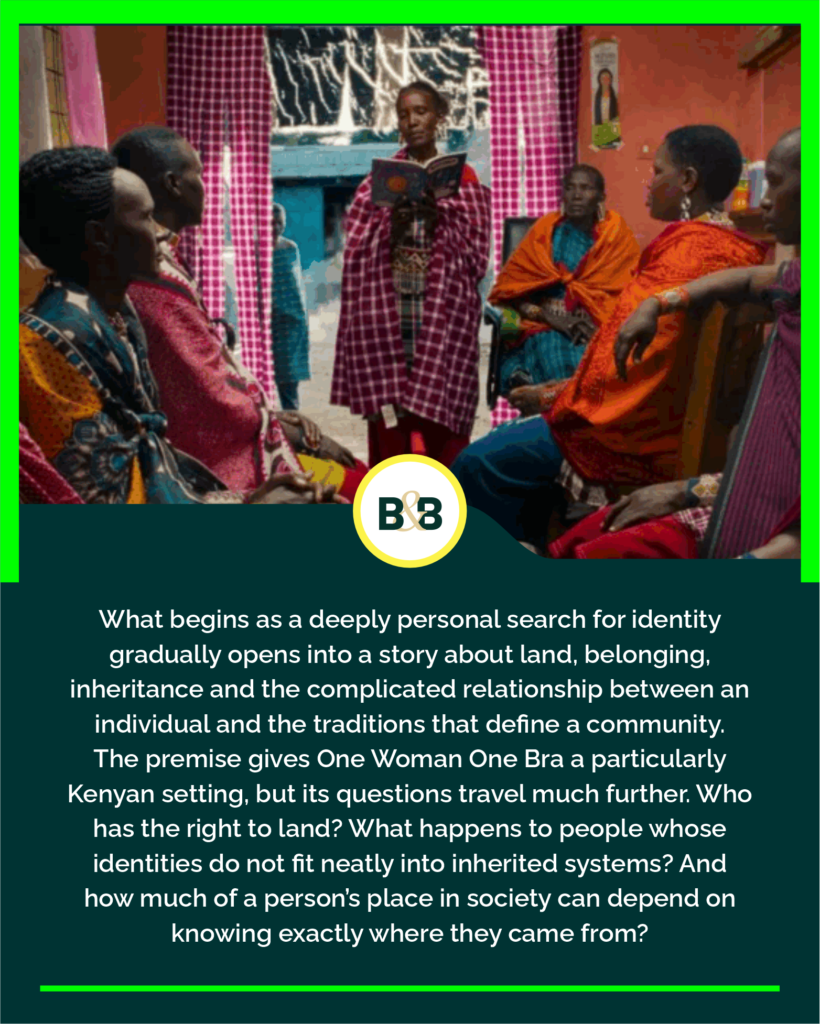
At the centre of the 79-minute film is Star, a 38-year-old unmarried woman living in a rural Maasai community whose right to the home she occupies becomes entangled with a question she cannot easily answer: where does she come from? As the community moves towards the formal registration of property, Star must establish her family lineage to secure legal ownership of her home. What begins as a deeply personal search for identity gradually opens into a story about land, belonging, inheritance and the complicated relationship between an individual and the traditions that define a community.
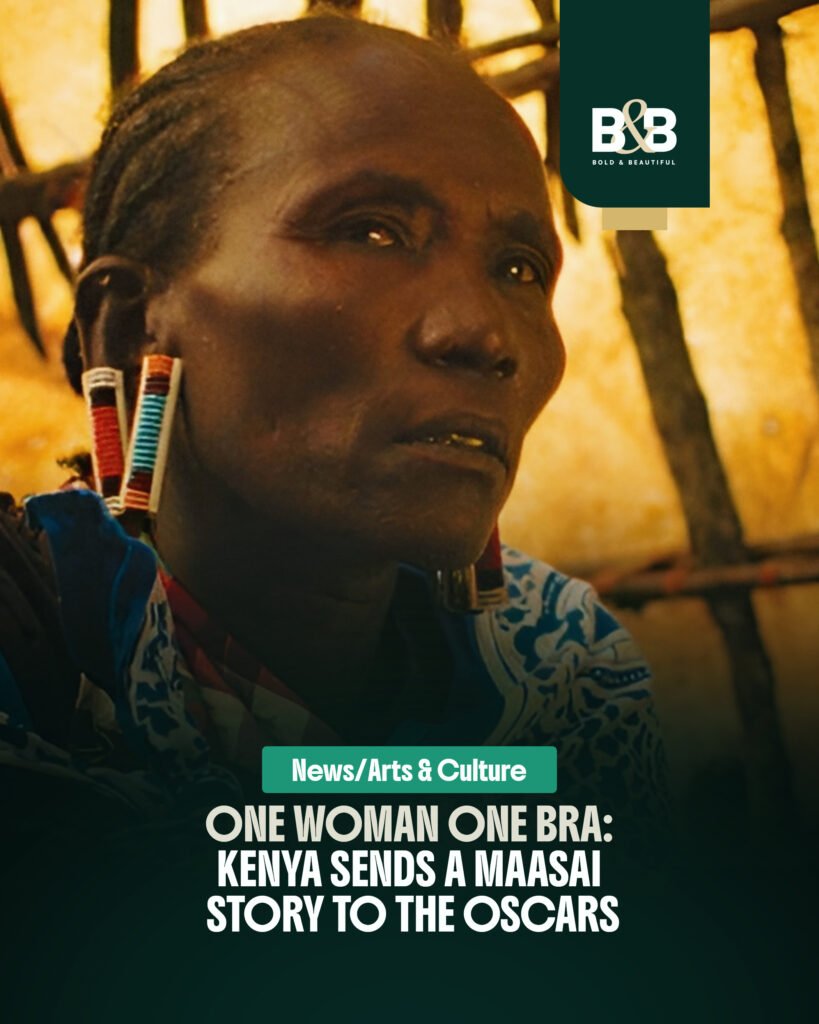
The premise gives One Woman One Bra a particularly Kenyan setting, but its questions travel much further. Who has the right to land? What happens to people whose identities do not fit neatly into inherited systems? And how much of a person’s place in society can depend on knowing exactly where they came from? Nchogu builds those questions around a woman whose search for a legal claim to her home becomes inseparable from her search for herself. The result is a film where property rights and personal identity occupy the same dramatic space.
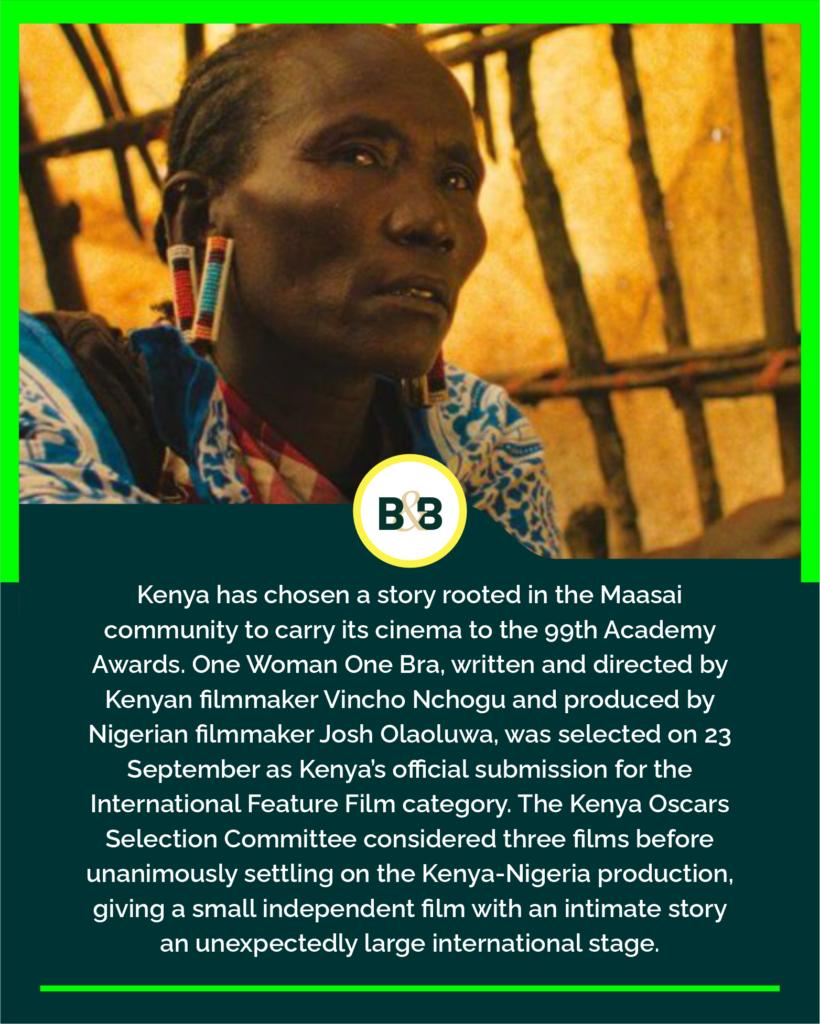
The film also carries the texture of the community in which it was made. It is performed in Maa, Swahili and English, with Sarah Karei leading a cast that includes Norng’aruani Kipuker, Amos Leuka, Irungu Mutu, Boniface Saitabau and Davina Leonard. The Academy submission committee specifically highlighted elements including the film’s pacing, costumes, landscape and sound design, with sounds associated with Maasai life, including cattle and cowbells, forming part of its sonic world. Those details matter because the film’s sense of place is not simply visual decoration; the environment is part of the story.
For Nchogu, the Oscar selection comes after a journey that had already taken One Woman One Bra far beyond Kenya. The film had its world premiere at the 2025 Venice International Film Festival, where it screened through Biennale College Cinema, the development programme that supported its production. La Biennale di Venezia lists the film as a Kenya-Nigeria production, with Nchogu as writer-director and Olaoluwa’s Kilastory as producer. It subsequently travelled to the BFI London Film Festival, extending the film’s festival life across two major international cinema platforms.
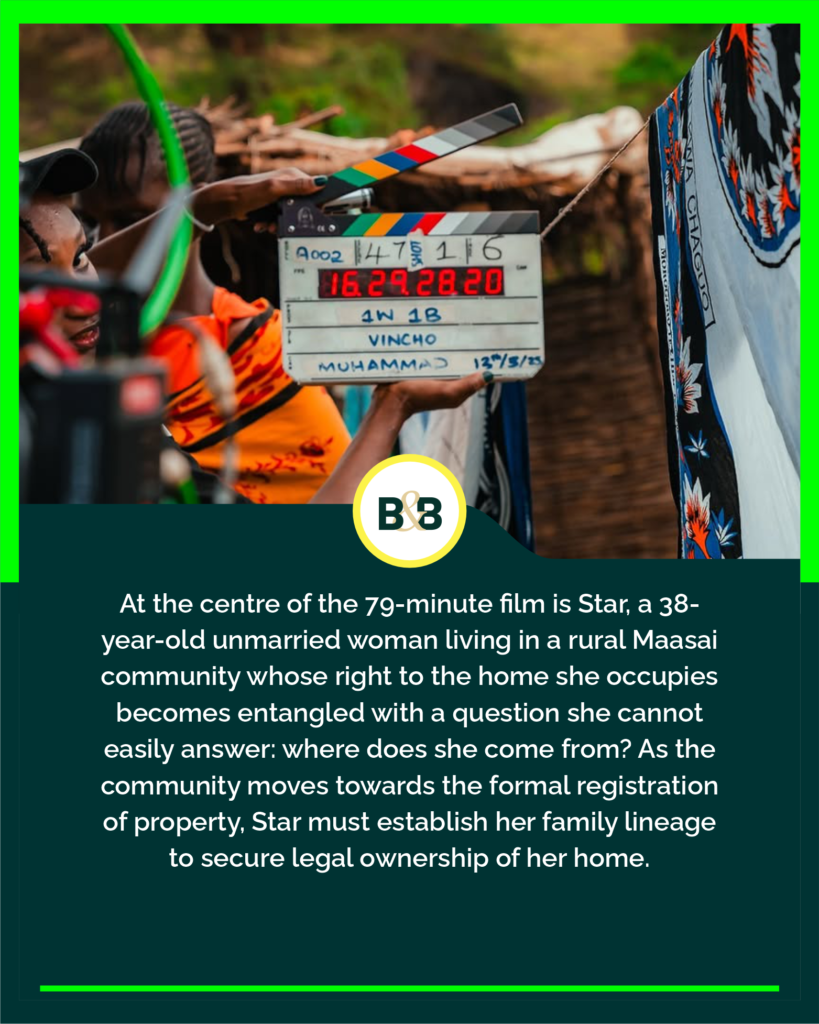
Its route to the Oscars is also significant for Nigeria. Although the story is Kenyan and Nchogu is Kenyan, the production crosses borders through Olaoluwa and the Nigerian side of the filmmaking team. The film was shot in Kenya, including in the Loita region where its story is rooted, while its development and production brought together creative voices from both countries. That makes One Woman One Bra part of a broader African cinema movement in which national borders increasingly matter less to the production of stories than the relationships, financing, talent and creative partnerships behind them.
The timing gives the film another layer of momentum. One Woman One Bra returned to Kenya this month, screening first in the community where it was filmed before its Nairobi premiere on 10 September. Less than two weeks later, it was selected as the country’s Oscar submission. For an independent African film, that sequence is striking: a story made close to its cultural source travels to Venice, reaches London, returns home and then receives another route towards the global spotlight. The journey itself becomes part of the story of what African cinema can do when local specificity is treated as an asset rather than something to be diluted for international audiences.
The Oscar submission does not guarantee a nomination, but it places Vincho Nchogu, Josh Olaoluwa and One Woman One Bra inside one of the world’s most visible conversations about international cinema. More importantly, it puts a Maasai woman’s fight for identity, home and belonging at the centre of a global film conversation without removing the cultural ground from which the story emerged. For B&B, that may be the most interesting part of this development: African cinema does not have to leave Africa behind to travel. Sometimes, the further a story reaches, the more important it becomes that you can still hear where it came from.