Imagine two people with access to the same AI tools. Both can generate business plans, analyse documents, produce presentations and learn unfamiliar subjects in a fraction of the time it once took. One spends the day experimenting with prompts, collecting information and discussing possibilities. The other identifies a problem, speaks to the people affected by it, tests a solution and improves it using what the experiment reveals. At the end of the month, one has accumulated a collection of impressive outputs. The other has built something people can use. That difference gets to the heart of what Sam Altman, OpenAI’s chief executive, meant when he advised people to become “high agency”. In a period when access to powerful AI tools is expanding, the advantage increasingly lies in what a person chooses to do with them. Information is useful. Capability is valuable. But neither automatically produces results.
High agency is the ability to turn intention into action, particularly when the instructions are incomplete, the outcome is uncertain or nobody has volunteered to take responsibility. It is the person who notices that customers keep asking the same question and develops a better way to answer it. The employee who sees a broken process and proposes a workable alternative. The graduate who lacks professional connections but researches an industry, produces relevant work and finds a credible reason to contact someone already in it. None of these people necessarily starts with superior talent, money or influence. They start by treating a problem as something they can investigate rather than a reason to remain stuck. In The Martian, Andy Weir’s stranded astronaut, Mark Watney, survives by repeatedly identifying the next solvable problem. The lesson is not that determination makes every obstacle disappear. It is that a frightening situation becomes more manageable when you establish the facts, work with what is available and make the next decision. In real life, that first decision might be considerably less dramatic: send the proposal, make the call, publish the sample or ask the question you have been avoiding.
STEP 1: Stop Waiting for Complete Clarity
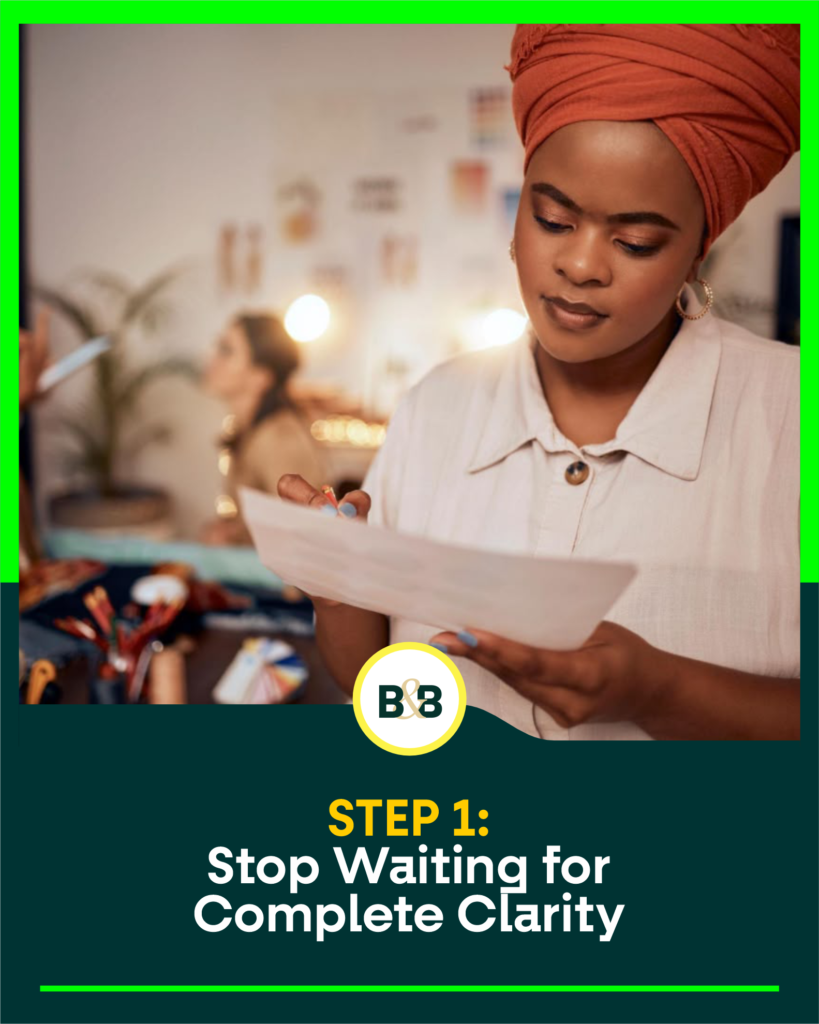
Take a goal you have postponed, whether it is changing careers, launching a small business, developing a creative project or improving your income. Write down what success would look like in concrete terms. Then list the three things preventing you from moving forward. Separate genuine constraints from assumptions. If you want to become a copywriter but have no clients, the missing ingredient may be a portfolio rather than another certificate. If you want to sell a product but lack the capital for a large launch, you may be able to test demand with a small batch, a landing page or direct conversations with potential buyers.
AI can help you research competitors, draft interview questions, compare options and identify weaknesses in your plan. Your job is to verify the information and choose the experiment. Give yourself 48 hours to take one meaningful step. The purpose is not to manufacture urgency around everything. It is to stop allowing a problem to occupy your mind for months without ever meeting reality.
STEP 2: Learn to Recognise Problems Worth Solving
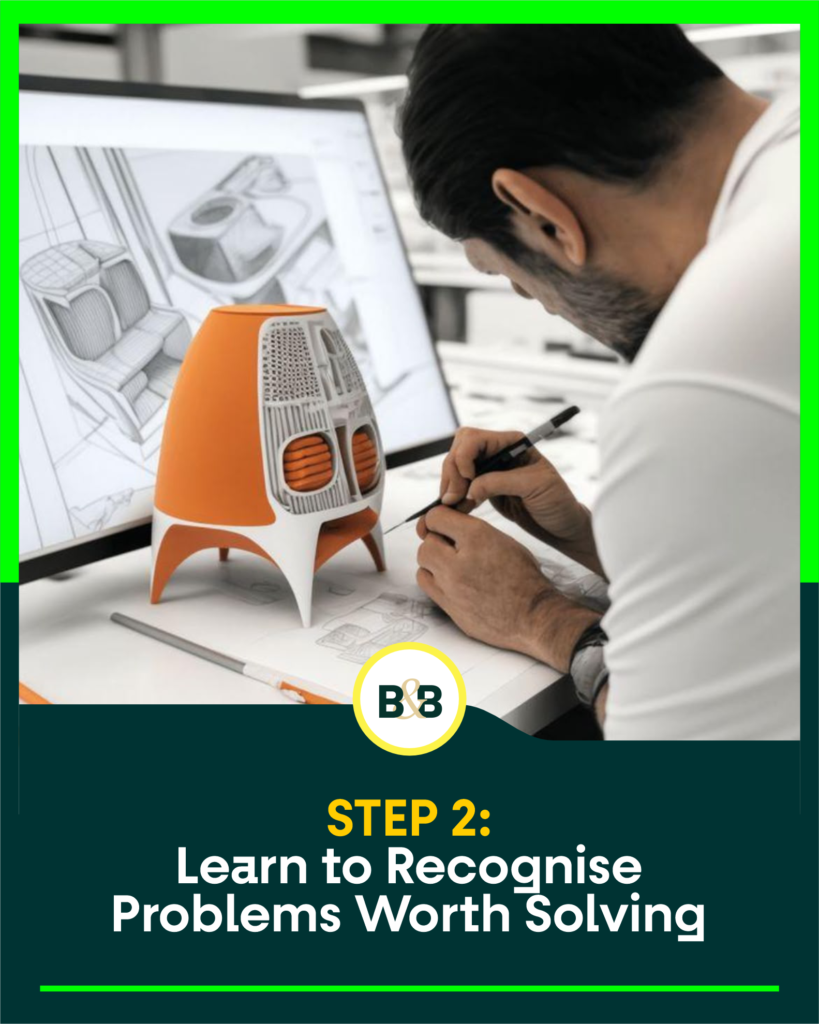
AI can generate a hundred business ideas before breakfast, but an abundance of ideas creates its own difficulty: many sound plausible until they meet an actual customer. The film Moneyball offers a useful lesson here. Billy Beane’s advantage came from challenging familiar assumptions about how baseball talent should be evaluated and focusing on evidence that others undervalued. The principle travels well beyond sport.
Before building an app, selling a service or launching a campaign, find out what people struggle with, what they already pay to fix and why existing solutions disappoint them. Speak to five potential customers. Read complaints and reviews. Observe where people waste time or money. Ask what they have already tried. Then use AI to organise your findings, identify recurring patterns and explore possible solutions.
Do not confuse a convincing AI-generated market analysis with proof of demand. A real person willing to pay, participate or change their behaviour provides stronger evidence than an elegant document. Agency begins with initiative, but good judgement determines where that initiative goes.
STEP 3: Use AI to Expand Your Abilities, Not Replace Your Thinking
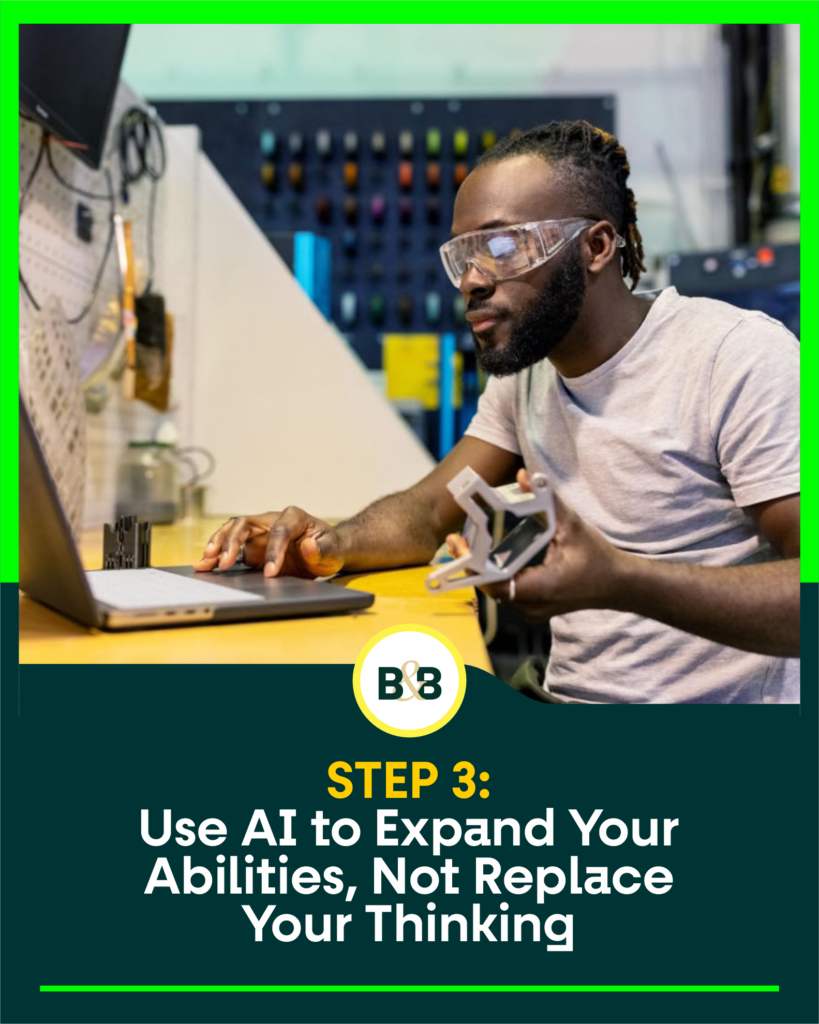
Treat AI as a research assistant, tutor, critic and collaborator. Ask it to explain an unfamiliar subject at three levels of difficulty, challenge your argument, identify gaps in a proposal or compare several approaches to a problem.
If you are a journalist, use it to generate interview questions and investigate possible angles, then verify the facts and conduct the interviews that give the story its substance. If you run a small business, use it to draft customer surveys, organise feedback and automate repetitive administration while keeping human oversight over important decisions. If you are learning a skill, ask for exercises and feedback rather than simply asking it to complete the work for you.
A useful rule is to attempt the problem yourself before consulting the machine, then compare your reasoning with its response. This makes the interaction a learning process rather than a transaction in which you receive an answer and surrender the opportunity to understand it. The objective is not to become the person who can produce the most AI-generated material. It is to become the person who can make better decisions and produce better work with the available tools.
STEP 4: Get Comfortable Being a Beginner
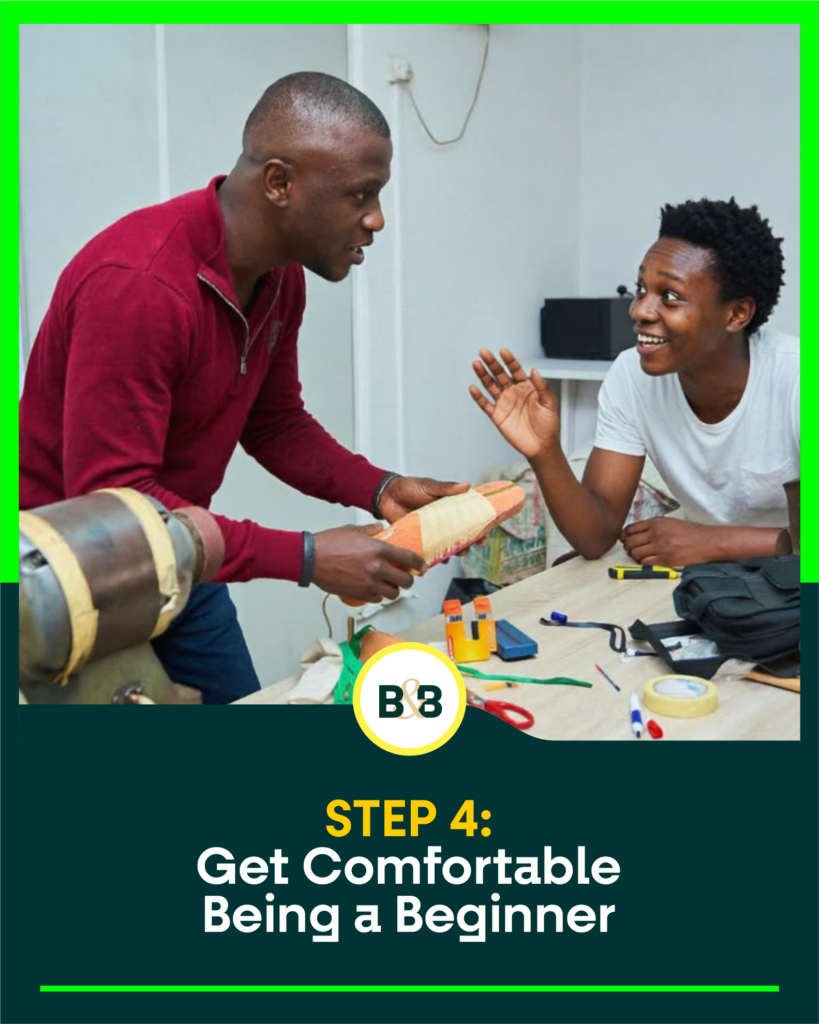
Many people mistake the discomfort of learning for evidence that they lack ability. They wait until they feel qualified, confident or sufficiently prepared, and the waiting becomes a lifestyle.
In Range, David Epstein examines how broad experiences and varied learning paths can contribute to expertise, particularly in complex environments where the right answer is not obvious. The lesson is relevant to a world in which professional skills and tools are changing quickly. You do not have to predict every future development. You need to learn how to learn.
Choose one useful skill and practise it through a real project for the next 30 days. If you want to understand data analysis, study a small dataset and explain what it reveals. If you want to learn video editing, produce a short film rather than endlessly watching tutorials. If you want to enter public relations, develop a sample campaign for an organisation and explain how you would measure its results.
Publish the work, seek informed criticism and revise it. A finished project exposes gaps that passive consumption can keep hidden. Your first attempt does not need to impress the world. It needs to give you something specific to improve.
STEP 5: Turn Failure into Useful Information
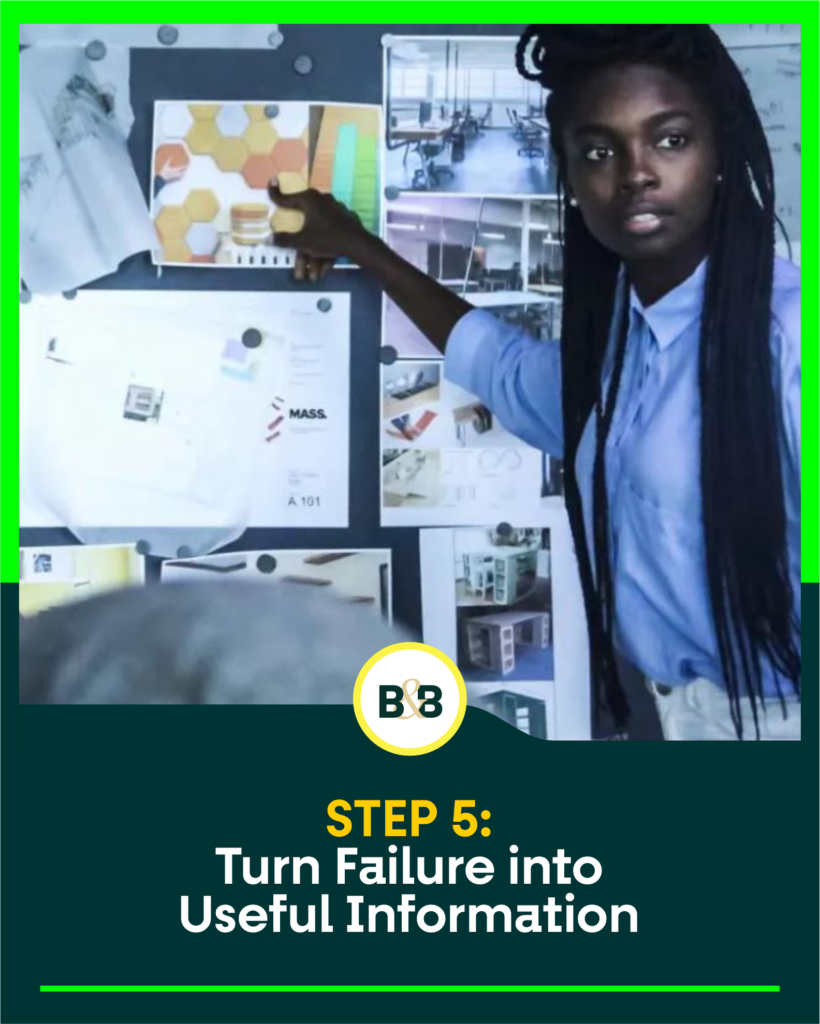
High agency does not mean working without rest, ignoring legitimate barriers or assuming that every failure is your fault. People operate under unequal conditions, and access to money, education, technology, safety and professional networks can materially affect what is possible. Agency is not a denial of those realities. It is the practice of identifying where you still have room to act.
When something fails, resist the temptation to turn the result into a verdict on your identity. Instead, conduct a short review:
- What did I expect to happen?
- What actually happened?
- Which assumption was wrong?
- What can I change next time?
In Thinking in Bets, Annie Duke explores the importance of separating the quality of a decision from the outcome, particularly when uncertainty is involved. That distinction helps you learn from an unsuccessful experiment without treating every disappointment as proof that you should stop.
Build a weekly habit of reviewing your actions, keeping what works, correcting what does not and deciding what deserves another attempt. Persistence is useful when it is informed by feedback. Repeating the same mistake indefinitely is not resilience; it is refusal to learn.
STEP 6: Make Your Ability Visible
In an AI-saturated market, claiming to be creative, strategic, adaptable or innovative carries little weight without evidence. Build a record of problems you have solved, projects you have completed, people you have helped and results you can explain honestly.
Keep a portfolio. Document improvements. Ask clients or colleagues for specific feedback. Learn to communicate your thinking, collaborate across disciplines and take responsibility for the consequences of your recommendations.
If you are looking for work, create relevant samples before someone gives you a job. If you want clients, demonstrate how you approach the problems they face. If you want to change industries, complete a project that shows you can apply your existing abilities in a new context. Your CV tells people what you claim to have done. Evidence allows them to judge what you can do.
STEP 7: Build a Weekly High-Agency Habit
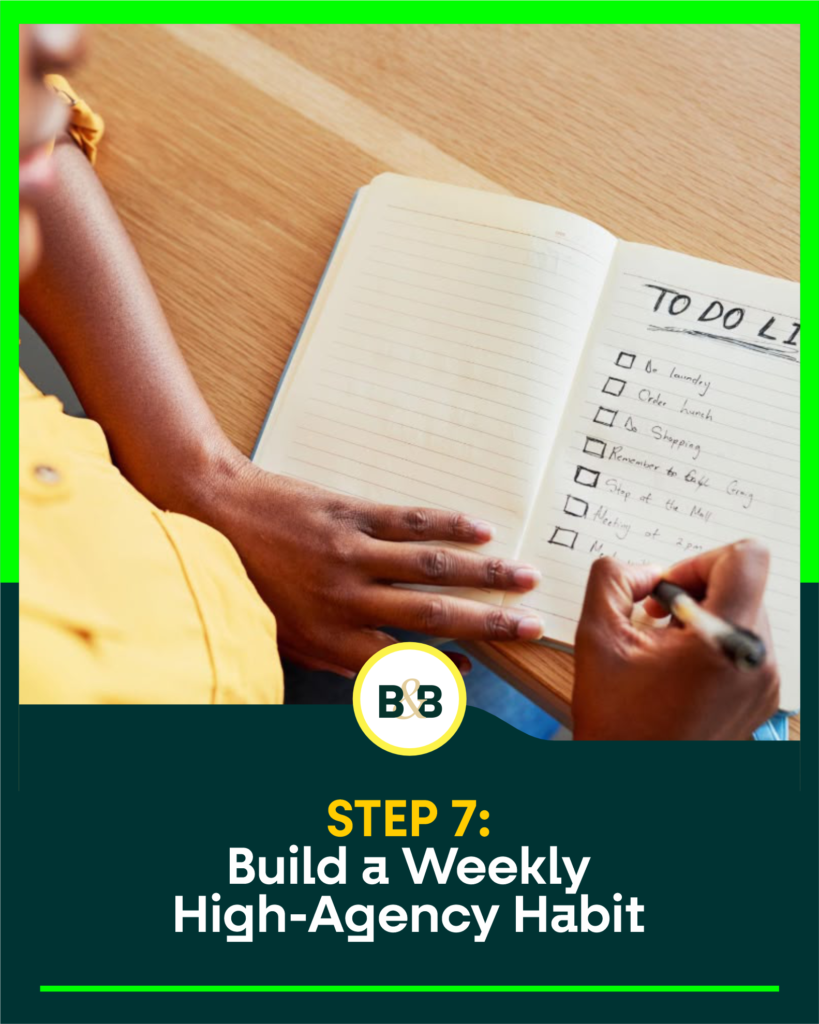
Put the previous steps into practice with a simple routine. Every week, identify one problem worth solving, take one action that moves it forward, use AI where it genuinely improves the work, seek feedback from a real person and record what you learned.
Repeat this process for 12 weeks. Keep track of what you attempted, what you completed, what changed and what you need to learn next. Choose projects that matter to your career, business, community or personal development rather than filling your schedule with activity for its own sake.
Also Read: The New Pandemic: The Dangers of Outsourcing Your Thinking to AIhttps://boldbeautifulmag.com/the-new-pandemic-the-dangers-of-outsourcing-your-thinking-to-ai/
The goal is not to become busy. It is to become increasingly capable of turning ideas into useful outcomes. Over time, these small experiments can become a portfolio of completed work, stronger judgement, new relationships and a clearer understanding of where your abilities create value.
The AI age will reward technical knowledge, and many people will need to acquire new skills as industries change. But knowledge becomes far more powerful when paired with initiative, judgement and follow-through. High agency is not about pretending that every obstacle is within your control. It is about refusing to surrender the decisions that are.
The important question is no longer only what you know or which tools you can access. It is what you can recognise, decide, build and improve.
Learn to make things happen. Then use AI to make what happens better.