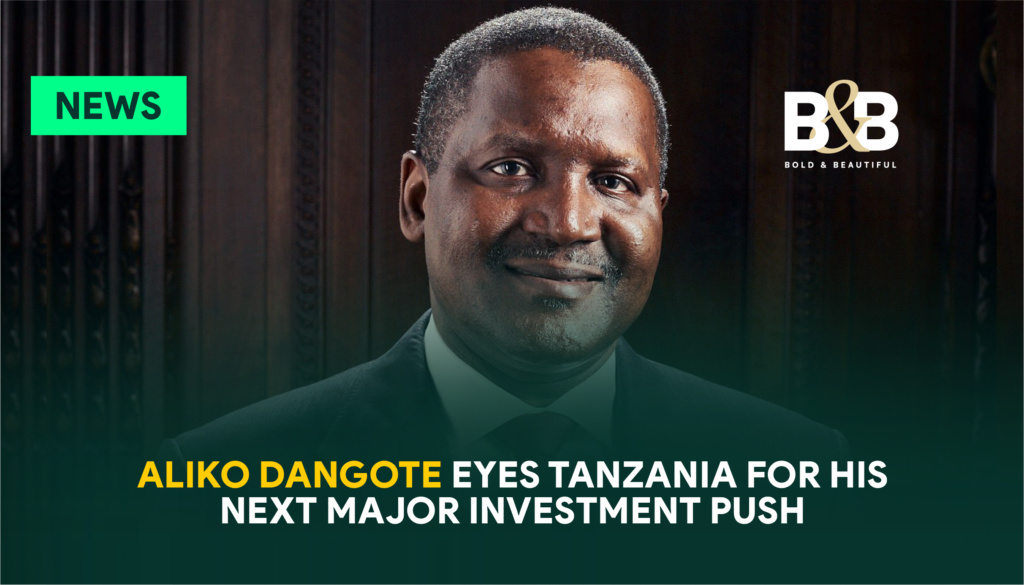
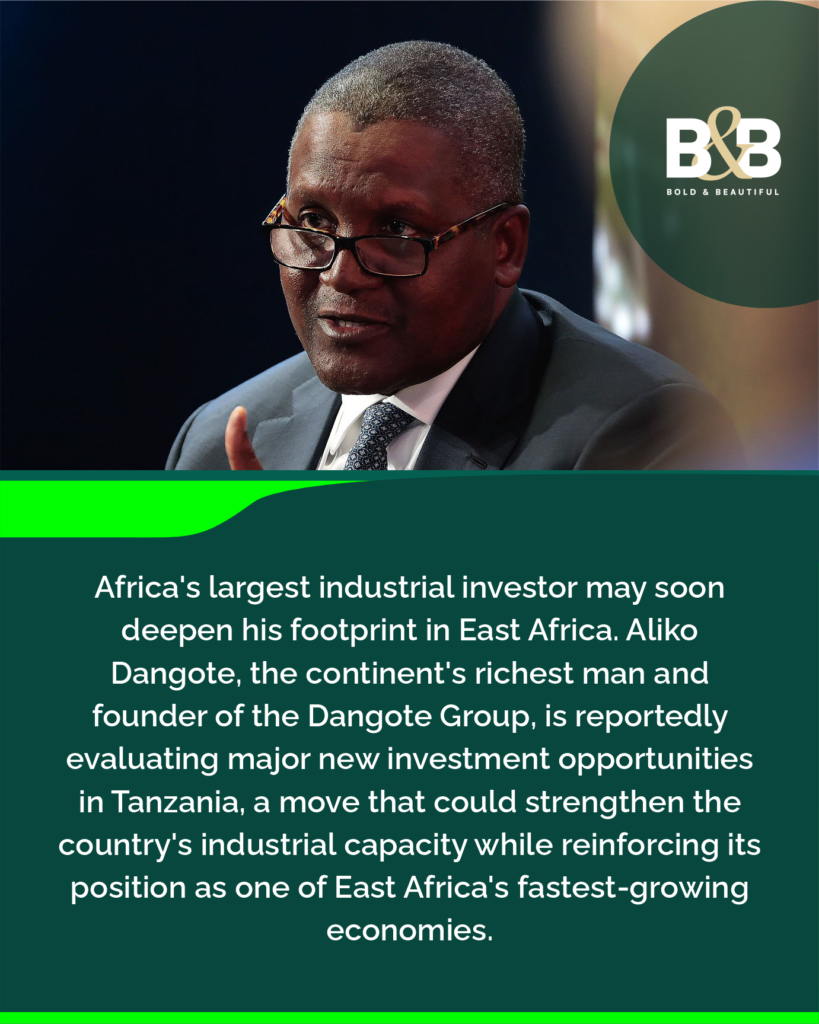
Africa’s largest industrial investor may soon deepen his footprint in East Africa. Aliko Dangote, the continent’s richest man and founder of the Dangote Group, is reportedly evaluating major new investment opportunities in Tanzania, a move that could strengthen the country’s industrial capacity while reinforcing its position as one of East Africa’s fastest-growing economies.

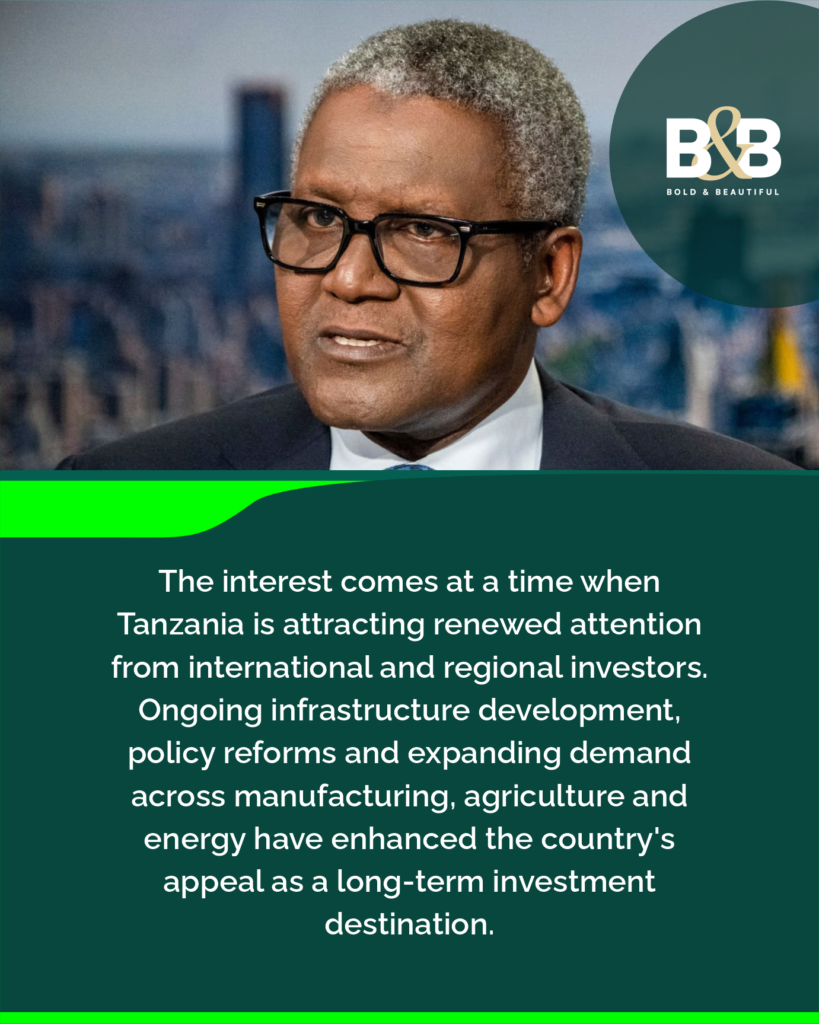
The interest comes at a time when Tanzania is attracting renewed attention from international and regional investors. Ongoing infrastructure development, policy reforms and expanding demand across manufacturing, agriculture and energy have enhanced the country’s appeal as a long-term investment destination. For Dangote, whose business empire spans cement, fertiliser, sugar, petrochemicals and logistics, Tanzania presents another opportunity to align industrial production with rising regional demand.
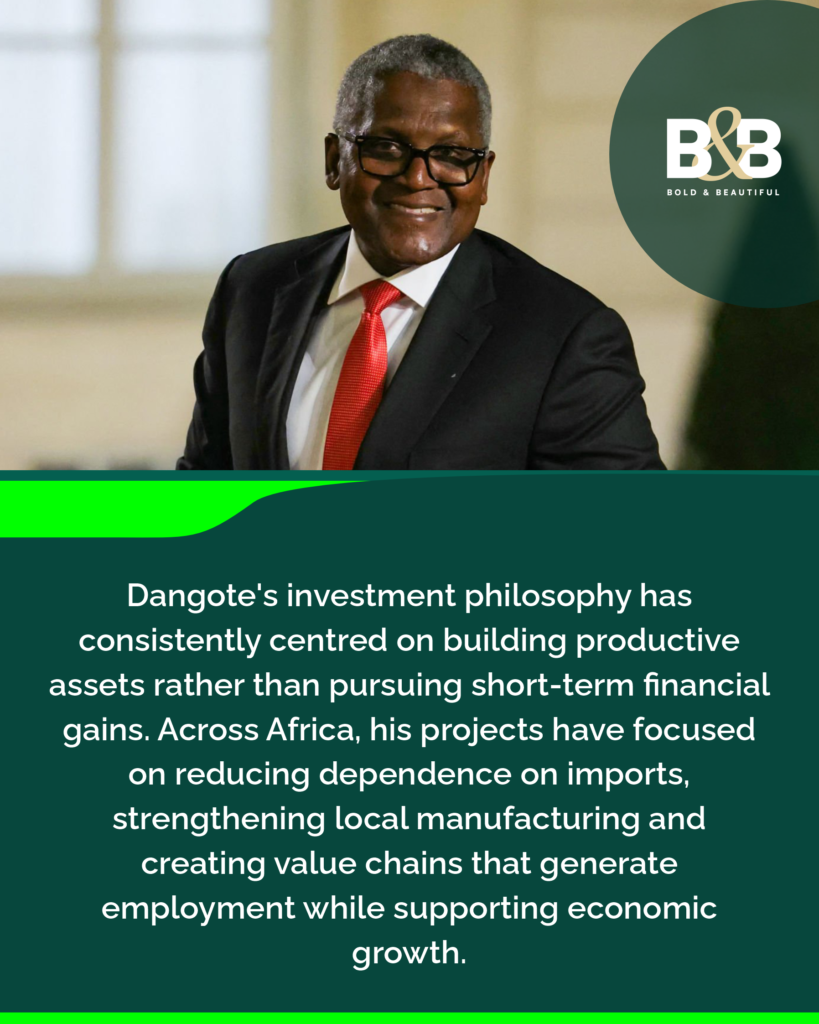
Dangote’s investment philosophy has consistently centred on building productive assets rather than pursuing short-term financial gains. Across Africa, his projects have focused on reducing dependence on imports, strengthening local manufacturing and creating value chains that generate employment while supporting economic growth. From cement plants across multiple African countries to the landmark refinery and petrochemical complex in Nigeria, the billionaire has built a reputation for executing projects that reshape entire industries.
Any expansion into Tanzania would also reflect a broader shift taking place across the continent. Increasingly, African capital is financing African growth, with homegrown investors playing a more prominent role in developing strategic industries. As governments prioritise industrialisation and regional trade under the African Continental Free Trade Area (AfCFTA), investments led by African business leaders are becoming central to the continent’s long-term economic ambitions.
Although no formal investment announcement has yet been made, Dangote’s reported interest has already generated considerable attention within business and policy circles. Market observers will be watching closely to see which sectors ultimately attract his capital. If history is any indication, the decision is likely to extend beyond commercial returns and contribute to the broader story of Africa’s industrial transformation.