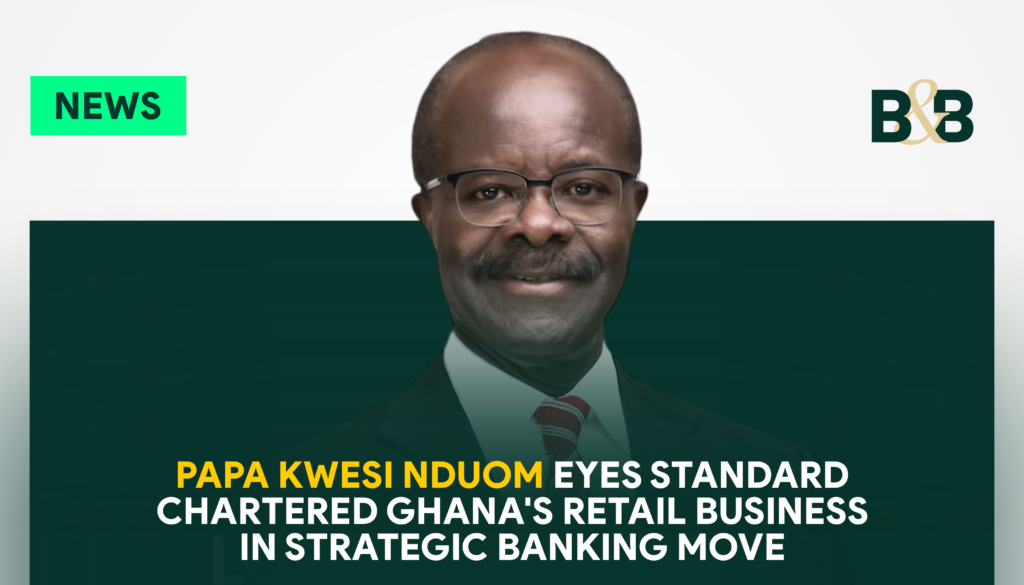
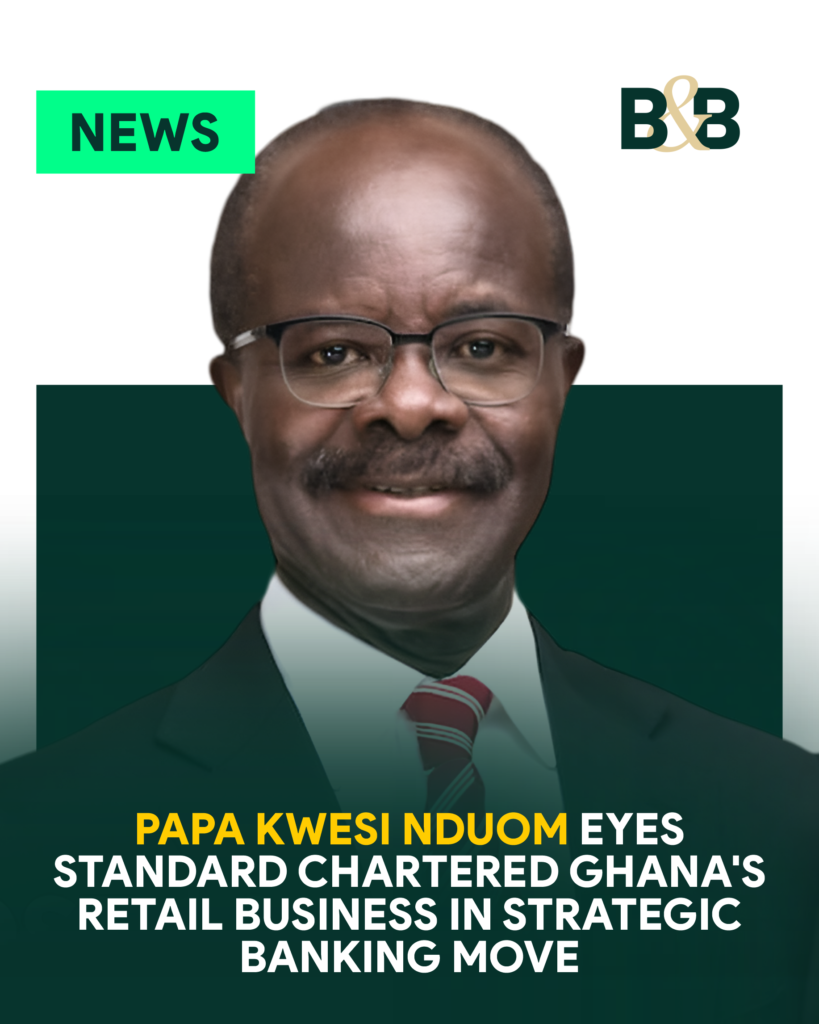
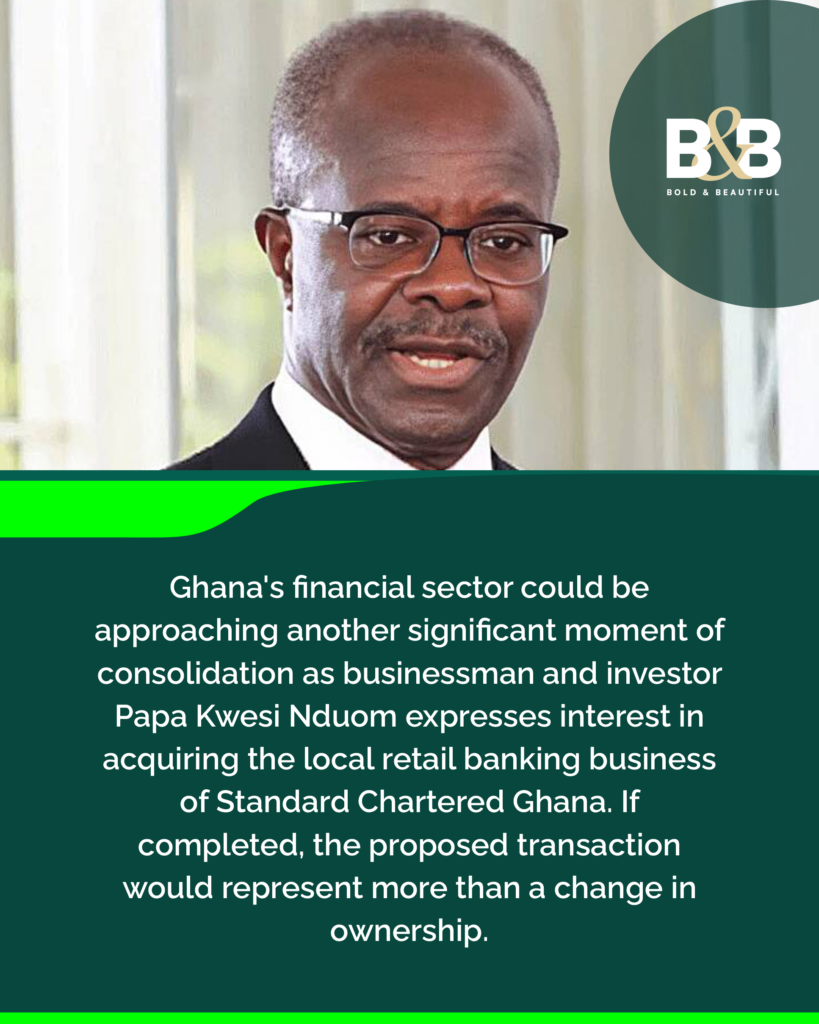
Ghana’s financial sector could be approaching another significant moment of consolidation as businessman and investor Papa Kwesi Nduom expresses interest in acquiring the local retail banking business of Standard Chartered Ghana. If completed, the proposed transaction would represent more than a change in ownership. It would signal the continued evolution of indigenous participation in one of West Africa’s most competitive banking markets, where local investors are increasingly seeking opportunities to expand their influence.
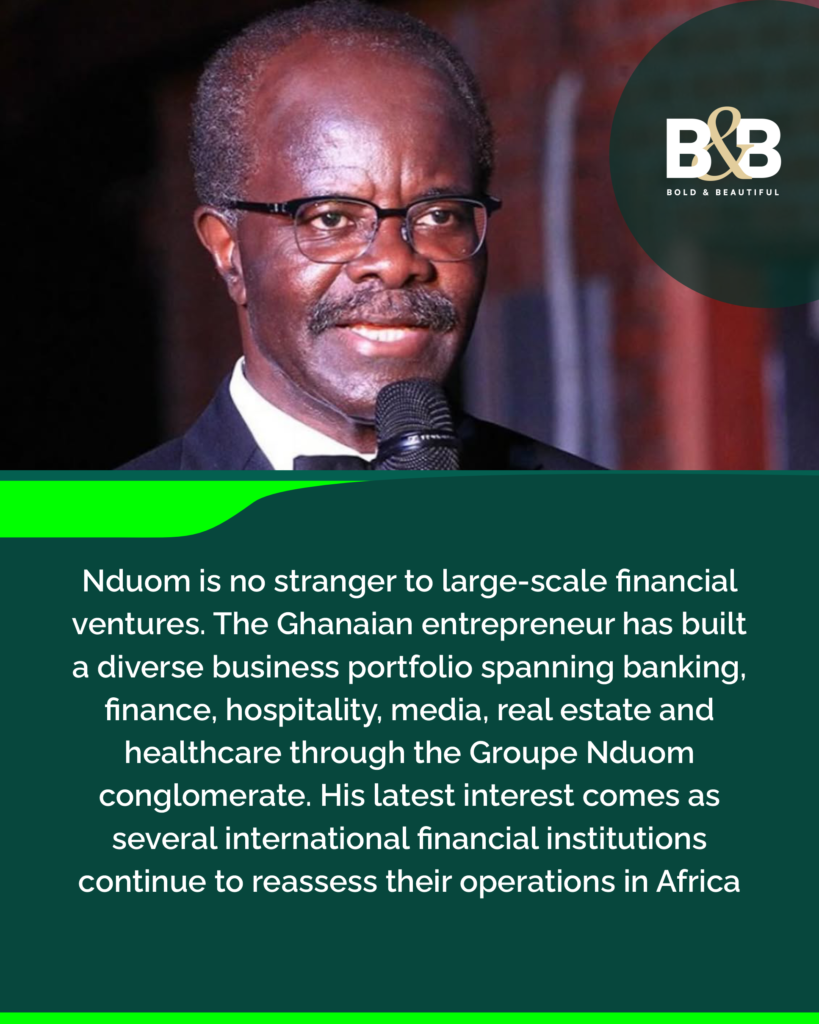
Nduom is no stranger to large-scale financial ventures. The Ghanaian entrepreneur has built a diverse business portfolio spanning banking, finance, hospitality, media, real estate and healthcare through the Groupe Nduom conglomerate. His latest interest comes as several international financial institutions continue to reassess their operations in Africa, with many choosing to streamline portfolios and concentrate resources on corporate and institutional banking while reducing exposure to consumer banking businesses.
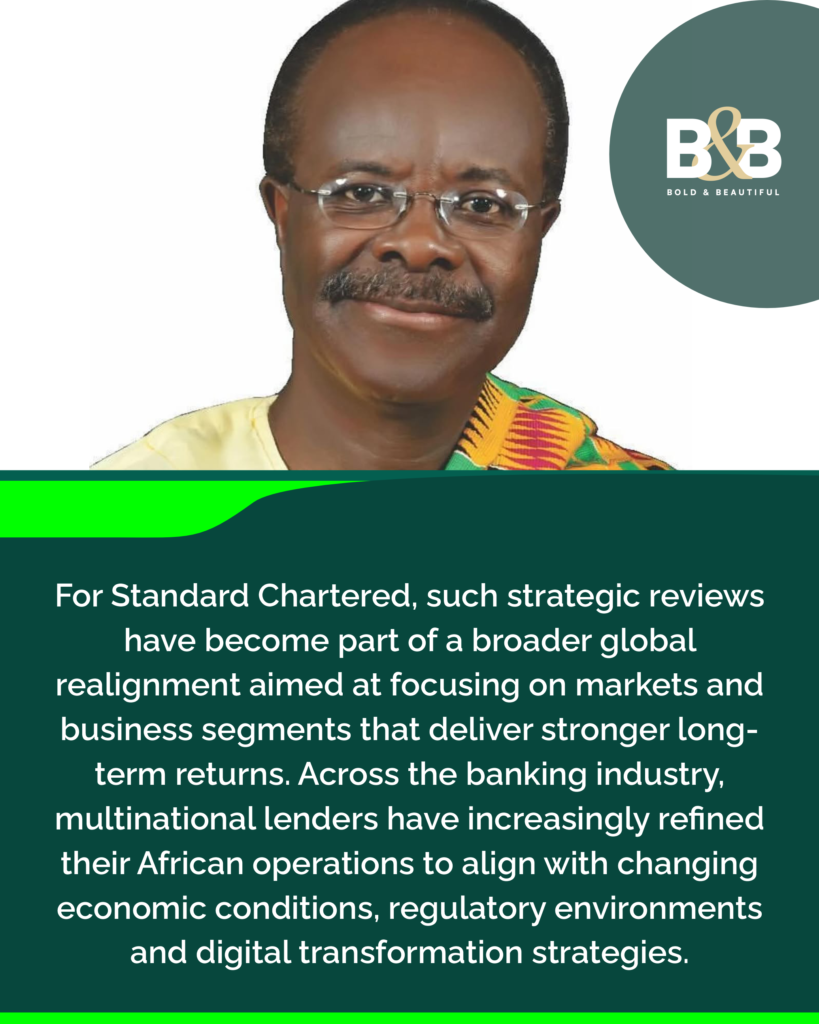
For Standard Chartered, such strategic reviews have become part of a broader global realignment aimed at focusing on markets and business segments that deliver stronger long-term returns. Across the banking industry, multinational lenders have increasingly refined their African operations to align with changing economic conditions, regulatory environments and digital transformation strategies. A successful acquisition by a Ghanaian investor would therefore fit within a wider continental trend of local capital assuming greater responsibility for financial services previously dominated by international institutions.
The proposed deal also reflects growing confidence among African investors with the financial capacity to pursue transactions of this scale. Indigenous ownership has become an increasingly important theme across sectors ranging from banking and telecommunications to manufacturing and infrastructure. Supporters argue that locally led institutions often possess a deeper understanding of domestic markets and customer needs, while also contributing to stronger capital retention within national economies.
Although discussions remain subject to regulatory approvals and the conclusion of formal negotiations, Papa Kwesi Nduom’s reported interest has already attracted attention across Ghana’s business community. The outcome will be closely watched by investors, policymakers and industry leaders alike. Regardless of the final decision, the development highlights the increasing maturity of Africa’s financial sector, where homegrown entrepreneurs are positioning themselves to shape the next phase of institutional growth and economic development.