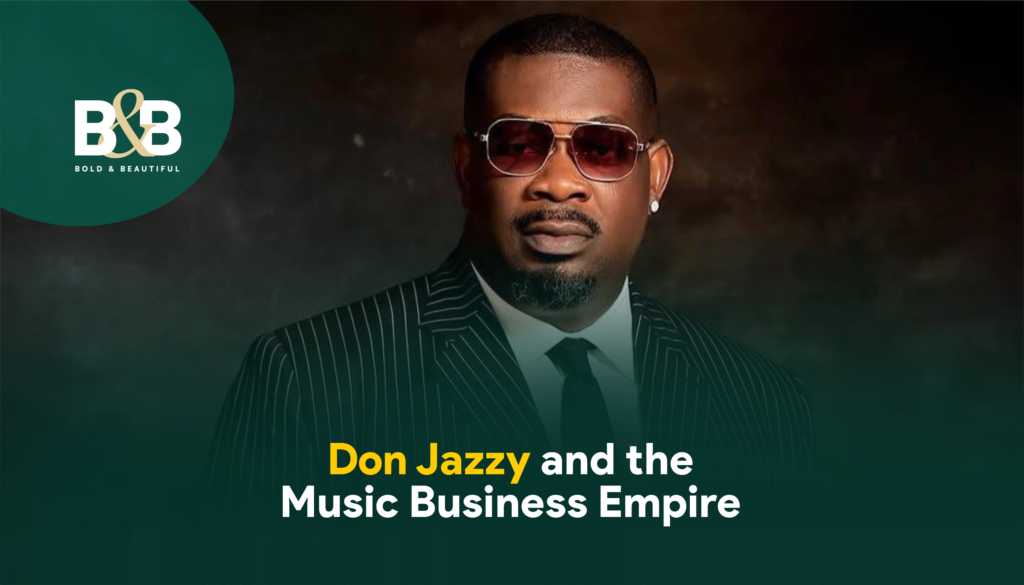
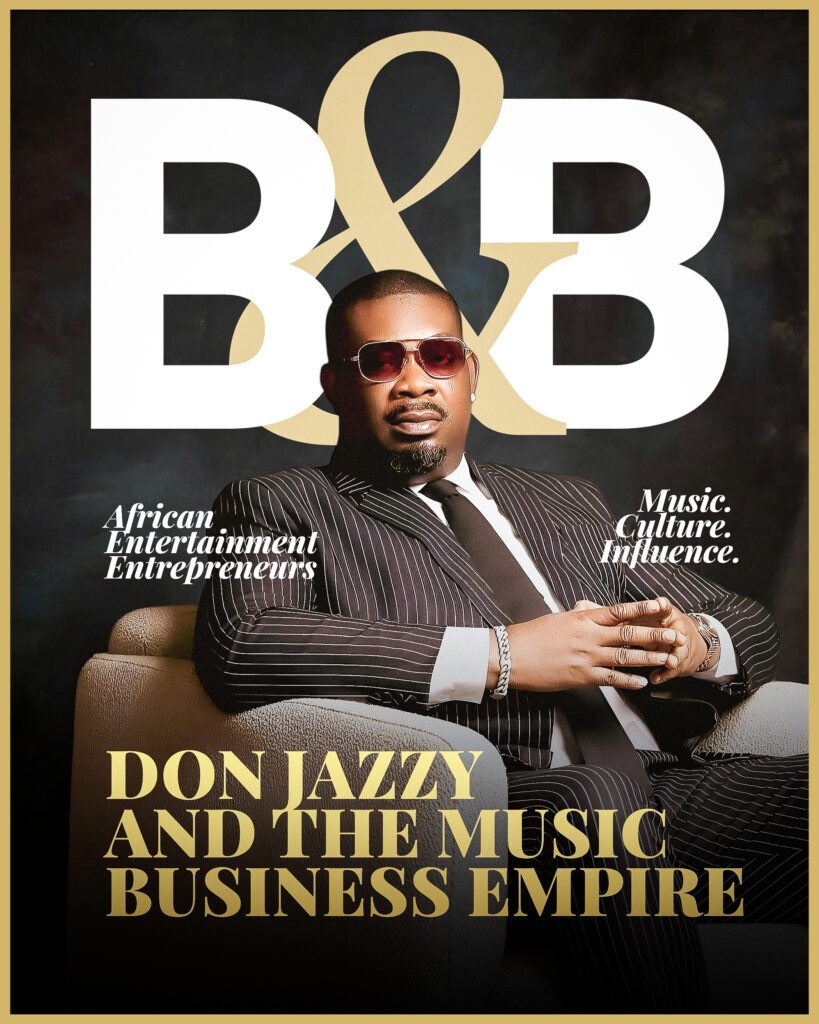
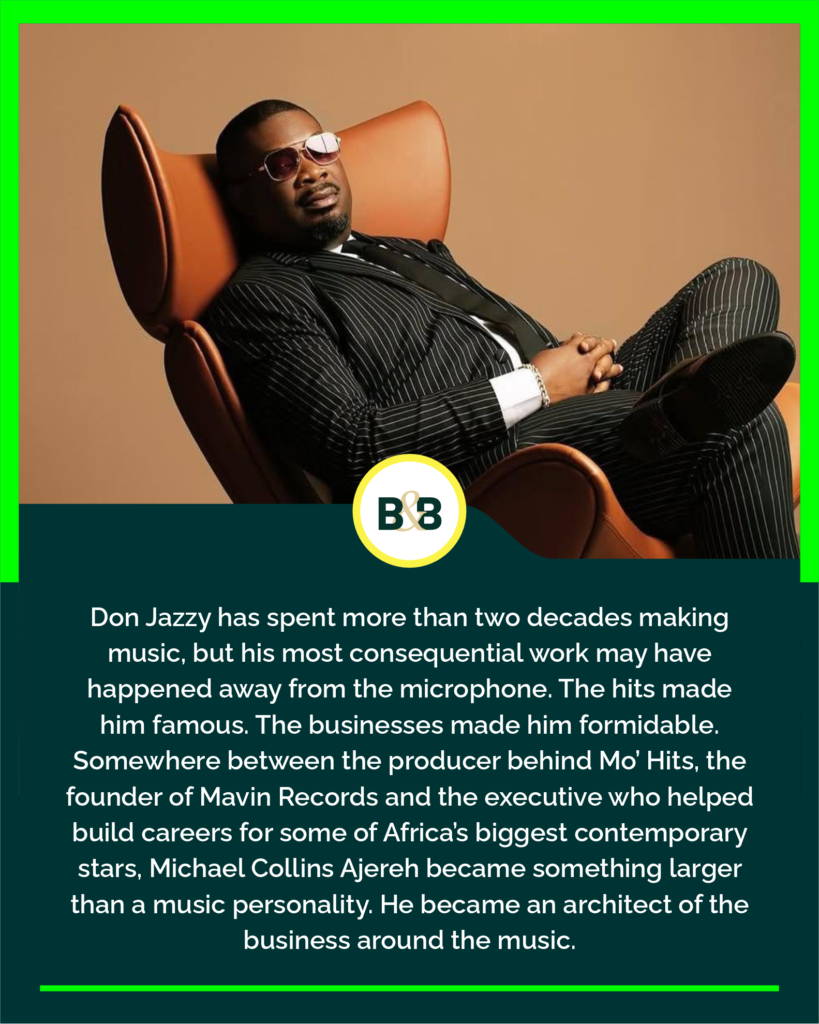
Don Jazzy has spent more than two decades making music, but his most consequential work may have happened away from the microphone. The hits made him famous. The businesses made him formidable. Somewhere between the producer behind Mo’ Hits, the founder of Mavin Records and the executive who helped build careers for some of Africa’s biggest contemporary stars, Michael Collins Ajereh became something larger than a music personality. He became an architect of the business around the music.
His instinct was visible early. At Mo’ Hits, which he co-founded in 2004, Don Jazzy was already operating with an understanding that records could become ecosystems. D’banj, Wande Coal and the Mo’ Hits All-Stars became part of a recognisable world, while songs such as “Why Me”, “Oliver Twist” and “Booty Call” helped define the sound and attitude of Nigerian pop in the 2000s. The producer’s famous tag became almost a brand signature. But the more interesting achievement was what happened behind it: he was learning how artists, producers, records, personalities and audiences could be assembled into something with commercial life beyond a single hit.
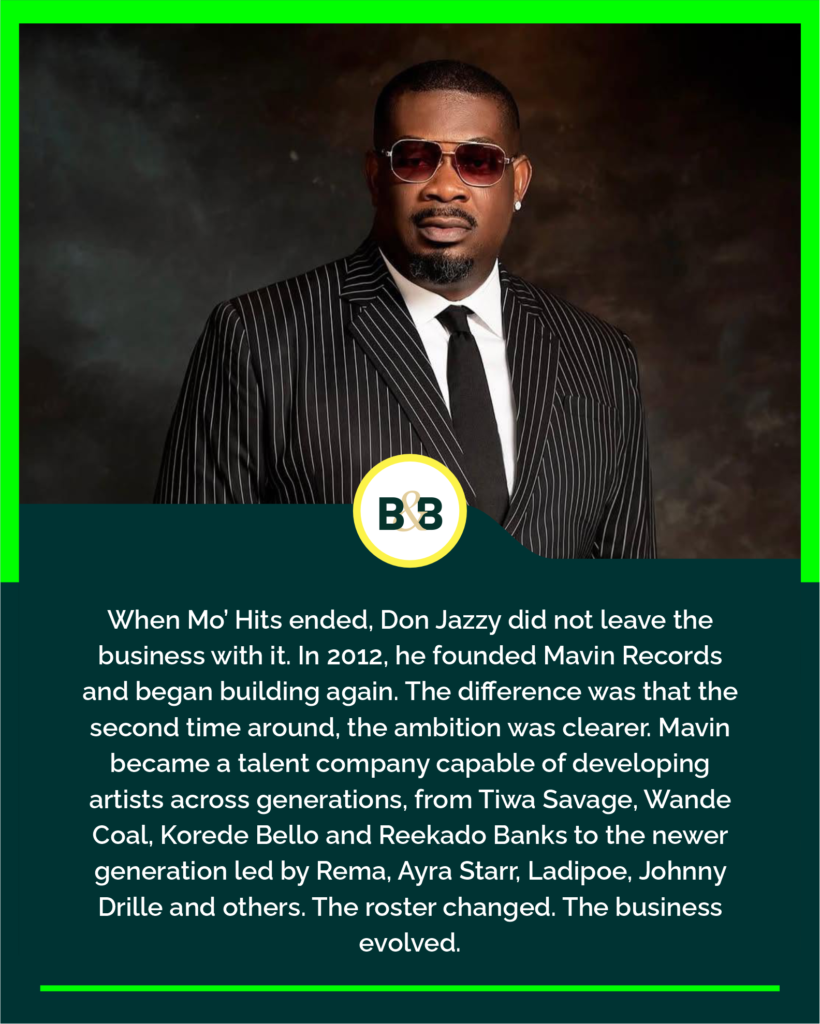
When Mo’ Hits ended, Don Jazzy did not leave the business with it. In 2012, he founded Mavin Records and began building again. The difference was that the second time around, the ambition was clearer. Mavin became a talent company capable of developing artists across generations, from Tiwa Savage, Wande Coal, Korede Bello and Reekado Banks to the newer generation led by Rema, Ayra Starr, Ladipoe, Johnny Drille and others. The roster changed. The business evolved. The underlying philosophy remained remarkably consistent: find talent, give it an environment to grow and build a machine capable of taking the music further.
That machine eventually became too significant to be viewed solely as a Nigerian record label. Rema’s “Calm Down” became a global phenomenon, while Ayra Starr pushed Mavin further into the international conversation. By the time Universal Music Group announced its majority investment in Mavin Global in 2024, the deal represented something larger than a corporate transaction. It was an acknowledgement of the commercial infrastructure that had been built in Lagos and the value of a company that understood African talent from the inside. Don Jazzy and Mavin COO Tega Oghenejobo retained leadership, preserving the local executive intelligence that had helped build the company in the first place.
That distinction matters. African music has often attracted global attention through individual stars, but stars need systems around them. They need A&R, publishing, distribution, marketing, rights management, audience development, partnerships, finance and people who understand when to push and when to wait. Mavin has steadily expanded into those spaces, describing its business across partnerships, content production, publishing and marketing. Its Artist Academy and Future Five initiative have also pointed towards a broader ambition: the business is interested in developing the people who build the industry, not only the artists who perform inside it.
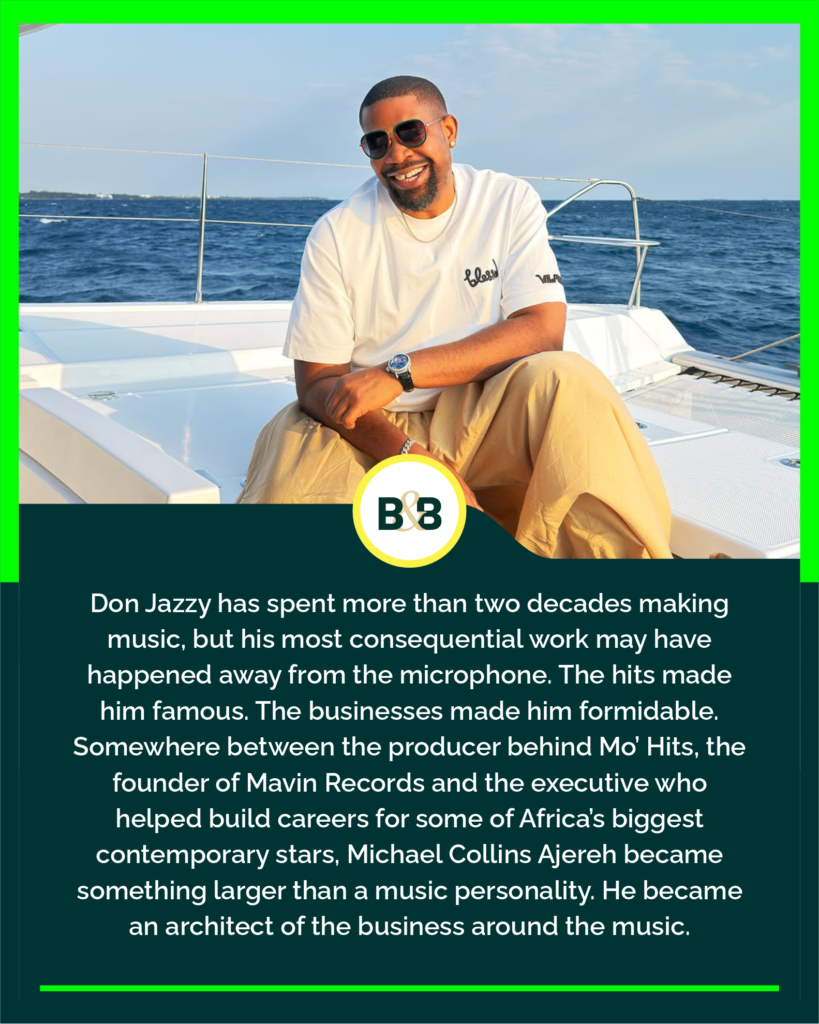
Don Jazzy’s own evolution mirrors that expansion. He remains a producer with an unusually recognisable musical identity, but his public persona has also become part of his entrepreneurial advantage. He understands entertainment as culture, and culture as business. His humour has made him unusually accessible for a music executive of his stature, while his willingness to experiment with digital platforms has kept him relevant in an industry where executives can become invisible as soon as the audience moves somewhere else. In 2026, his recognition alongside Tega Oghenejobo on Billboard’s Global Power Players list offered another indication of how far that executive journey has travelled.
The most important part of the Don Jazzy story, however, may be what happens after the individual hit. A producer can make a classic. A superstar can dominate a year. A label can have a golden generation. Building an institution capable of repeatedly producing relevance is considerably harder. Mavin’s history suggests that Don Jazzy has been less interested in being the loudest person in the room than in understanding how the room works, who belongs in it and how to keep building new rooms when the old ones become too small.
That is why the Don Jazzy story belongs in the larger story of African business. His greatest creation is not a particular song, artist or era. It is a Nigerian music company that grew from the lessons of Mo’ Hits into a global entertainment platform, while continuing to develop talent from home. The next chapter will be judged by the artists Mavin breaks, the businesses it builds, the executives it produces and the global opportunities it creates. Don Jazzy entered Nigerian popular music as a producer. More than twenty years later, he has become one of the people teaching the music business how to scale.