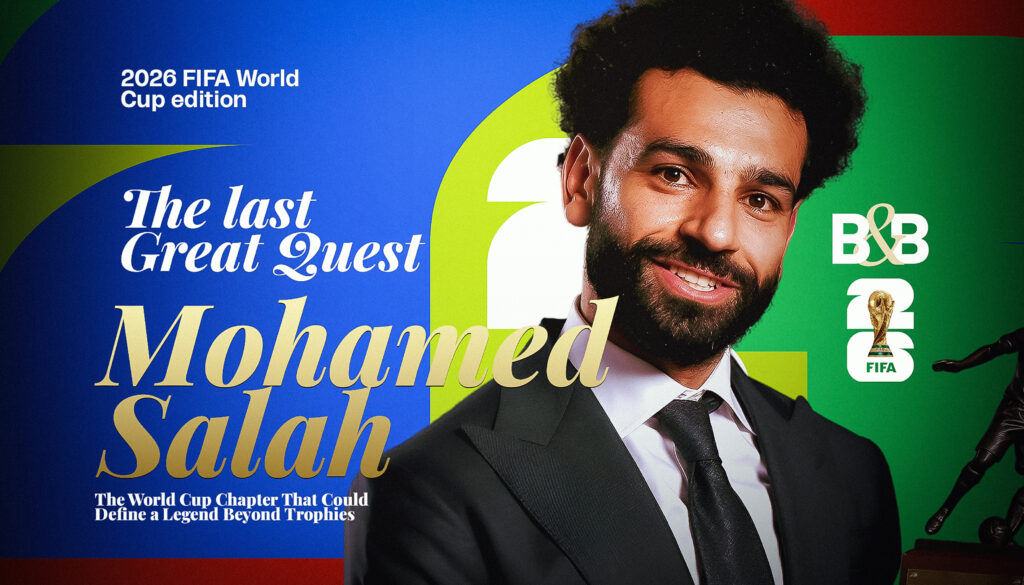
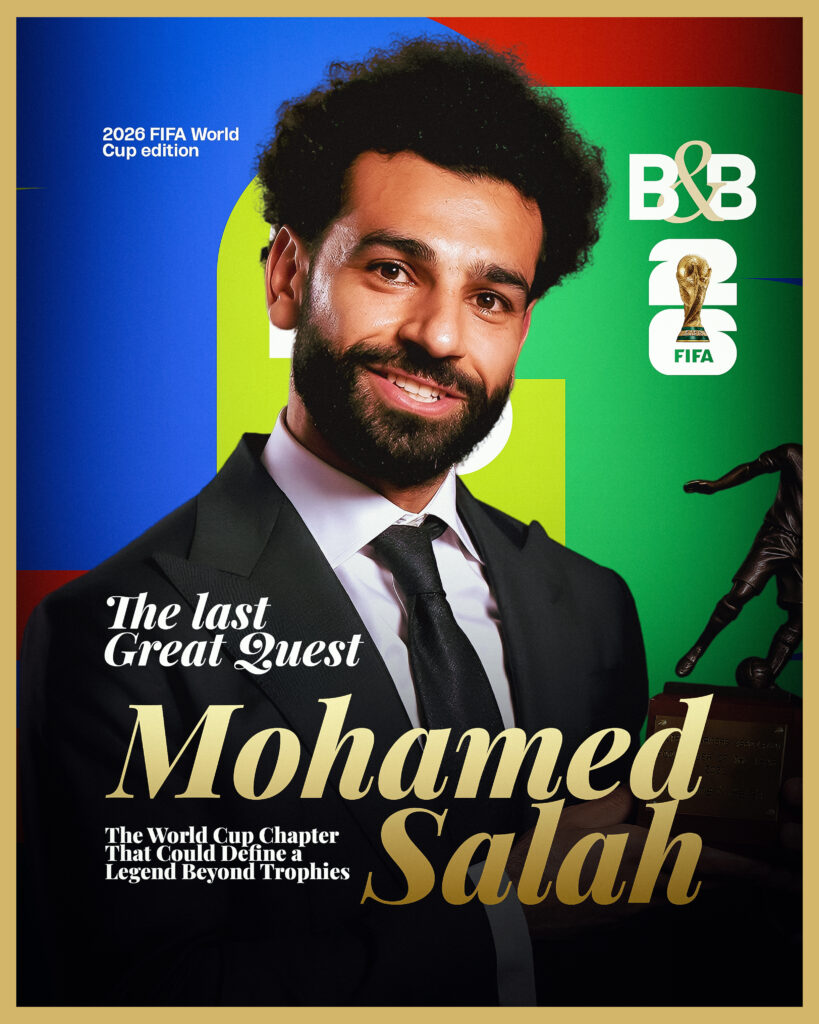
The World Cup Chapter That Could Define a Legend Beyond Trophies
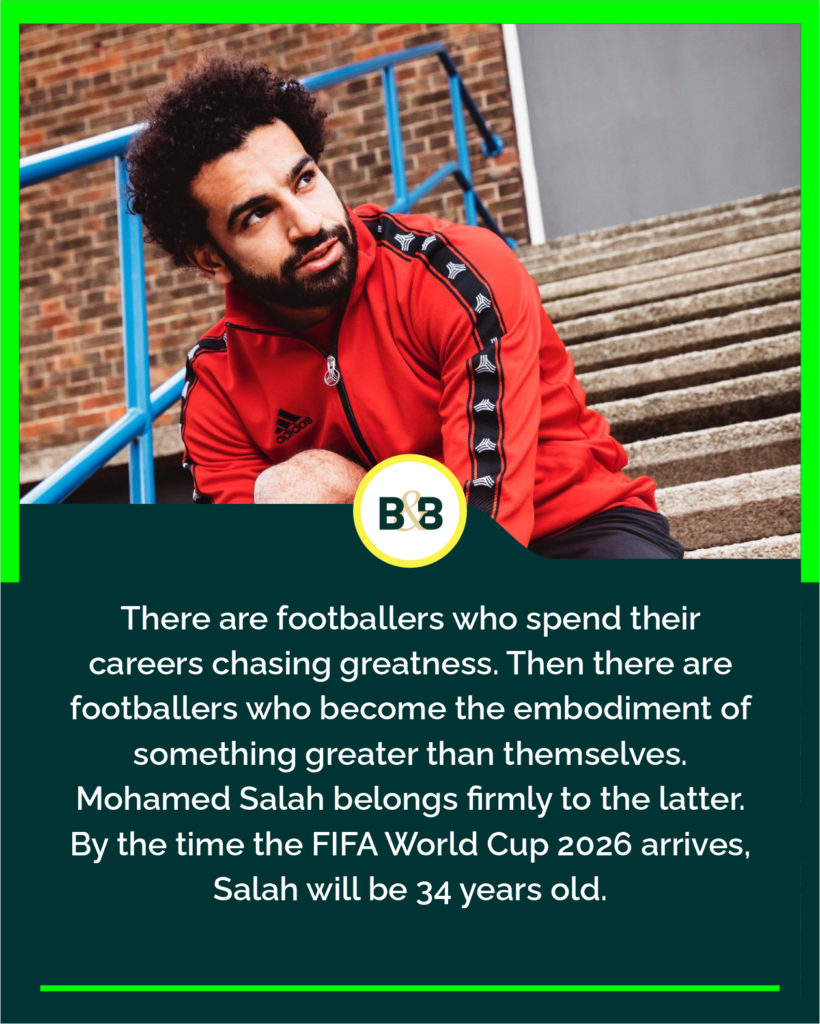
There are footballers who spend their careers chasing greatness.
Then there are footballers who become the embodiment of something greater than themselves.
Mohamed Salah belongs firmly to the latter.
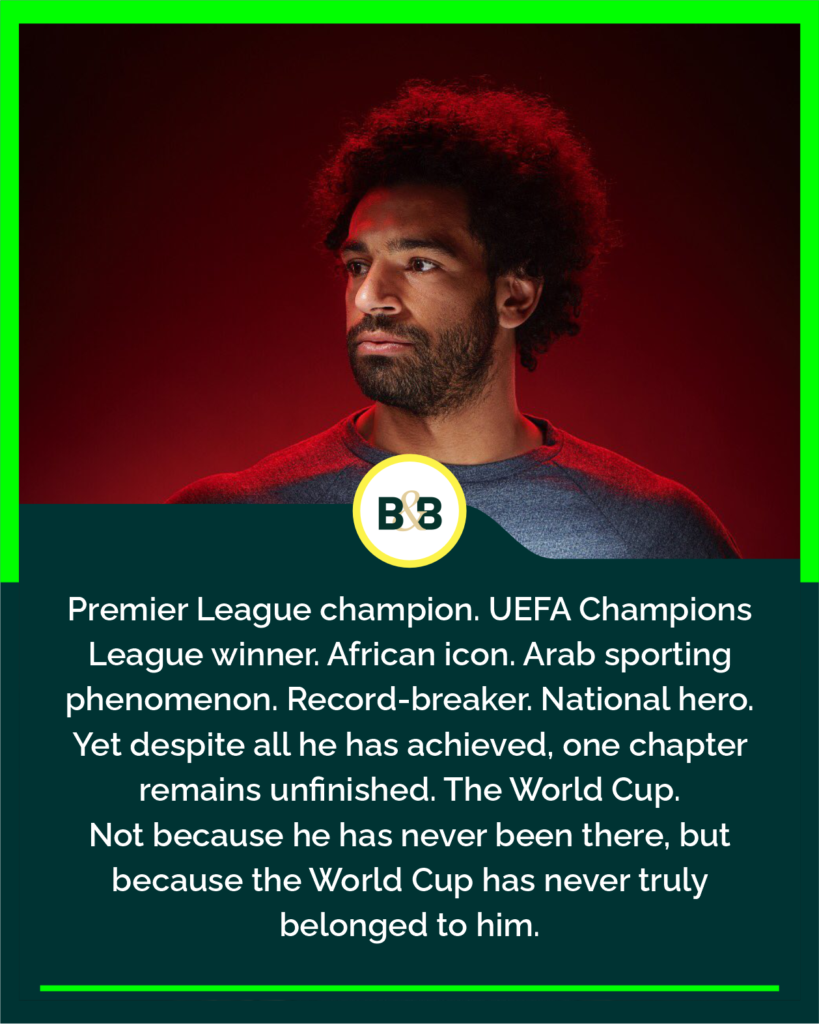
By the time the FIFA World Cup 2026 arrives, Salah will be 34 years old. His trophy cabinet will already tell a remarkable story. Premier League champion. UEFA Champions League winner. African icon. Arab sporting phenomenon. Record-breaker. National hero.
Yet despite all he has achieved, one chapter remains unfinished.
The World Cup.
Not because he has never been there.
But because the World Cup has never truly belonged to him.
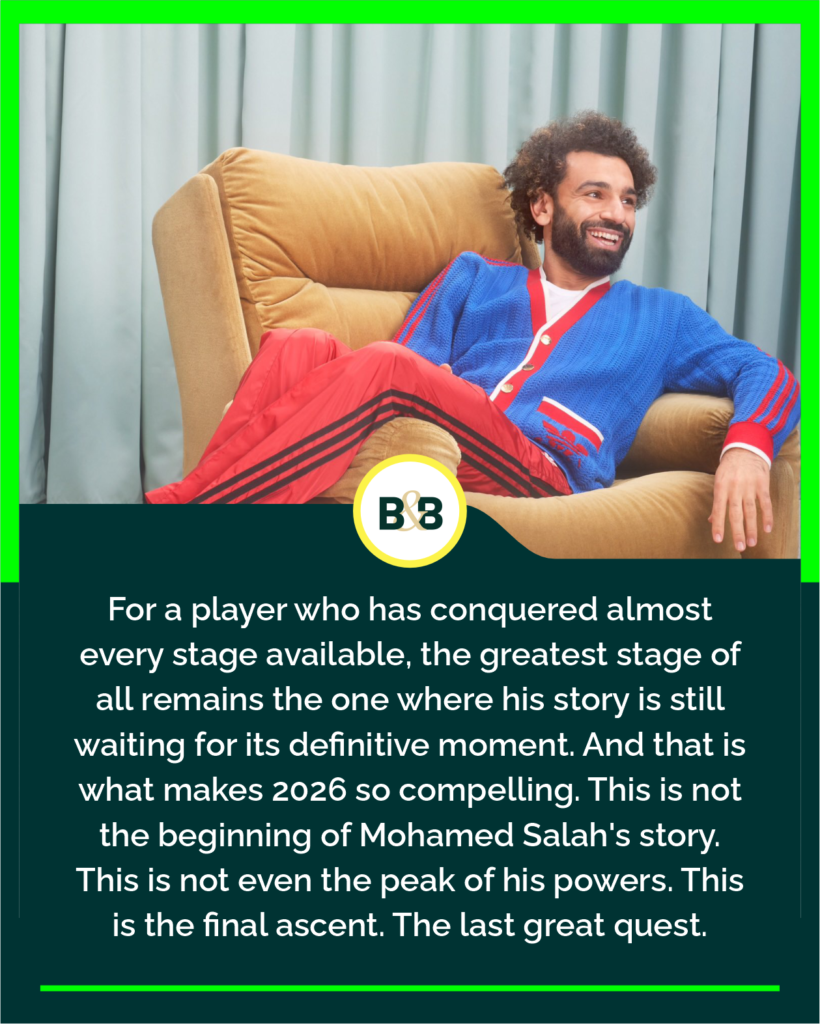
For a player who has conquered almost every stage available to modern footballers, the greatest stage of all remains the one where his story is still waiting for its definitive moment.
And that is what makes 2026 so compelling.
This is not the beginning of Mohamed Salah’s story.
This is not even the peak of his powers.
This is the final ascent.
The last great quest.
For generations, Egyptian football has lived in a fascinating contradiction.
It is home to one of Africa’s richest football cultures, one of the continent’s most passionate fan bases, and one of its most successful national teams. Yet despite producing legendary footballers and winning multiple continental titles, Egypt has never fully established itself among the enduring powers of World Cup history.
The Pharaohs have often arrived carrying enormous expectations only to leave before their story truly begins.
That historical burden now rests on Salah’s shoulders.
Not because he asked for it.
But because history placed it there.
For nearly two decades, Salah has represented far more than goals, assists, and trophies. He became the symbol of possibility for an entire generation of Egyptians who watched one of their own rise from the Nile Delta to the summit of world football.
He became proof that greatness could emerge from their streets, their schools, their communities, and their dreams.
The World Cup, therefore, represents something larger than football.
It represents validation.
Validation that Egyptian football can stand among the elite.
Validation that African and Arab excellence can consistently shape football’s grandest narratives.
Validation that the journey was never simply about individual success.
It was about national arrival.
That is why 2026 feels different.
Unlike previous tournaments, this World Cup arrives at a unique intersection of time and legacy.
Salah is no longer the young star seeking recognition.
He is no longer the explosive newcomer surprising Europe.
He is no longer the rising African talent trying to prove he belongs.
Those questions have long been answered.
The question now is altogether deeper.
What does football immortality look like when almost everything has already been achieved?
For some players, immortality is measured in trophies.
For others, it is measured in moments.
Salah’s opportunity in 2026 may ultimately belong to the second category.
Because history remembers more than champions.
History remembers symbols.
It remembers pioneers.
It remembers figures who shifted perceptions and expanded possibilities.
A remarkable World Cup campaign from Egypt—whether or not it ends with silverware—could become one of African football’s defining modern stories.
It could elevate Egypt beyond participation and into contention.
It could inspire a new generation across Africa and the Arab world.
It could transform Salah’s relationship with the World Cup from a participant’s story into a legacy story.
And perhaps that is the deeper identity question he arrives to answer.
Can a footballer who has already become a global icon still complete his journey without a defining World Cup chapter?
Can the greatest Egyptian footballer of all time truly close the circle without leaving an unforgettable mark on football’s biggest stage?
The answer may not be found in goals.
It may not be found in medals.
It may not even be found in victories.
It may be found in meaning.
Because the greatest athletes eventually reach a point where achievement becomes secondary to inheritance.
They stop asking what they can win.
They begin asking what they will leave behind.
For Mohamed Salah, World Cup 2026 may represent that moment.
A final opportunity to write the chapter that connects village dreams to global legacy.
A chance to carry Egypt into football history once more.
A chance to complete a journey that has inspired millions.
And perhaps most importantly, a chance to prove that some mountains are worth climbing not because they guarantee victory, but because they reveal the full measure of the climber.
Mohamed Salah has already given Egypt countless memories.
He has already given Africa one of its greatest modern sporting icons.
But as the road to 2026 unfolds, one possibility remains tantalisingly alive.
That the final defining act of his extraordinary career is still waiting.
And that football’s biggest stage may yet become the setting for its most meaningful chapter.