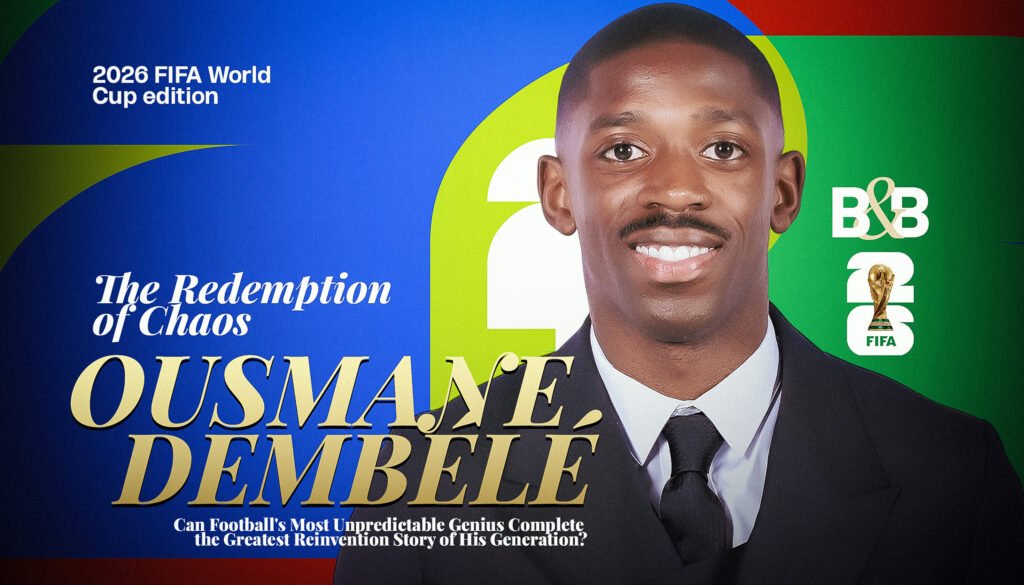
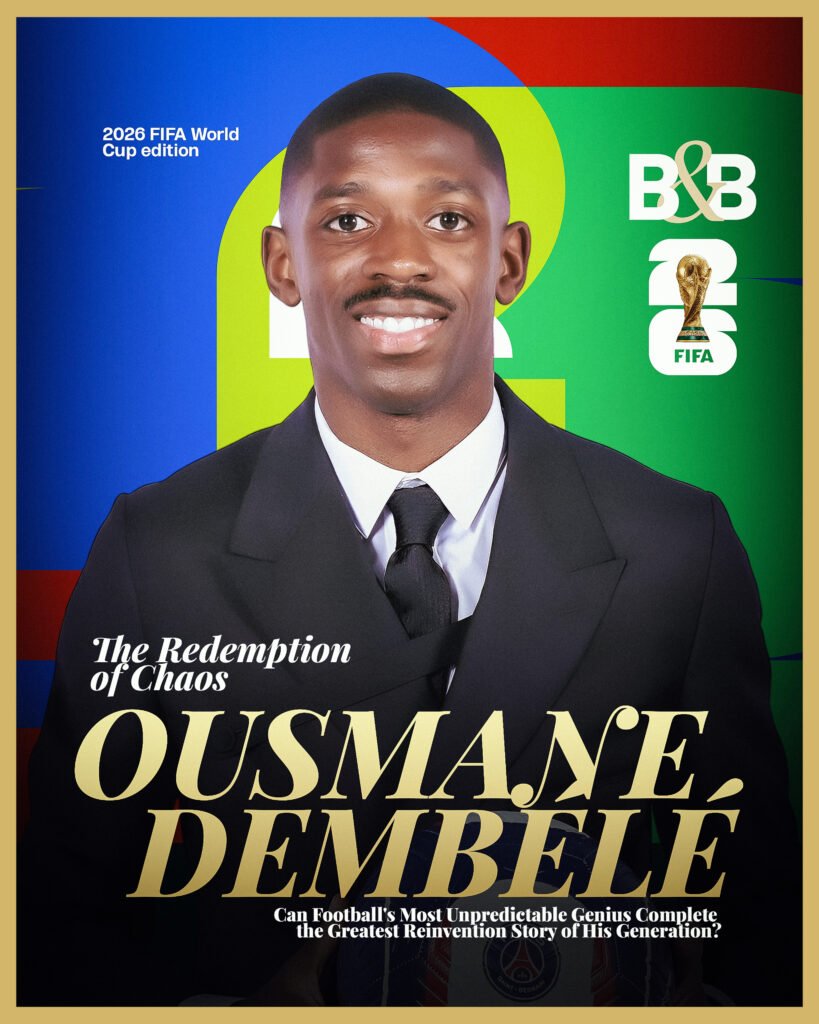
Can Football’s Most Unpredictable Genius Complete the Greatest Reinvention Story of His Generation?
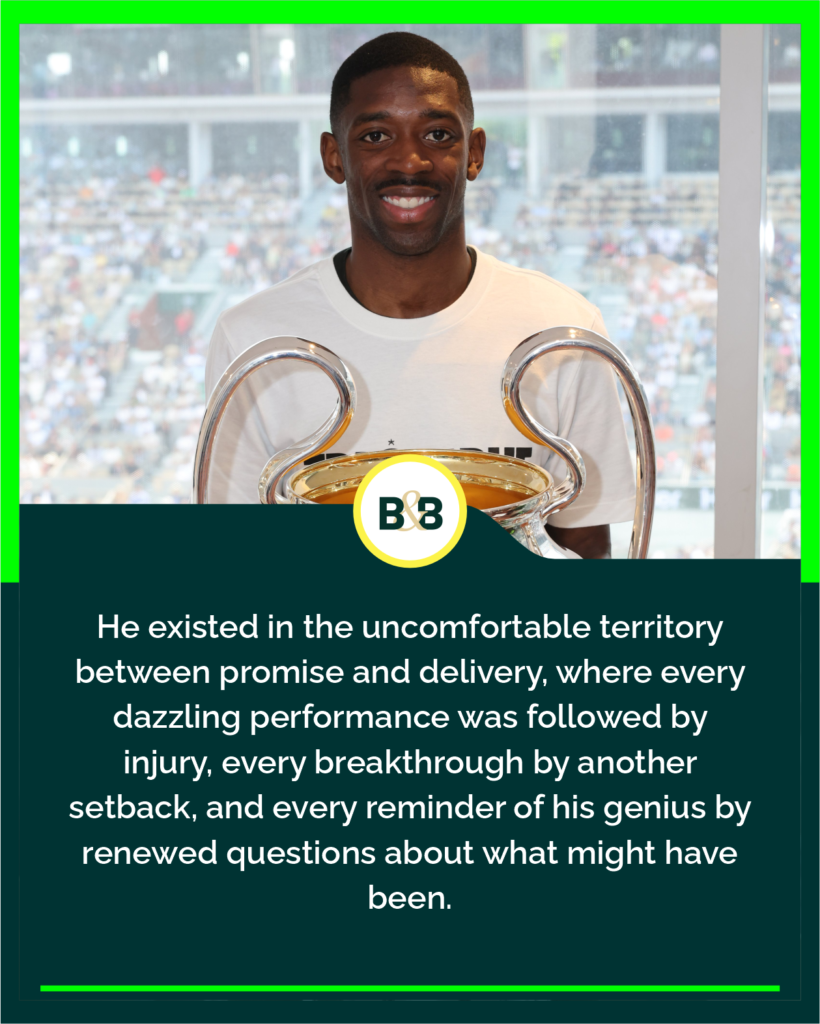
There was a time when Ousmane Dembélé represented everything football fears about potential. You know that feeling of the possibility that an extraordinary talent might never fully materialise. For years, he occupied a peculiar space in the sport’s imagination. He was neither a failure nor a success. Neither fulfilled nor forgotten. He existed in the uncomfortable territory between promise and delivery, where every dazzling performance was followed by injury, every breakthrough by another setback, and every reminder of his genius by renewed questions about what might have been.
The narrative became so deeply embedded that it eventually overshadowed the player himself. Dembélé was no longer discussed primarily as a footballer. He became a symbol. The €100 million Barcelona signing whose career seemed permanently suspended between expectation and reality. The gifted prodigy whose two-footed brilliance, explosive acceleration and creative unpredictability convinced many that he possessed Ballon d’Or potential, yet whose body repeatedly interrupted the story before it could properly unfold. In an era obsessed with immediate fulfilment, he became football’s favourite example of unfulfilled promise.
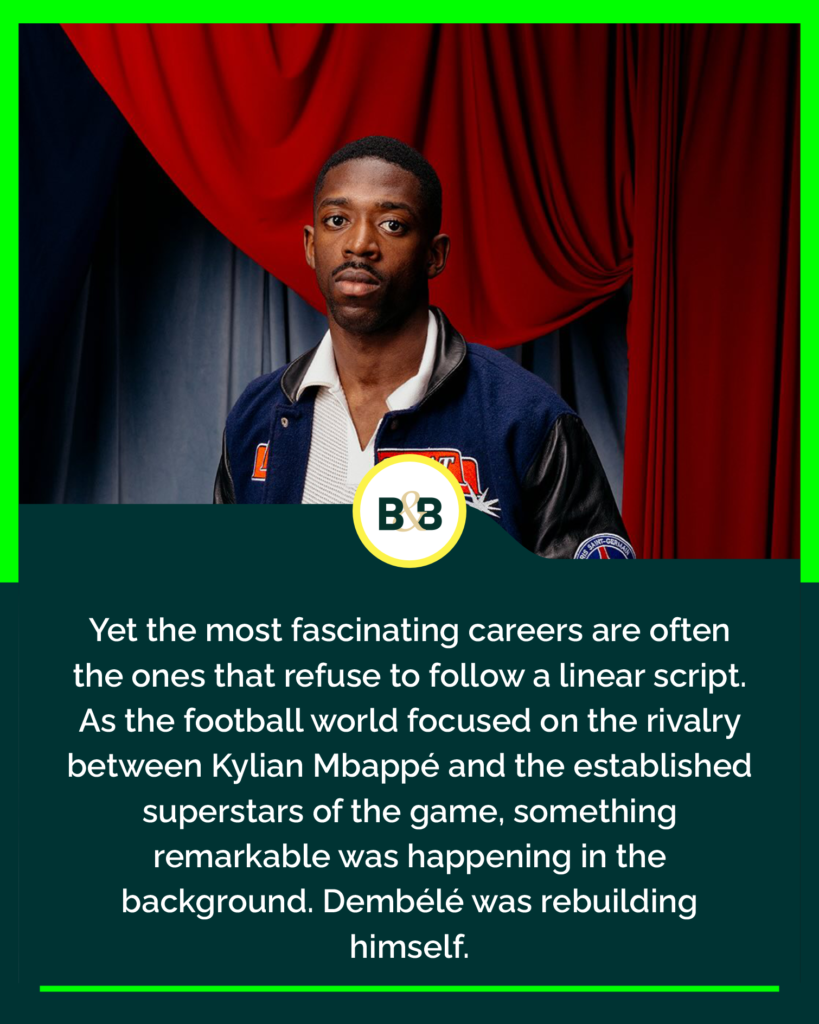
Yet the most fascinating careers are often the ones that refuse to follow a linear script.
As the football world focused on the rivalry between Kylian Mbappé and the established superstars of the game, something remarkable was happening in the background. Dembélé was rebuilding himself. Not through dramatic declarations or carefully manufactured redemption narratives, but through performance, maturity and resilience. The player who once seemed trapped by his reputation gradually began to redefine it. When Paris Saint-Germain entered a new era following Mbappé’s departure, many expected uncertainty. Instead, the club discovered a clearer identity, a stronger collective structure and a renewed sense of purpose. At the centre of that transformation stood a footballer who had spent years being told what he could not become.
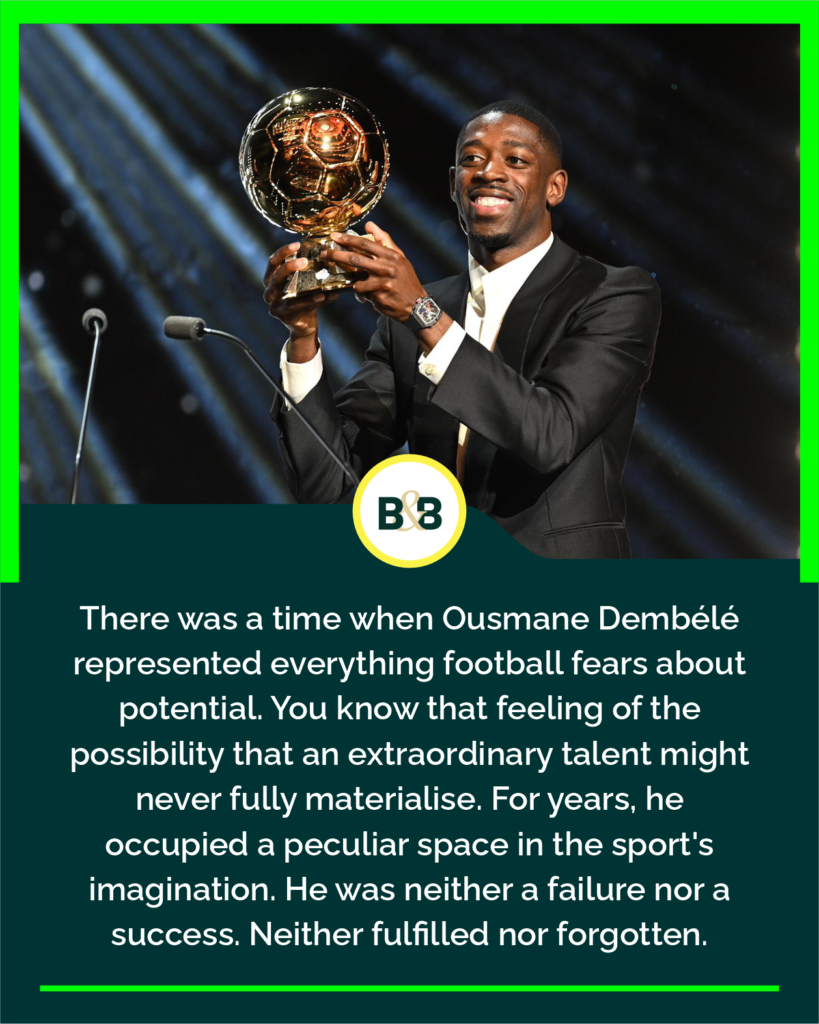
Suddenly, the conversation changed. The same player once criticised for inconsistency was being discussed among the most influential performers in European football. The same footballer whose career had been characterised by interruptions was producing sustained excellence at the highest level. The same man who had spent much of the previous decade answering questions about wasted potential was now emerging as one of the leading figures of a team that conquered Europe. It was not simply a revival. It was a reinvention.
And yet, for all the success he has enjoyed at club level, the World Cup presents a very different challenge. In many ways, international football remains the one stage where Dembélé’s story feels incomplete. France has witnessed flashes of his brilliance, but rarely the fully realised version that Paris Saint-Germain supporters have come to admire. Injuries have interrupted major tournaments. Tactical circumstances have often limited his influence. Even when surrounded by elite talent, he has struggled to establish the same authority he now enjoys at club level. The gap between the Dembélé of Paris and the Dembélé of France remains one of the most intriguing mysteries of modern football.
That unresolved tension is precisely what makes the 2026 World Cup such a compelling chapter in his journey. This is not the story of a young player seeking validation. Nor is it the story of a veteran chasing one final opportunity. Instead, it is the story of a footballer arriving at the sport’s greatest tournament at the exact moment he may finally understand himself. For perhaps the first time in his career, Dembélé enters a World Cup not as a prospect, not as a question mark, and not as an unfinished project. He arrives as an established star expected to shape outcomes rather than merely participate in them.
The historical burden he carries is unlike that of most players in the tournament. Many footballers spend their careers attempting to prove they are talented enough for greatness. Dembélé’s challenge has always been different. The world accepted his talent long ago. What it questioned was whether that talent could be transformed into sustained influence. Whether brilliance could become consistency. Whether unpredictability could become leadership. Whether potential could become legacy.
In that sense, the defining identity question of this World Cup is not whether Ousmane Dembélé is good enough to lead France. The question is whether football is finally witnessing the player he was always supposed to become.
For years, his career was defined by chaos. Injuries disrupted momentum. Expectations distorted perception. Circumstances repeatedly interrupted progress. Yet chaos, while dramatic, is rarely a destination. Eventually every great athlete reaches a moment when the narrative shifts from what happened to them toward what they choose to do with it. This World Cup may represent that moment for Dembélé.
What makes his story particularly fascinating is that he does not necessarily need to lift the trophy to alter his place in football history. If he becomes the creative heartbeat of a French side pursuing global glory, if he finally transfers his club form onto the international stage, and if he demonstrates that reinvention is possible even after years of disappointment, his impact will extend beyond medals and statistics. His journey will become something larger. A testament to patience in an age of impatience. A reminder that greatness sometimes arrives later than expected. Proof that talent delayed is not always talent denied.
The World Cup has always been football’s most powerful stage for transformation. Careers have been elevated, redefined and immortalised within the space of a few summer weeks. For Ousmane Dembélé, 2026 offers an opportunity unlike any other. Not to introduce himself to the world. Not even to redeem himself. But to complete one of the most extraordinary reinvention stories of modern football.
The question now is whether the player once regarded as football’s greatest unfinished masterpiece is ready to become one of its most unforgettable finished works.