
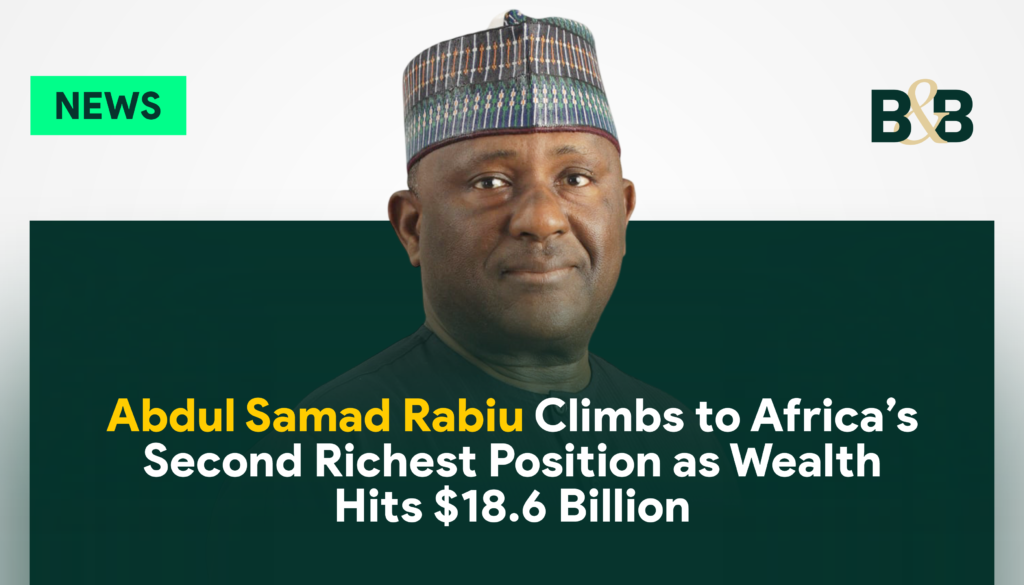
Abdul Samad Rabiu has moved into the position of Africa’s second-richest individual, with his net worth reported at approximately $18.6 billion, according to recent wealth tracking estimates. The update places him ahead of South African billionaire Johann Rupert in continental rankings, reflecting a significant shift in Africa’s private wealth landscape.
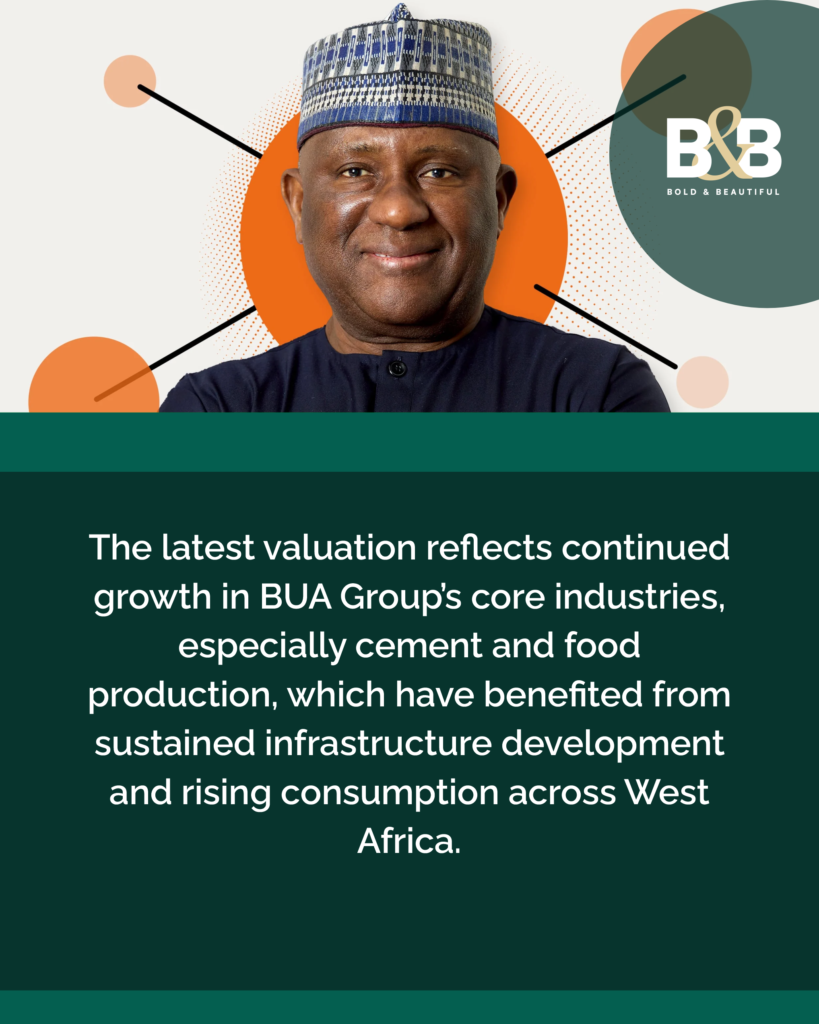
Rabiu, founder and chairman of BUA Group, has built his fortune through a diversified portfolio spanning cement production, sugar refining, real estate, and infrastructure. His business expansion strategy has been anchored in large-scale industrial development within Nigeria, particularly in sectors that align with domestic demand and import substitution policies.
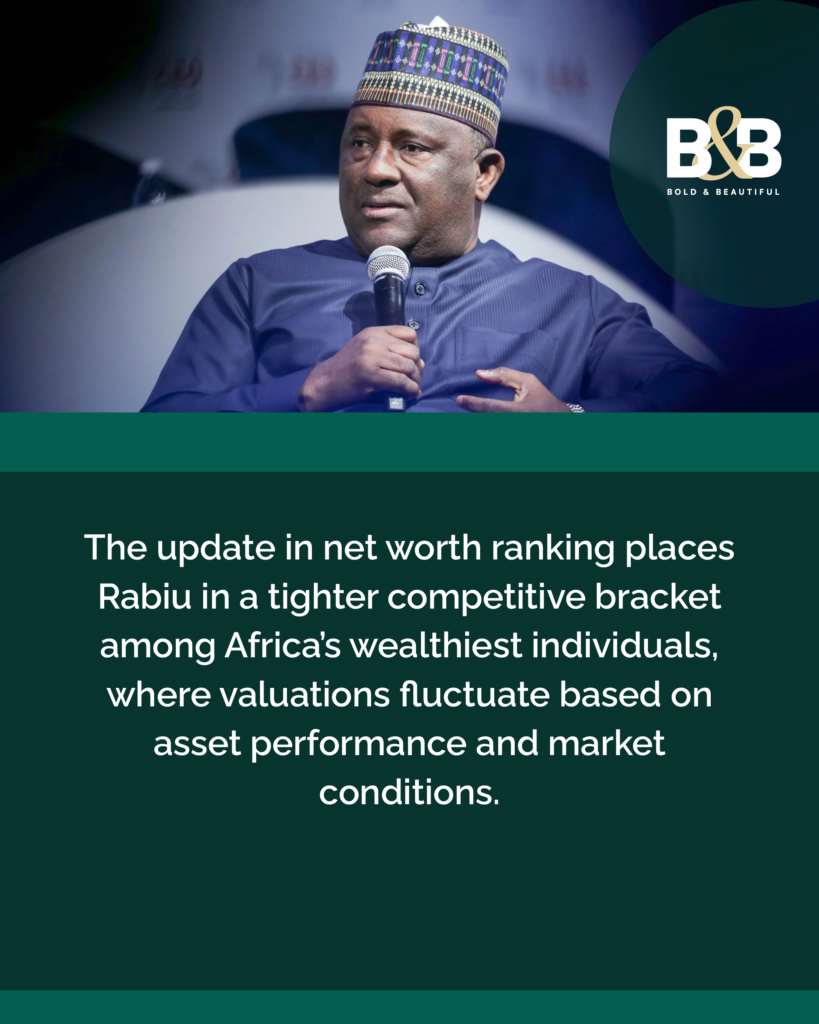
The latest valuation reflects continued growth in BUA Group’s core industries, especially cement and food production, which have benefited from sustained infrastructure development and rising consumption across West Africa. Rabiu’s approach has consistently focused on vertical integration, allowing the group to control production chains and improve operational efficiency across its subsidiaries.
His rise in continental rankings underscores broader changes in African wealth distribution, where industrial manufacturing and infrastructure-driven conglomerates are increasingly competing with traditional holdings in mining, luxury goods, and finance. The shift highlights how local production capacity and domestic market strength are becoming key drivers of billionaire wealth on the continent.
Rabiu’s business trajectory has been marked by gradual expansion rather than rapid speculative growth. Over the years, he has maintained a focus on scaling essential industries, positioning BUA Group as one of Nigeria’s most influential private sector players. The company’s footprint in cement production, in particular, has placed it at the centre of Nigeria’s ongoing infrastructure development.
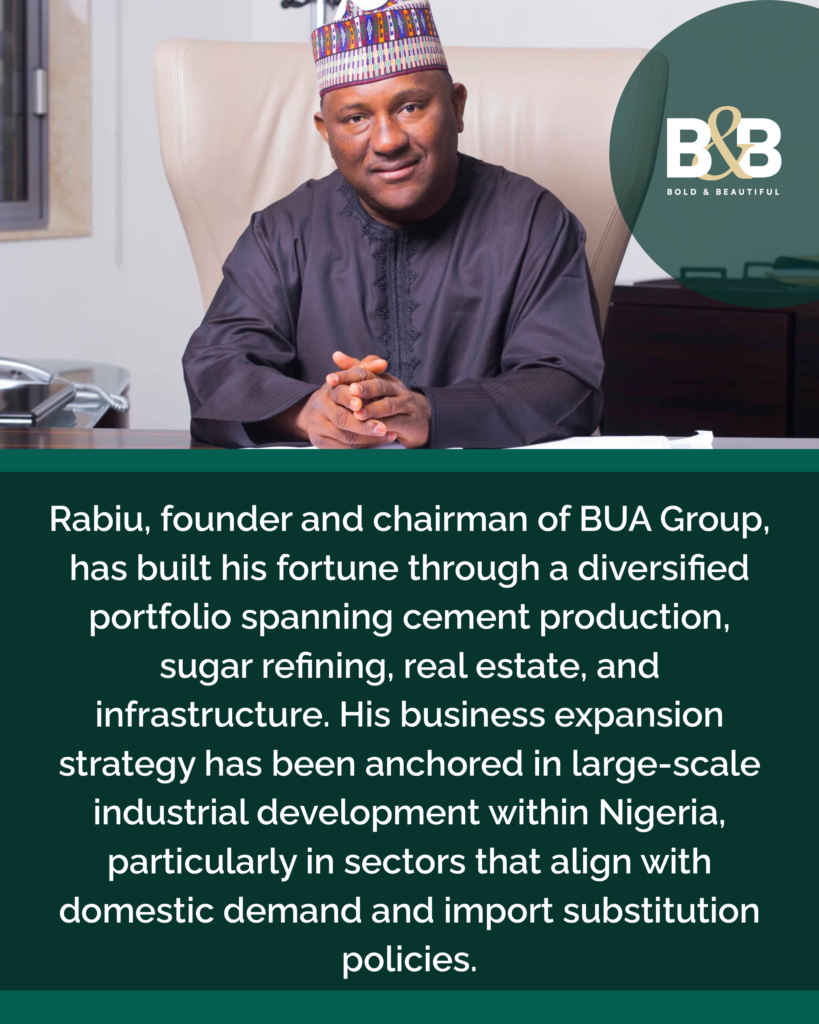
The update in net worth ranking places Rabiu in a tighter competitive bracket among Africa’s wealthiest individuals, where valuations fluctuate based on asset performance and market conditions. While rankings remain fluid, his current position reflects the scale of his industrial holdings and their increasing impact on the regional economy.