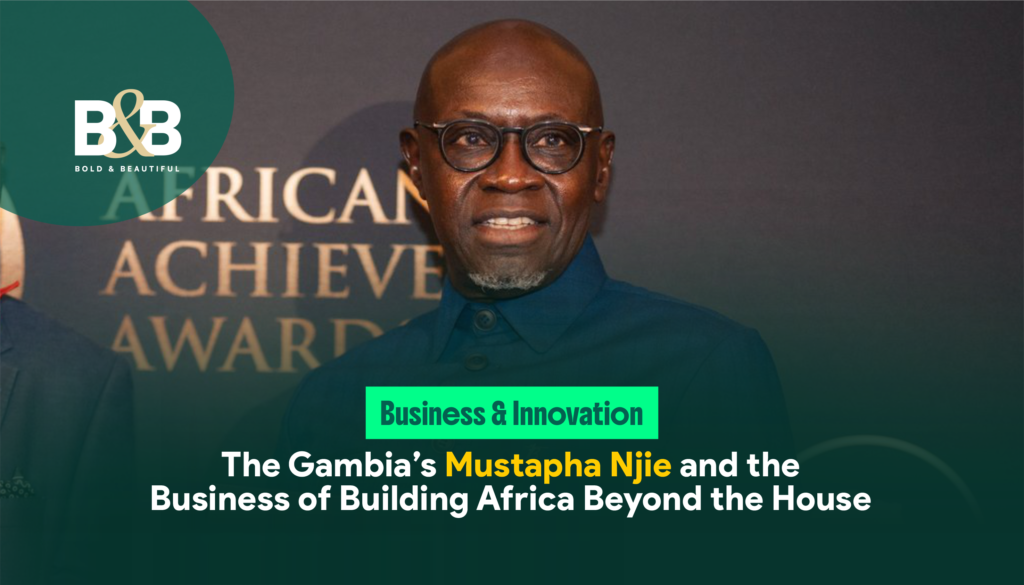
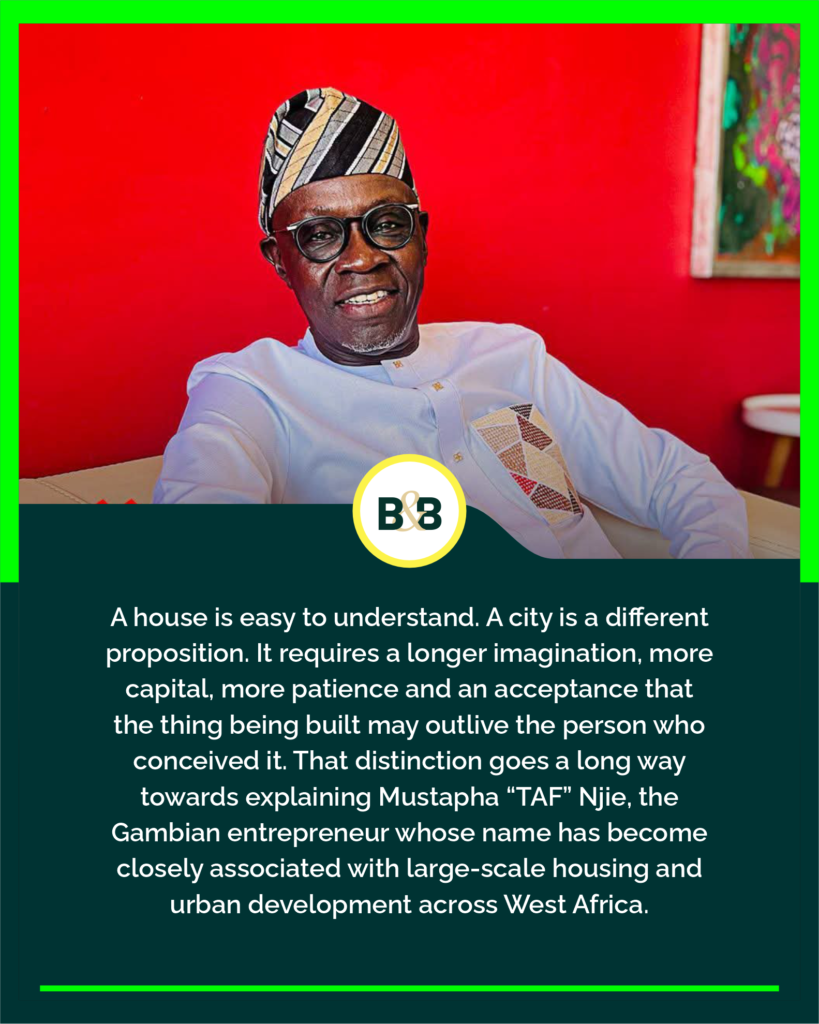
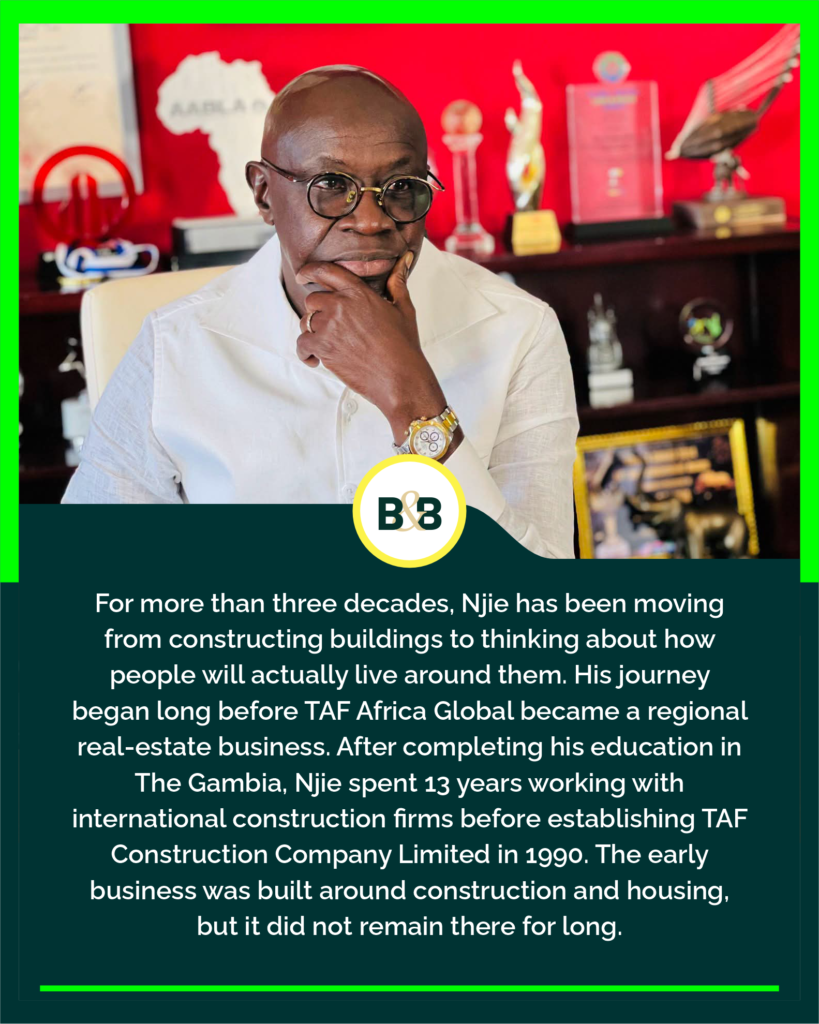
A house is easy to understand. A city is a different proposition. It requires a longer imagination, more capital, more patience and an acceptance that the thing being built may outlive the person who conceived it. That distinction goes a long way towards explaining Mustapha “TAF” Njie, the Gambian entrepreneur whose name has become closely associated with large-scale housing and urban development across West Africa. For more than three decades, Njie has been moving from constructing buildings to thinking about how people will actually live around them.
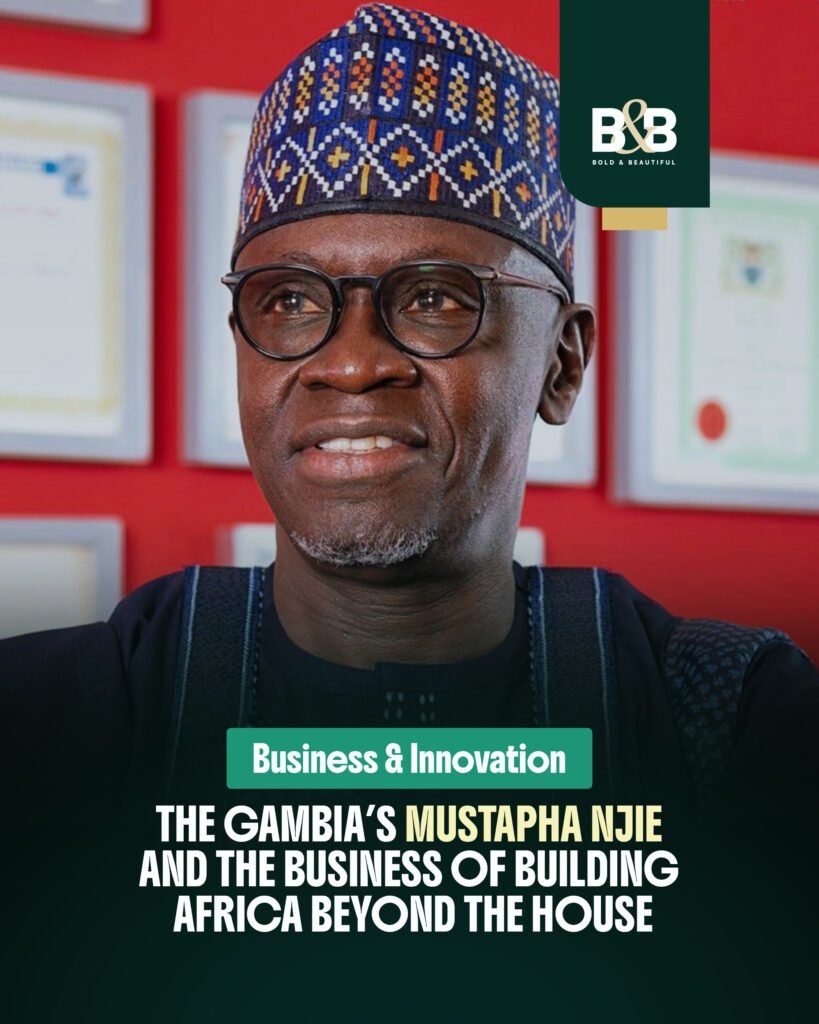
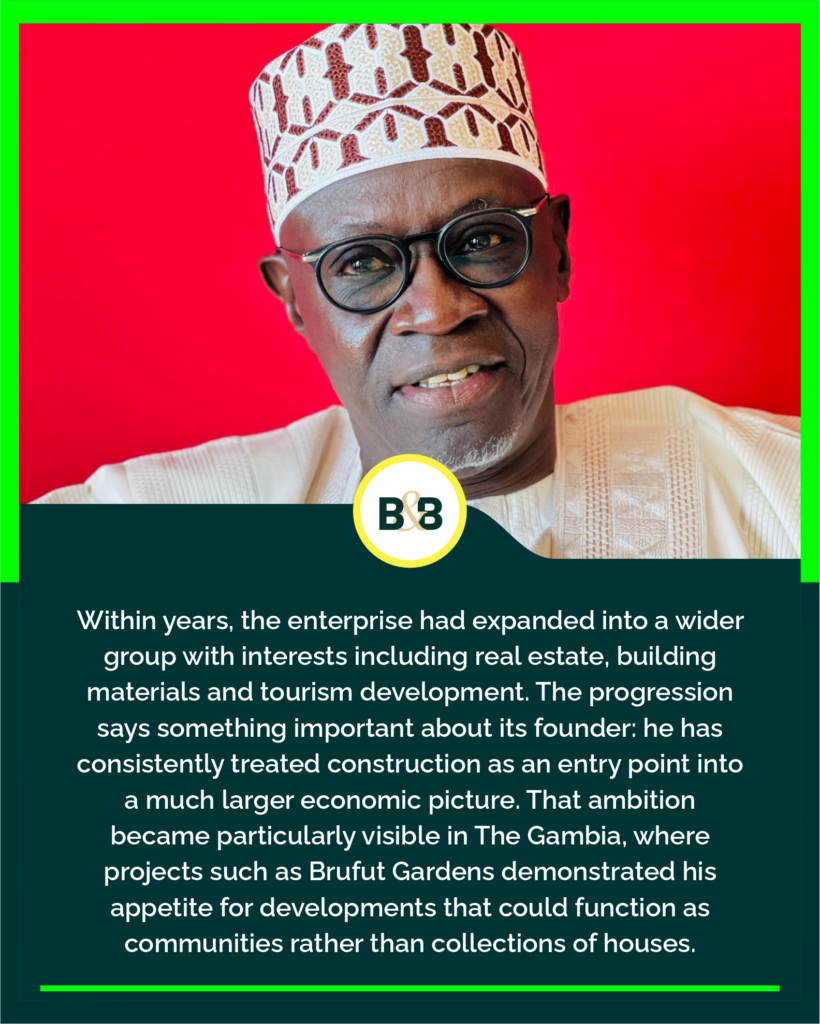
His journey began long before TAF Africa Global became a regional real-estate business. After completing his education in The Gambia, Njie spent 13 years working with international construction firms before establishing TAF Construction Company Limited in 1990. The early business was built around construction and housing, but it did not remain there for long. Within years, the enterprise had expanded into a wider group with interests including real estate, building materials and tourism development. The progression says something important about its founder: he has consistently treated construction as an entry point into a much larger economic picture.
That ambition became particularly visible in The Gambia, where projects such as Brufut Gardens demonstrated his appetite for developments that could function as communities rather than collections of houses. But the larger idea emerged with TAF City, conceived around affordable housing, sustainability, urban farming and the basic infrastructure required for residents to live, work and build businesses in one environment. The concept anticipated a problem now confronting cities across the continent: Africa’s urban population is growing rapidly, while housing, transport, infrastructure and access to essential services struggle to keep pace.
Nigeria has become another major chapter in that story. Through Greater TAF City in Port Harcourt, TAF Africa Global is developing a 1,000-hectare residential project planned to accommodate more than 20,000 homes. The first 1,000-unit phase was commissioned in December 2025. The project’s proposition extends beyond the number of houses: its master plan incorporates green spaces, smart-city infrastructure and amenities designed around middle-income residents. In a region where conversations about housing often become trapped between luxury developments and inadequate mass housing, the scale and positioning of the project point towards a different commercial opportunity.
The business has also continued to look beyond its established markets. In 2026, TAF Africa Global entered discussions in Liberia around a proposed 5,000-unit housing and smart-city development, following an investment mission led by Njie. The Liberian National Investment Commission described the initiative as part of efforts to advance sustainable urban development and affordable housing. It is another indication of the direction in which Njie’s business has been moving: towards a Pan-African development model in which knowledge, capital and construction expertise can travel across borders rather than remain confined to one national property market.
There is a reason the smart-city language matters here. In the African context, a smart city cannot simply mean sensors, apps and futuristic architecture. The more difficult questions are ordinary ones: Can people afford to live there? Can they move around efficiently? Is there reliable power and water? Can they work close to home? Can children learn there? Can food production form part of the local economy? Njie’s approach has increasingly attempted to place those questions inside the development itself. That makes the idea less about technology for its own sake and more about designing functioning communities around the realities of African life.
His longevity may ultimately be the most revealing part of the story. Njie started his construction company in 1990 and has remained at the centre of it through radically different economic cycles, property markets and generations of consumers. He has spoken publicly about the importance of endurance in African entrepreneurship, describing TAF’s decades-long growth as the product of continuing to show up when the conditions were difficult. That philosophy is visible in the architecture of the business itself. The objective is not one spectacular project. It is the creation of a development platform capable of producing the next project after it.
That is what makes Mustapha Njie an interesting figure in the changing African business landscape. The conventional image of a property developer ends at the front door. Njie’s ambition begins somewhere beyond it, in the streets, infrastructure, businesses, farms and communities that determine whether a development becomes a real place. From The Gambia to Nigeria and now into new West African markets, his career has increasingly become a story about scale, urbanisation and the business of building for a continent whose cities are changing faster than their skylines suggest. The house may be the product people see first. The bigger enterprise is the city he is trying to build around it.