
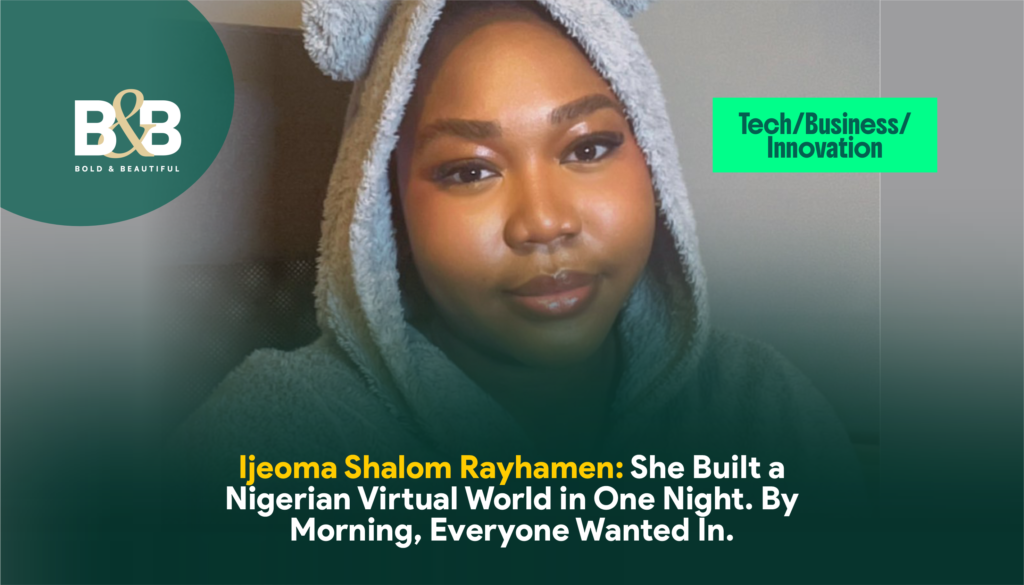
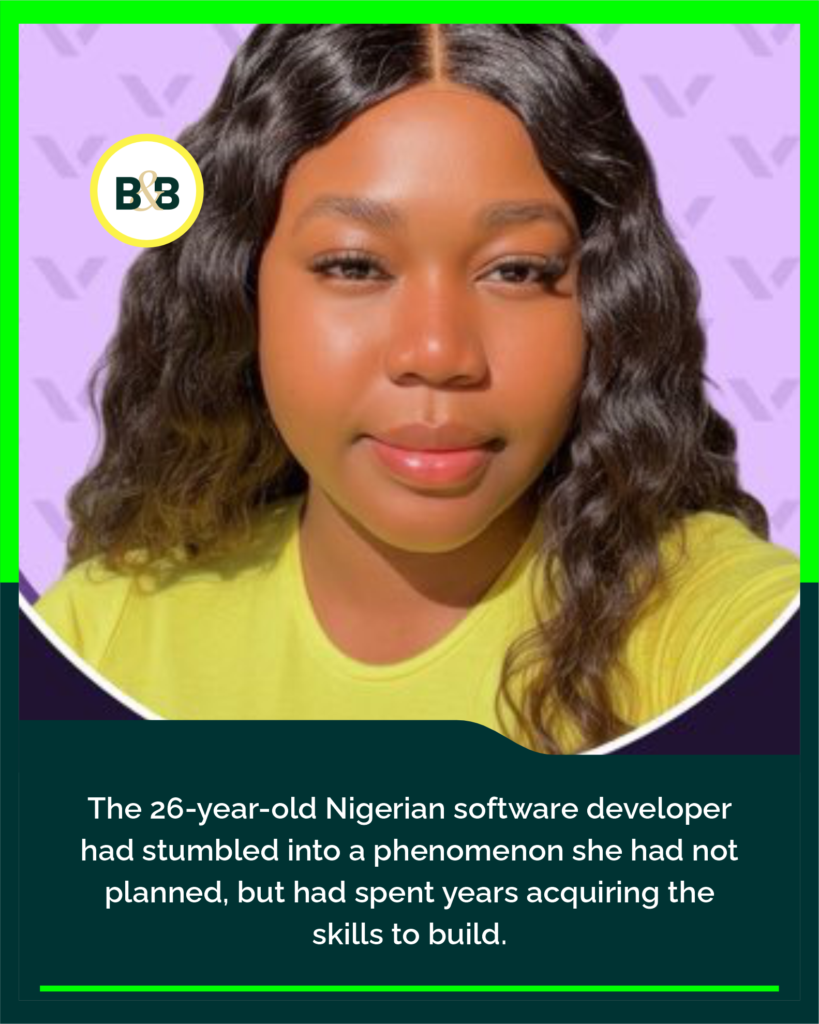
At 9 pm, Ijeoma Shalom Rayhamen sat down to build a game. By 5 am, she had created a virtual version of Nigerian social life, complete with money to spend, businesses to patronise, music to enjoy and the kind of everyday drama that makes Lagos feel like Lagos. She shared the link on X at 7 am, went to sleep and woke up three hours later to discover that her creation was trending. More than 10,000 plays had already come in. Within days, she says, Lagos Life had attracted over a million players, generated substantial revenue and drawn the attention of businesses eager to buy space in its virtual world. The 26-year-old Nigerian software developer had stumbled into a phenomenon she had not planned, but had spent years acquiring the skills to build. Her husband’s reaction captured the absurdity of the moment. “It’s trending!” she told him over the phone. “What’s trending?” he asked. “My game.” He was confused. “You made a game?” She had. Neither of them knew what would happen next.
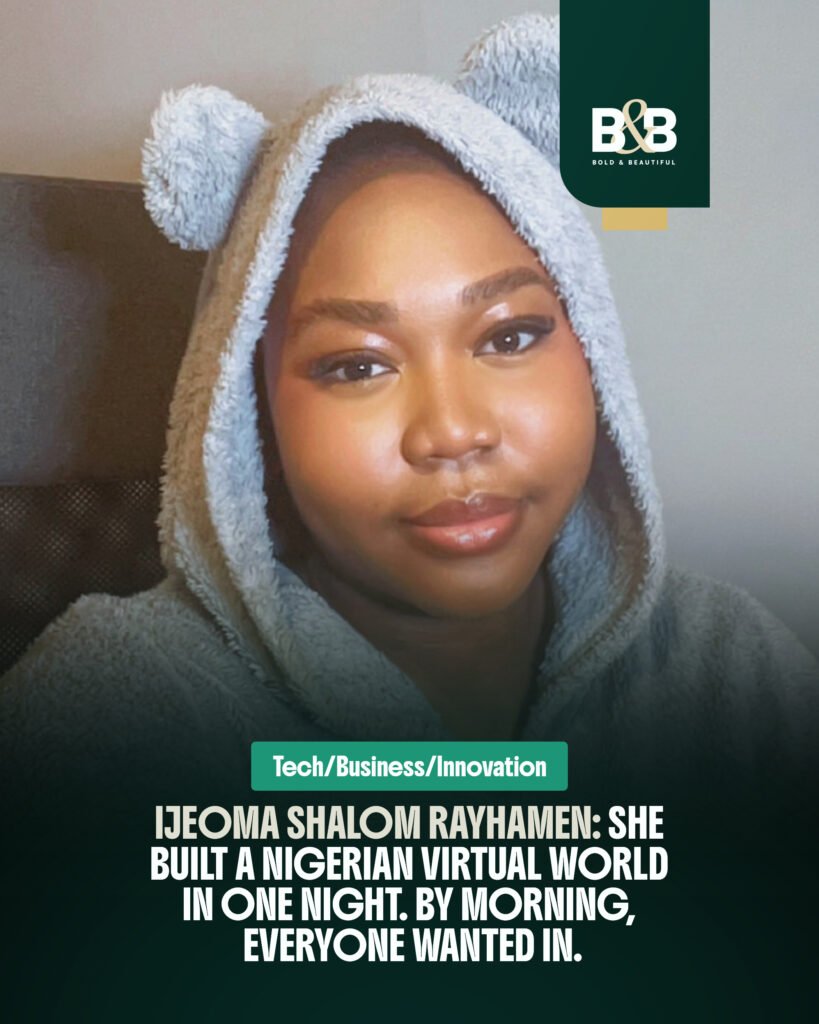
The Girl Who Kept Coding
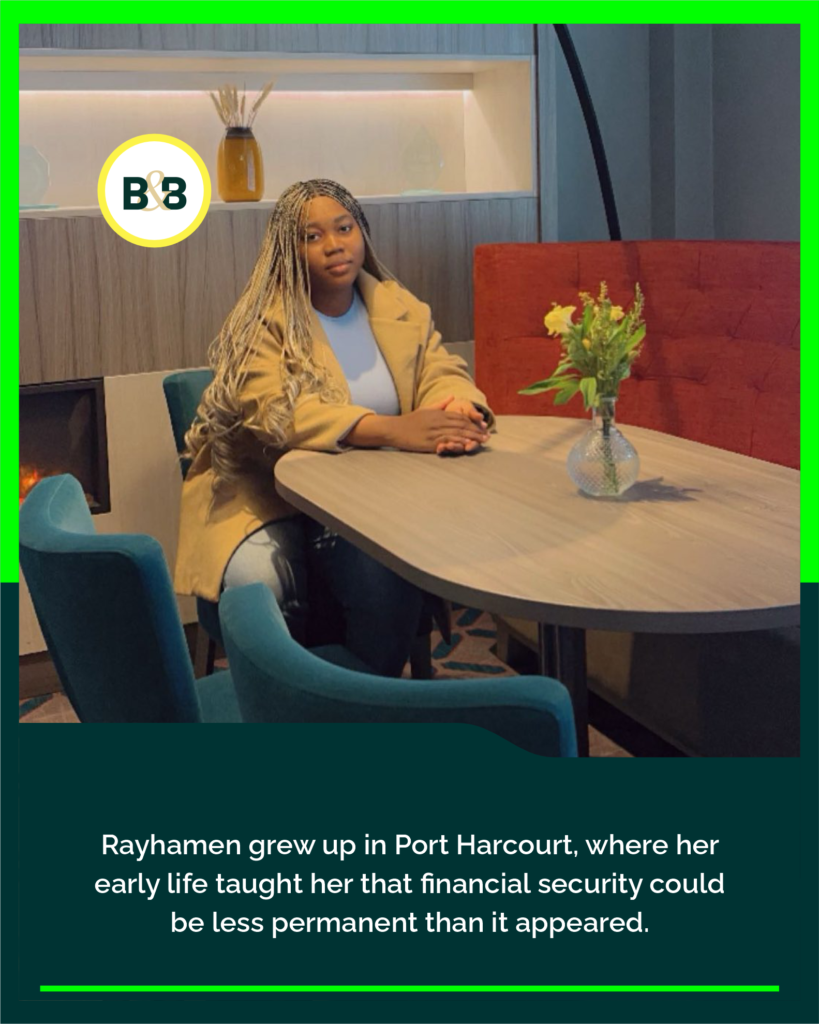
Rayhamen grew up in Port Harcourt, where her early life taught her that financial security could be less permanent than it appeared. Her father had provided comfortably for the family until circumstances changed. School fees became difficult to pay, and there was a period when she and her brother took turns attending school because their parents could not afford to send both children at once. It was the sort of disruption that could narrow a young person’s ambitions. For Rayhamen, the desire to create survived it.
In 2018, aged 18, she secured a six-month coding internship in Abia, where her mother lives. Her first laptop, a Chromebook given to her for her 18th birthday, was poorly suited to the demands of software development. Unreliable electricity and slow internet made the learning process even more frustrating. When the internship ended, however, she continued teaching herself, often spending time at technology hubs in Aba, where access to electricity and free Wi-Fi made it easier to practise. The conditions were hardly ideal, but she had made a decision about the person she wanted to become. She was going to be a software engineer.
Her first proper paid assignment arrived in 2020, during the COVID-19 pandemic. A startup developing a medical booking application hired her to build its front end and paid her ₦60,000. The amount mattered for reasons beyond the money itself. Until then, coding had largely been a skill she was working to master. Now somebody had paid her to use it. She bought another laptop with the earnings, although the bulky machine made enough noise to embarrass her at the technology hubs where she worked. She kept showing up anyway. The early equipment, the unreliable infrastructure and the awkwardness of being a beginner were all part of the price of entry.
Then Facebook delivered an opportunity she had not known to pursue. In 2021, a Malaysian man came across her posts about her work and her efforts to teach children to code. He connected her with his boss, and a WhatsApp conversation led to an offer for a remote software engineering role paying $1,000 a month. Rayhamen accepted immediately. She admits she could barely process the amount and did not even negotiate. For someone whose education had once been interrupted by her family’s financial difficulties, the offer represented a dramatic change in what her technical skills could make possible. In 2023, her professional journey brought another milestone: a UK Global Talent visa. By then, she had built a career from a combination of self-directed learning, persistence and opportunities she was prepared to take when they arrived.
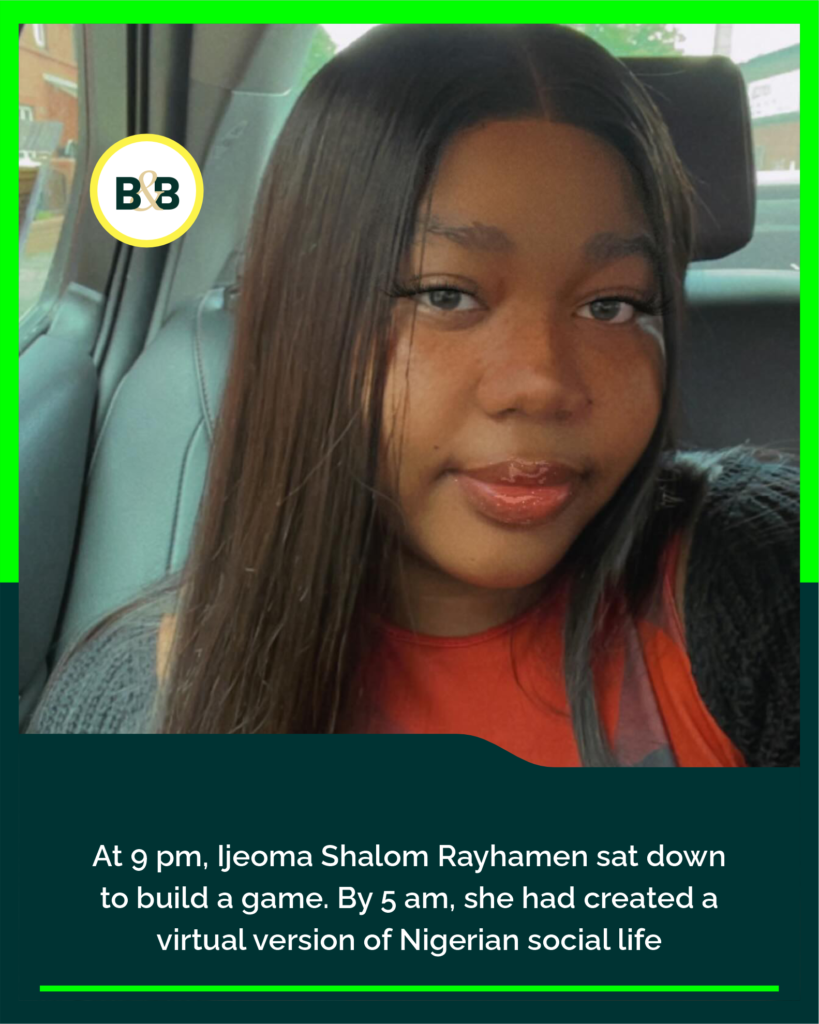
The Idea That Would Not Let Her Sleep
For all her progress as a software engineer, game development had remained a personal interest rather than a serious business plan. She had grown up playing The Sims 3, the life simulation game that lets players create characters, build homes and direct their virtual lives. But she wanted something that felt closer to home. The characters and world of The Sims did not fully reflect the social codes, humour, aspirations and everyday realities she knew. If she ever built a life simulation game, she imagined a Nigerian version.
The idea sat on the shelf until a Danfo driving game began attracting attention on X. As people discussed it, others started creating their own versions and variations. Rayhamen noticed a recurring sentiment among the creators: “I had the idea first.” The phrase struck a nerve. She had entertained her own version of a Nigerian simulation game for some time. What if she spent years thinking about it only to watch somebody else build it?
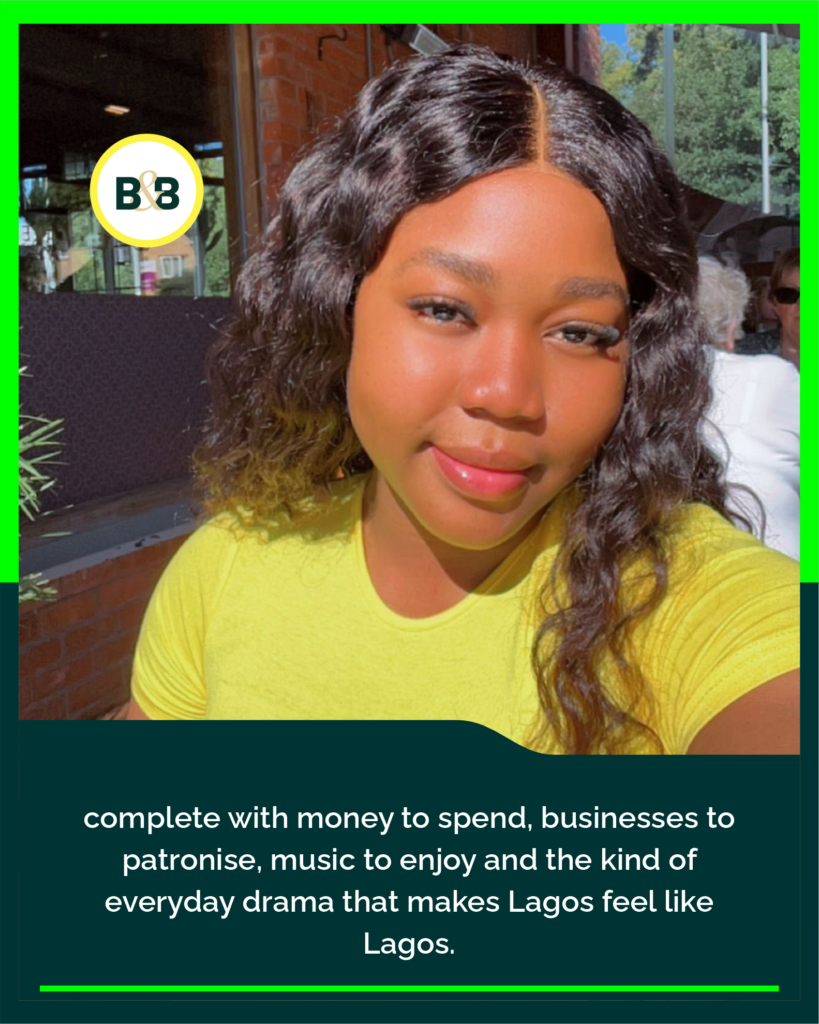
She told her husband she wanted to start programming a game. He suggested that she concentrate on Eliy, her existing AI project, instead. Then he went to sleep. Rayhamen stayed up.
From 9 pm until 5 am, she coded, fixed problems and added features. Each time she checked the clock, she told herself she would go to bed soon. Then another idea appeared, or another issue needed attention. What emerged was Lagos Life, a browser-based social simulation that translated the familiar texture of Nigerian life into a playable world. Players could earn and spend virtual money, explore social spaces, enjoy music and interact with a digital environment shaped by the realities and aspirations of the people playing it.
She shared the game on X at 7 am on 1 October 2026 and went to sleep. By 10 am, it was trending. The game had already recorded more than 10,000 plays, far beyond what she had anticipated. The timing was extraordinary, but the appeal was rooted in something more substantial than novelty. Lagos Life gave people a place to recognise themselves, their city and the social world they understood, while also offering the freedom to play with it. The idea had been familiar to Rayhamen for years. What changed that night was her decision to stop treating it as an idea.
When the Players Became the Business
The first signs of commercial potential came from the players themselves. Rayhamen introduced three bundles of in-game currency, priced at ₦500, ₦1,000 and ₦2,000. She expected modest interest. Instead, she says, purchases generated between ₦150,000 and ₦200,000 during the game’s first three days. Players then began asking for larger bundles, leading her to introduce ₦10,000 and ₦20,000 packages.
But the virtual currency was not the biggest opportunity. Companies began approaching her within days of launch, interested in promoting their businesses inside Lagos Life. Virtual billboards became a major revenue stream, while music promotion offered artists another way to reach an audience through the game’s clubs and entertainment spaces. Rayhamen says demand for advertising grew so quickly that she had to expand the available billboard inventory.

The significance of this development extends beyond the popularity of a new game. Lagos Life offers businesses a way to meet people inside an environment they actively choose to spend time in. Instead of interrupting an audience with a conventional advertisement, a brand can become part of the virtual landscape. For musicians, the clubs create another potential route to discovery. For the developer, these commercial relationships offer possibilities beyond charging players for digital currency.
The opportunity has also brought growing pains. Rayhamen remains the game’s sole coder, and scaling a product from a personal overnight project to a rapidly expanding online destination has placed immediate demands on its infrastructure. At one point, the accumulation of in-game money contributed to lagging performance, requiring her to intervene. In another incident, a scripting error in a feature designed to let the Economic and Financial Crimes Commission catch criminals accidentally wiped out players’ virtual funds. Users were furious, and some directed their anger at her online.
She understood the reaction. Players had invested time and emotion in the world she created, and the accidental loss of their money disrupted the experience they had come to enjoy. Their anger was also evidence that Lagos Life had become more than a link people clicked out of curiosity. It was a place in which they had begun to care about what happened.
The Million-Dollar Question
The speed of Lagos Life’s rise has changed Rayhamen’s calculations about her future. Before its launch, she had been questioning whether building her own products was worth the effort. Several of her projects had failed to sustain momentum, and she was considering abandoning the pursuit of independent ventures in favour of concentrating on employment and career progression. Even her husband had agreed that focusing on her job might be the more sensible choice.
Then Lagos Life happened.
Rayhamen says the game generated more than $46,000 in revenue in its early days. The figure became public after someone on X offered $100,000 to buy the business. She found the offer amusing, believing it substantially undervalued what she was building. She has spoken confidently about the possibility of generating $50 million before December and ultimately building a billion-dollar company. Those are her projections and ambitions, not established financial outcomes, but they reveal the scale of the opportunity she believes she has found.
Her immediate plan is to leave her job and concentrate on Lagos Life and her other personal projects full-time. The decision reflects a shift in how she sees her work. For years, software engineering had been the route to financial independence and professional advancement. Now, the product she built for fun has given her a reason to reconsider the conventional career path she had been preparing to follow.
There is still much to prove. A viral launch does not guarantee sustained engagement, and rapid revenue growth brings questions about infrastructure, player retention, customer support, security and the ability to build a team capable of supporting expansion. A successful game must keep giving people reasons to return long after the initial excitement fades. If Lagos Life is to become the company Rayhamen envisions, the next phase will demand a different kind of work from the overnight sprint that created it.
She is already thinking beyond Nigeria. Rayhamen says she has developments in the pipeline involving expansion into other African countries, although she is keeping the details under wraps until she is ready to announce them. For now, she is confident that Lagos Life has staying power.
Perhaps the most revealing part of her story is what she was doing just before the breakthrough. She was not waiting for a major investor, a formal invitation into game development or permission to pursue an idea that had been sitting in her imagination. She had the skills, the curiosity and a night in which she decided to use both. The internet supplied the audience. The players helped reveal the business. And a game inspired by a childhood favourite began opening doors that years of conventional career planning had not.
Rayhamen’s next challenge is to turn that extraordinary beginning into a durable enterprise. The overnight success makes a compelling headline, but the more interesting story is the decade of learning, the imperfect laptops, the first ₦60,000 payment and the persistence that preceded it. Lagos Life may have taken eight hours to build its first version. Its creator spent years becoming the person capable of making it.